Science & Environment

Ron in Regina

"Voice of the West" Party
Apr 9, 2008
31,112
11,320
113
Regina, Saskatchewan
Pretty much.
And as little as 50 generations, do you think some of your descendants are gonna be popping out of the womb without wisdom teeth, or little toes, potentially without an appendix, smaller jaws, & that’s not even getting into the whole human induced evolution via CRISPR editing the people are gonna be doing at home in a generation or two…& some are trying it now.
 

petros

The Central Scrutinizer
Nov 21, 2008
119,534
14,711
113
Low Earth Orbit
And as little as 50 generations, do you think some of your descendants are gonna be popping out of the womb without wisdom teeth, or little toes, potentially without an appendix, smaller jaws, & that’s not even getting into the whole human induced evolution via CRISPR editing the people are gonna be doing at home in a generation or two…& some are trying it now.
What do you have that's different from 50 generations ago?
 

spaminator

Hall of Fame Member
Oct 26, 2009
39,732
3,715
113
What we learned about microplastics in 2025
Although the science of microplastics is new, studies link the tiny particles to several diseases, including Alzheimer's and heart disease

Author of the article:Washington Post
Washington Post
Shannon Osaka
Published Jan 07, 2026 • Last updated 18 hours ago • 4 minute read

Microplastics
Microplastics Getty Images
For many scientists, 2025 was the year of microplastics. Researchers have known for decades that tiny plastic particles were floating around in rivers and lakes and accumulating in the ocean. But it’s only in the past year or so that they have begun to understand that the tiny plastics – including some that are impossible to see with the naked eye – are in our bodies and food as well.


And scientists are beginning to crack open what that means for human health.


Here are some of the main things we learned about microplastics in 2025.

– – –

Microplastics are accumulating in the brain
After discovering the particles in testicles, kidneys, the liver, placenta, and even a baby’s first poop, scientists turned their attention to the brain. Last year, a team of researchers at the University of New Mexico used cadaver brains to analyze whether the tiny particles were passing through the blood-brain barrier.

They found the plastics were not only entering the brain – they were actually accumulating there. Brains of people who died in 2024, for example, had significantly higher concentrations of microplastics than the brains of people who died in 2016. And there was no correlation between the amount of microplastics and the age of the person at the time of their death.

Researchers also looked at brain samples going back to 1997 and found the same trend – newer samples had more microplastics.


The study also estimated that the human brain was 0.5 percent microplastics by weight – or that the brain contained around 7 grams of the tiny plastics, about the weight of a plastic spoon. That finding has been challenged by some other experts, who say that certain fatty cells in the brain can resemble microplastics.

– – –

New links between microplastics and certain diseases
Although the science of microplastics is new, studies in 2025 linked the tiny particles to several diseases, including Alzheimer’s and heart disease.

In one study by researchers at the University of Rhode Island, scientists analyzed mice with a genetic predisposition to Alzheimer’s. When the mice were exposed to tiny particles of polystyrene – the same plastic used in Styrofoam – the mice showed signs of memory problems consistent to early-stage Alzheimer’s. The mice not exposed to microplastics did not show the same problems.

There are other suggestive links. In the New Mexico study, researchers found that patients with dementia had three to five times the amount of microplastics as patients without. But, the researchers warned, dementia can make the brain more porous – meaning those brains were more vulnerable to the tiny particles.


Scientists are also looking into a connection between microplastics and heart disease. In a 2024 study, a group of Italian researchers found that people with microplastics in a key artery were more likely to suffer heart attack, stroke, or death in the following three years. Another study by scientists at the University of California at Riverside found that male mice exposed to microplastics were more likely to develop atherosclerosis, or a build up of plaque in arteries that can lead to heart attack or stroke.

– – –

How to avoid microplastics in your food and drink
Scientists around the world have continued to find microplastics in food and drink. One study of beverages in the United Kingdom found the tiny particles in hot coffee, hot tea, bottled water, fruit juice, energy drinks and soft drinks. Microplastics have previously been found in tap water across many different states and countries; they are also in fruits, vegetables, meat, highly processed foods and fish.


But researchers say one of the key risk factors is heat. A plastic cup with a hot drink, for example, is more likely to shed tiny particles into the beverage than a cold drink. Other researchers have found that plastic tubs and containers shed many more particles when heated or placed in the microwave.

Highly processed foods are also more likely to contain higher concentrations of microplastics – likely because the food passes through numerous assembly lines and processing equipment before it reaches the plate. Those foods are also more likely to have high concentrations of plastic chemicals that can disrupt hormones in the body, such as phthalates or bisphenols.

There are still many questions about the health risks of microplastics. Researchers are trying to understand what average exposure might look like for a typical American, and whether it takes abnormally high exposure levels to create health problems.

“If 2025 taught us anything, it is that we need accurate data, standardized analytical methods, and high-quality research to inform decision-making,” said Kimberly Wise White, vice president of scientific and regulatory affairs at the American Chemistry Council, a trade group for chemical companies. White said that a 2025 report from the European Food Safety Authority argued that most of the studies on microplastics in food so far didn’t meet minimum quality standards.

But scientists say new research is on the way. The world produced 450 million tons of plastics in 2025, and that number is only expected to climb. If all of those plastics eventually turn into tiny microplastics, the planet will be facing one of the most prolific forms of pollution ever – and one that we know very little about.
 

spaminator

Hall of Fame Member
Oct 26, 2009
39,732
3,715
113
Water on some planes shouldn’t even be used to wash hands: Study
The report revealed which airlines are most likely to carry “potentially unsafe water”

Author of the article:Denette Wilford
Published Jan 07, 2026 • 3 minute read

American Airlines passenger jets
American Airlines passenger jets prepare for departure, Wednesday, July 21, 2021, near a terminal at Logan International Airport, in Boston. Photo by Steven Senne /AP
Most, if not all, airplanes have signs in their washrooms warning passengers not to drink the tap water because it can contain contaminants.


However, airlines are also serving that gross water to travellers, according to a new study.


The report revealed which airlines are most likely to carry “potentially unsafe water,” with researchers urging flyers to stick to bottled water and even avoid drinking the coffee or tea served.

What’s worse is that researchers also suggested that passengers refrain from washing their hands in aircraft bathrooms.

The Center for Food as Medicine & Longevity analyzed more than 35,000 water samples served by 21 U.S. airlines — 10 major and 11 regional — over three years (from Oct. 1, 2022 through Sept. 30, 2025).

The samples were collected from different parts of the aircrafts including galley and bathroom faucets, and tested for coliforms — microbes that can indicate the presence of disease-causing organisms, and E. coli.

The analysis found that 2.7% of samples tested positive for the group of bacteria that’s found in the digestive tracts of humans and animals, as well as in plants and soil.


“Testing for coliform bacteria is important because their presence in drinking water indicates that disease-causing organisms (pathogens) could be in the water system,” the nonprofit said in its report.

E. coli was identified 32 times across the 21 airlines, the group said.

Which airlines were the worst — and best?
Among major airlines, American had the lowest score — 1.75 out of five, or a D grade.

JetBlue, which ranked lowest in a 2019 water safety study, scored 1.8 and also received a grade of D.

Spirit also got a D, with a score of 2.05, while United, Hawaiian and Southwest Airlines all received C grades.

Alaska and Allegiant Air each received Bs while Delta and Frontier topped the list with a 5 and a 4.8, respectively.

As for regional airlines, GOJet ranked the best with a 3.85 while Mesa Airlines earned the worst score of all, earning a 1.35 and a big, fat F.

How does some planes’ water get so bad?
“Nearly all regional airlines need to improve their onboard water safety, with the exception of GoJet Airlines,” Charles Platkin, director of the Center for Food as Medicine and Longevity, noted in the report.


Water used in galleys and bathroom sinks is drawn from a water tank on the plane, which airlines are required to disinfect and flush four times a year.

However, the study pointed out that aircraft water systems can experience periods of stagnation between flights and temperature variations during ascent and descent, as well as possible contamination from airport hoses and tanks.

“Never drink any water onboard that isn’t in a sealed bottle and do not drink coffee or tea onboard,” Platkin recommended.

He also added: “Do not wash your hands in the bathroom — use alcohol-based hand sanitizer containing at least 60 per cent alcohol instead.”

What airlines had to say
American Airlines told CBS News in a statement that its potable water program is “fully in compliance with the Environmental Protection Agency’s (EPA) Aircraft Drinking Water Rule (ADWR).”

The airline cited a recent audit from the agency that showed “no significant findings with our program,” and added that they are reviewing the Center for Food as Medicine & Longevity’s analysis “to determine any potential changes that would further enhance the safety and well-being of our customers and team.”


JetBlue said in a statement that it follows processes outlined by the EPA, the Food and Drug Administration, and the Federal Aviation Administration to ensure safe water, noting it serves bottled drinking water on its flights.

Spirit said it maintains a comprehensive testing and maintenance program that complies with the EPA’s aircraft drinking water rule, while Southwest told the outlet it regularly inspects the water quality aboard its planes and that it complies with EPA standards.
 
  • Like
Reactions: Ron in Regina

spaminator

Hall of Fame Member
Oct 26, 2009
39,732
3,715
113
See the ‘freezing fogbow’ that formed during a Hawaii snowstorm
Author of the article:Washington Post
Washington Post
Matthew Cappucci
Published Jan 09, 2026 • Last updated 1 day ago • 2 minute read

Webcams from Mauna Kea Weather Center in Hawaii revealed a ghostly white arch over the snowcapped landscape
Webcams from Mauna Kea Weather Center in Hawaii revealed a ghostly white arch over the snowcapped landscape this week. Mauna Kea Weather Center
After a winter storm dumped 8 to 10 inches of snow on a dormant volcano on Hawaii’s Big Island, the system left behind what’s known as a freezing fogbow.


The system that preceded the phenomenon was what’s called a “Kona low,” or a low-pressure system that approaches from the west, using a name that refers to leeward winds. The storm brought localized flooding to the lower elevations but subfreezing temperatures above 10,000 feet that led to a wintry wallop on Mauna Kea, the highest peak on the Big Island. Trade winds in Hawaii typically come from the east, except during the wintertime, when Kona lows are more common.


On Monday, webcams revealed a ghostly white arch over the snowcapped landscape. It was likely a fogbow (or cloudbow, depending on droplet size) – the dull cousin of the rainbow.

fogbow_N3FB7Z6UL3IKSTN5D76SIBJVM4
A winter storm left behind what’s known as a freezing fogbow. Mauna Kea Weather Center
As the sun shone through the small, fine fog droplets, its light was refracted, or bent. Sunlight is made up of a combination of wavelengths spanning the visible spectrum; each wavelength represents a different colour.

Rainbows result when bigger raindrops refract each wavelength, or colour, a slightly different amount. That means the differing wavelengths exit the raindrop at slightly different angles, which allows them to separate and each color to be distinctly visible.


But because a fogbow forms in fog, the droplets are much smaller. Fog and cloud droplets may be only one-tenth or even one-hundredth the size of a raindrop.

Since the droplets in fog are small, there is only a bit of refraction (bending) of each colour, and the colours don’t get separated, as they mostly overlap still. That’s why fogbows are white whereas rainbows are colourful. Only a subtle reddish tinge is visible on the outside of the fogbow.

The arch in Hawaii this week also seemed to be a freezing fogbow, since air temperatures were probably below freezing. This doesn’t make for any visible difference but may have been a headache for scientists and weather observers on the summit. That’s because freezing fog is made up of supercooled water droplets – subfreezing liquid droplets suspended in midair with nothing to freeze onto. When those droplets land on a surface, however, they freeze almost instantly, accreting into a slick rime.

It also appears the fogbow may have been a supernumerary fogbow – a term given to the extra bands of light inside the fogbow.


The Mauna Kea Weather Center
The Mauna Kea Weather Center in Hawaii. Maunakea Weather Center
Supernumeraries form thanks to a high number of small, uniformly sized cloud droplets present in the atmosphere. Consider it an interference pattern of sorts. When two beams of sunlight enter a droplet, even though they’re parallel when they enter, they strike the back edge of the droplet in slightly different places and subsequently are bounced in different directions when they exit.

The central pocket of “constructive” interference produces the bright band of light we see in the primary fogbow; then each iteration of a supernumerary band is the product of subsequent instances of constructive interference, which grow dimmer each time before fading away.
1768074465911.png1768074652175.png1768074687530.png
 

spaminator

Hall of Fame Member
Oct 26, 2009
39,732
3,715
113
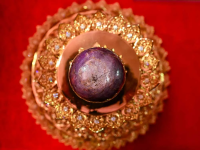
Sri Lanka unveils a rare purple star sapphire claimed to be the biggest of its kind
The precious stone is estimated to be worth at least US$300 million

Author of the article:Associated Press
Associated Press
Bharatha Mallawarachi
Published Jan 18, 2026 • 1 minute read

The Star of Pure Land certified by the Gemological Institute of America (GIA) as the world's largest natural purple star sapphire is unveiled in Colombo on Jan. 17, 2026.
The Star of Pure Land certified by the Gemological Institute of America (GIA) as the world's largest natural purple star sapphire is unveiled in Colombo on Jan. 17, 2026. Photo by Ishara S. KODIKARA /AFP via Getty Images
COLOMBO, Sri Lanka — A Purple Star Sapphire weighing 3,563 carats which is claimed to be the world’s biggest of its kind was unveiled on Saturday in the Sri Lankan capital by the owners, who are ready to sell the precious stone which is estimated to be worth at least US$300 million.


The round shaped gem named “Star of Pure Land” is the world’s largest documented natural purple star sapphire, said Ashan Amarasinghe, a consultant gemologist.


“This is the largest purple star sapphire of its kind,” he told the media, adding that the gem “shows a well-defined asterism. It has six rays asterism. That’s something special out of all the other stones.”

The gem, which has been polished, is owned by the Star of Pure Land Team, who want to remain anonymous for security reasons.

One of the owners said the gem was found in a gem pit near the remote Sri Lankan town of Rathnapura, known as the “city of gems,” in 2023.

It was purchased together with other gems in 2023 and about two years later, the owners found that it was a special stone. They then got it certified by two laboratories.

Amarasinghe said the value of the stone has been estimated at $300 million to $400 million by international valuers. Sri Lankan sapphires are renowned for their unique color, clarity and shimmer.
1768812579655.png
 

spaminator

Hall of Fame Member
Oct 26, 2009
39,732
3,715
113
Microplastics from washing clothes could be hurting your tomatoes
Scientists say household laundry is a leading source of polyester microfiber and other microplastic contamination in the soil.

Author of the article:Washington Post
Washington Post
Ambrosia Wojahn
Published Jan 22, 2026 • Last updated 18 hours ago • 4 minute read

011526-MICROPLASTICS-TOMATOES_AA7P4AU4LJFYBIQQCA4AYU2Q2M
Workers harvest ripe cherry tomatoes inside a greenhouse in Bonita, Arizona, last year. MUST CREDIT: Anna Watts/For The Washington Post Photo by Anna Watts /For The Washington Post
New research suggests that tiny fibres shed by clothing can harm the growth of cherry tomato plants, with potentially broad implications for agriculture.


Scientists say household laundry is a leading source of polyester microfiber and other microplastic contamination in the soil.


Now a study by researchers at Cornell and the University of Toronto has found that polyester microfibers present in soil can delay development and reduce success rates for cherry tomato plants.

Experts say every load of laundry releases millions of tiny fibres into sewage systems and subsequently into waterways, soil and the atmosphere. Many of these fibres are microplastics, shed from polyester and other synthetic fabrics. Scientists are just beginning to study the implications of this new form of pollution on human health and the environment.

Each year, farmers apply millions of gallons worth of treated sewage sludge on cropland as fertilizer. Even after treatment, the sludge retains roughly 90 percent of microfibers carried from household washers and transfers the fibres and other pollutants into the soil. In some countries, up to 75 percent of cropland is treated using this method, the researchers said.


Natasha Djuric, one of the authors of the study, said her team chose cherry tomato plants because they have a relatively short, 90-day growth cycle and because they’re important for food production.

The study found microfibers can have consequences at every stage of plant development. Researchers observed that the plants grown with microplastics were 11 percent less likely to emerge from the soil, were smaller in size and were several days slower to produce flowers or ripen. The contaminated soil also had lower water retention, which may have led to some of the negative results.

Although the study showed a negative impact on growth, the scientists said more research will be needed before drawing conclusions for agriculture in general.

“Sometimes microplastics can have a positive impact on soil or plant properties, and sometimes it could be negative,” Djuric said.

Research on microplastics and plant growth is still in the early stages, the scientists said. And much of our knowledge of microplastic pollution centers on ocean-dwelling organisms.


“I think for a long time, our intuition was even if microplastics end up on the land, they’re going to run off into water bodies and all of that ultimately leads into the ocean,” Djuric said. “So now that we’re looking, we’re realizing that there’s a significant chunk of microplastics that end up interacting with terrestrial ecosystems for long periods of time.”

While the tomato study sheds light on the potential of microplastics to harm plants, some scientists are skeptical of its approach.

Willie Peijnenburg, a professor of environmental toxicology at Leiden University in the Netherlands, said the percentage of microfibers used in the study was much higher than any concentration he and his colleagues have observed in the field.

Peijnenburg has found the primary way plants are exposed to microplastics is through the air. Plants can absorb the particles from the atmosphere through tiny holes in their leaves, called stomata. The sources of the airborne pollutants could be virtually anywhere where plastic is stored, produced or broken down, he said.


“What we’ve found is that it’s very difficult to get real effects on plants in [soil] studies like this,” Peijnenburg said.

Djuric said that while the concentration of microfibers used in the experiment was on the higher end, the level of contamination in soil varies greatly by location and other factors, and that researchers often underestimate the amount of microfibers present in the environment.

Shelby Riskin, an associate professor of evolutionary biology and ecology at the University of Toronto and a co-author of the tomato study, noted that other research on crops and microplastics found some plants actually grow better when exposed to the pollutants, but said it’s difficult to pinpoint the exact cause.

Mary Beth Kirkham, an agronomy professor at Kansas State University who was not involved in the study, said she has seen positive results. She described an experiment in which corn grown with microplastics in the soil had higher protein levels than corn grown without the contaminants.


“The corn grown with microplastics in the soil had more nitrogen in it, which led to more protein,” Kirkham said.

But the increased protein from the contaminants does come with trade-offs, Kirkham said. Microplastics are a known carrier of heavy metals, which if consumed can have negative health effects.

While experts say regulations and policy changes are necessary when it comes to reducing contaminants in the environment, there are steps we can take as individuals.

Lisa Erdle, director of science at 5 Gyres Institute, an advocacy group, said there are a number of ways people can reduce their personal microfiber output.

Avoiding synthetic fabrics whenever possible can reduce the release of microfibers. And buying vintage or secondhand clothing can help, Erdle said, because new garments tend to shed significantly more fibers than used garments. Temperature also matters, Erdle said. Washing in cold water is the best way to limit the shedding of microplastics from your clothing.

Since wastewater from washing machines is a primary source of microplastics, scientists are working on ways to keep the contaminants out of the sewage system. Chelsea Rochman, another co-author of the tomato study, has explored new filters that can capture roughly 90 percent of microplastics released by a load of laundry.

“Microplastics are an ever-evolving issue,” Erdle said. “Although we’ve been aware of them for a long time, we still have a lot to learn about their effects.”