

I'd be more concerned about the testostosrone levels in the male soldiers that menstrate.I think it might’ve drifted over the pentagon. Pete Hegseth, the U.S.’s so-called “Secretary of War,” has apparently restricted unapproved social exchanges between high-ranking Canadian and American military personnel leaves me quaking in my boots for the safety of our country. This is a serious matter. Next, we shall no doubt hear that freedom is in peril because the testosterone levels of Canadian military personnel have been found wanting…at lease with the female soldiers.
Canada’s Military current state & equipment
- Thread starter Ron in Regina
- Start date
You are using an out of date browser. It may not display this or other websites correctly.
You should upgrade or use an alternative browser.
You should upgrade or use an alternative browser.

Not being particularly up on the latest and greatest in military aircraft, but having a very good knowledge of truck and equipment fleets, I do have to wonder about the thought process of anyone that believes we can have a one size fits all fighting aircraft fleet.

Maybe Israel , but few other countries are using Patriot missiles that need replacing right now .If we have a mixed fleet, we can try and rely on the Americans for parts on hand that they have and software that they have for the F 35, and we could rely on ourselves for parts for the Gripen that we have and software that we have on hand if they’re being made in Canada. Under Saab's proposed Canadian Gripen E plan, Canada would have domestic maintenance, parts production, and software capabilities vs the
United States retaining core control over F-35 software, upgrades, and shared spare-part pools.
Yeah, as stuck as we allow ourselves to be. Do you recall way back in COVID times during Trump’s first presidency when the United States restricted exports of essential medical supplies and vaccines to Canada during the COVID-19 pandemic? If push (even little ones with “America first”) comes to shove, you don’t think that would happen with F 35 parts for maintenance?
How many countries do you think right now have ordered, bought and paid for, patriot missiles from America with delivery dates that they have then been told that your order is gonna be late potentially by years because America has a shortage due to Iran so…so sorry…& get in line…for years?
Time will tell, but I’m sure much of the last 12 years will take a generation or two to deal with.

I didn’t say countries that “need Patriot missiles right now”Maybe Israel , but few other countries are using Patriot missiles that need replacing right now .
 but countries that have already bought and paid for them and were already expecting delivery, but they got bumped or bounced potentially for years on their delivery because the Americans used so many in the last nine months in Iran and want to replenish their own stock files first…like…like Ukraine, Switzerland, and a broader group of European and Middle Eastern allies now facing multi-year delivery delays on paid-for or allocated Patriot missiles as the U.S. military prioritizes rebuilding its own heavily depleted stockpiles following the 2026 conflict with Iran.
I only brought this up as an example of relying on America honouring their agreements (like timely supply of parts and software for the F 35) when their needs Trump (pun intended somewhat) the needs of others that have already bought and paid for the same items and are already expecting delivery…like the F 35 fighter, and later inturn parts for the same aircraft, etc…How many countries do you think right now have ordered, bought and paid for, patriot missiles from America with delivery dates that they have then been told that your order is gonna be late potentially by years because America has a shortage due to Iran so…so sorry…& get in line…for years?
It’s the same reason I brought up Covid during Trump’s first round as president restricting medical supplies from export that have already been bought and paid for by other nations. Again, I only brought this up as an example of reliance, and don’t you remember the Trump administration (in his first term) ‘asked’ 3M to stop exporting N95 respirators to Canada and Latin America?If we ever actually get into a shooting war , I would rather rely on Americans for parts and repair facilities at hand .
Just to anticipate the “What About” response, no Canada did not restrict or ban exports of essential medical supplies during the COVID-19 pandemic.…way back in COVID times during Trump’s first presidency when the United States restricted exports of essential medical supplies and vaccines to Canada during the COVID-19 pandemic?
Again, I only brought up these two examples in response to your statement of:
If we ever actually get into a shooting war , I would rather rely on Americans for parts and repair facilities at hand .
My turn for a “what about” like Ukraine and its allies (including Canada, Germany, and Norway) that have already paid for 60 interceptors (40 PAC-3 and 20 PAC-2) scheduled for delivery between September and December 2026, which remain stalled awaiting Pentagon sign-off. Additionally, a separate $2.1 billion allied-funded purchase of 500 PAC-3 MSE missiles approved in October 2026 is not projected to begin delivery until after 2030 now. Do they need the goods that they’ve bought and paid for and were expecting delivery on already?Maybe Israel , but few other countries are using Patriot missiles that need replacing right now .

Can Ukraine wait a couple years for these munitions that it and its allies have already prepaid for because America used a bunch up in the last nine months in Iran and then prioritized themselves first over top of existing orders?
How about Saudi Arabia? Supposedly an ally of the US, pulled into the Iranian (& friends like the Houthis) war, should they have to wait potentially for years for missiles that they’ve already bought and paid for and were expecting delivery on already because America used so many and has prioritize themselves first above the commitments already had in place? The UAE and Kuwait and Bahrain and Qatar in that neighbourhood also got “bumped” on their orders for the same reason that Saudi Arabia was.
I bring these up as a direct analogy with respect to parts for the F 35 jet that Canada is being pressured (coerced) into purchasing and then having to rely on America for software and maintenance. What if those parts and software become negotiating leverage for future trade agreements with Canada, with a threat of them being withheld unless we capitulate on some other unrelated front?
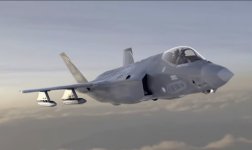
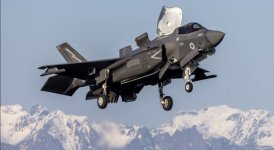
Can you picture something like that happening? Unrelated fronts like tariffs on automobiles tying to Trump’s Golden dome or threats about these same F35’s for example. Think that’s just a one way street? Maybe all our eggs shouldn’t be in one basket?
Well we pretty much sent ourselves down this course when we disbanded the Avro Arrow program .
Perhaps building Saab Gripens in Canada not only for our domestic usage, but for export, might be part of reversing the decision regarding the Avro Arrow?We are still living with the aftermath of that decision. We decided to ride American coat sleeves , forgetting that the Piper will demand to be paid and he will come calling

Under Saab's proposed partnerships, Halifax-based IMP Aerospace would establish a final assembly line, while Magellan Aerospace would manufacture composite aerostructures. Both Saab and IMP have explicitly pitched Canada as an international production and sustainment hub to fulfill global export orders (such as surging European demand), reviving the high-skilled aerospace ecosystem shattered in 1959.…we could rely on ourselves for parts for the Gripen that we have and software that we have on hand if they’re being made in Canada. Under Saab's proposed Canadian Gripen E plan, Canada would have domestic maintenance, parts production, and software capabilities vs the United States retaining core control over F-35 software, upgrades, and shared spare-part pools.
 The Gripen model would let Canadian engineers independently maintain, upgrade, and integrate local weapons onto the jets.
But wait…what happened in 1959?

On 20 February 1959, Prime Minister John Diefenbaker abruptly halted the development of both the Arrow and its Iroquois engines before the scheduled project review to evaluate the program could be held. Two months later the assembly line, tooling, plans, existing airframes, and engines were ordered to be destroyed.

Avro Canada CF-105 Arrow - Wikipedia
Then ask that same AI any other question about anything and see how long it takes to come up with an answer for you.The F35 struggles to achieve its promise as the end all be all. Its multi-role design, although helpful for foreign sales, means it does not perform any one role as well as other aircraft in the U.S. inventory. In addition, supply chain issues and other factors mean the U.S. F-35 fleet did not meet the Department of Defense’s (DoD) 70% “mission capable” rate for 2020 – meaning nearly a third of the fleet was incapable of flying any kind of combat mission. “Full mission capable” rates, meaning missions against threats requiring the full capabilities of the aircraft, lagged even further behind DoD targets.
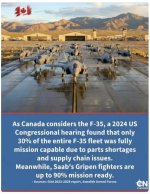
The full mission capable (FMC) rate for the U.S. F-35 fighter fleet—measuring the share of time the aircraft can perform all of its assigned missions—ranged from 25% to 38% across fiscal years 2021 through 2025, declining from 38% in FY2021 to 25% in FY2025. This is in comparison to the Saab Gripen generally falling between 70% to 90% in the same category.
You sure put effort into your arguments , I could care less how the American industrial defence industry does our doesn’t work . How and who defense contractors supply is none of my concern . If push comes to shove America can and will find a way to ramp up production as they always have in the past .I didn’t say countries that “need Patriot missiles right now”
I only brought this up as an example of relying on America honouring their agreements (like timely supply of parts and software for the F 35) when their needs Trump (pun intended somewhat) the needs of others that have already bought and paid for the same items and are already expecting delivery…like the F 35 fighter, and later inturn parts for the same aircraft, etc…
It’s the same reason I brought up Covid during Trump’s first round as president restricting medical supplies from export that have already been bought and paid for by other nations. Again, I only brought this up as an example of reliance, and don’t you remember the Trump administration (in his first term) ‘asked’ 3M to stop exporting N95 respirators to Canada and Latin America?
Just to anticipate the “What About” response, no Canada did not restrict or ban exports of essential medical supplies during the COVID-19 pandemic.
Again, I only brought up these two examples in response to your statement of:
My turn for a “what about” like Ukraine and its allies (including Canada, Germany, and Norway) that have already paid for 60 interceptors (40 PAC-3 and 20 PAC-2) scheduled for delivery between September and December 2026, which remain stalled awaiting Pentagon sign-off. Additionally, a separate $2.1 billion allied-funded purchase of 500 PAC-3 MSE missiles approved in October 2026 is not projected to begin delivery until after 2030 now. Do they need the goods that they’ve bought and paid for and were expecting delivery on already?
View attachment 36293
Can Ukraine wait a couple years for these munitions that it and its allies have already prepaid for because America used a bunch up in the last nine months in Iran and then prioritized themselves first over top of existing orders?
How about Saudi Arabia? Supposedly an ally of the US, pulled into the Iranian (& friends like the Houthis) war, should they have to wait potentially for years for missiles that they’ve already bought and paid for and were expecting delivery on already because America used so many and has prioritize themselves first above the commitments already had in place? The UAE and Kuwait and Bahrain and Qatar in that neighbourhood also got “bumped” on their orders for the same reason that Saudi Arabia was.
I bring these up as a direct analogy with respect to parts for the F 35 jet that Canada is being pressured (coerced) into purchasing and then having to rely on America for software and maintenance. What if those parts and software become negotiating leverage for future trade agreements with Canada, with a threat of them being withheld unless we capitulate on some other unrelated front?
View attachment 36292
Can you picture something like that happening? Unrelated fronts like tariffs on automobiles tying to Trump’s Golden dome or threats about these same F35’s for example. Think that’s just a one way street? Maybe all our eggs shouldn’t be in one basket?
View attachment 36291
Perhaps building Saab Gripens in Canada not only for our domestic usage, but for export, might be part of reversing the decision regarding the Avro Arrow?
View attachment 36290
Under Saab's proposed partnerships, Halifax-based IMP Aerospace would establish a final assembly line, while Magellan Aerospace would manufacture composite aerostructures. Both Saab and IMP have explicitly pitched Canada as an international production and sustainment hub to fulfill global export orders (such as surging European demand), reviving the high-skilled aerospace ecosystem shattered in 1959.
But wait…what happened in 1959?
View attachment 36289
On 20 February 1959, Prime Minister John Diefenbaker abruptly halted the development of both the Arrow and its Iroquois engines before the scheduled project review to evaluate the program could be held. Two months later the assembly line, tooling, plans, existing airframes, and engines were ordered to be destroyed.
Compare the above regarding the Gripen E with the fact that whether Canada buys 16 jets or all 88 F-35s from Lockheed Martin through the U.S.-led program, it will not get licensing to program its own core software, build a domestic final-assembly line, or unilaterally control the spare-parts supply chain. Instead, Canada would operate within a centralized, multinational program managed by the U.S. Pentagon’s Joint Program Office (JPO), regardless of whether the final fleet size is 16, 48, or 88 aircraft.Avro Canada CF-105 Arrow - Wikipedia
en.wikipedia.org
The Gripen E offers lower per-flight-hour operating costs, simpler maintenance with smaller ground crews, short/austere runway operations, strong electronic warfare, and local industrial assembly offers, and the F35 just doesn’t offer most of the above, specifically autonomy from American coercion.
Wanna try something interesting? Google (or pick your search engine of choice) and ask it, “What are the significant liabilities of the F 35 fighter?” Does that search engine’s AI get confused? What’s happening there?
The F35 struggles to achieve its promise as the end all be all. Its multi-role design, although helpful for foreign sales, means it does not perform any one role as well as other aircraft in the U.S. inventory. In addition, supply chain issues and other factors mean the U.S. F-35 fleet did not meet the Department of Defense’s (DoD) 70% “mission capable” rate for 2020 – meaning nearly a third of the fleet was incapable of flying any kind of combat mission. “Full mission capable” rates, meaning missions against threats requiring the full capabilities of the aircraft, lagged even further behind DoD targets.
The full mission capable (FMC) rate for the U.S. F-35 fighter fleet—measuring the share of time the aircraft can perform all of its assigned missions—ranged from 25% to 38% across fiscal years 2021 through 2025, declining from 38% in FY2021 to 25% in FY2025. This is in comparison to the Saab Gripen generally falling between 70% to 90% in the same category.
View attachment 36294
Btw Trump only has two more years long before we will have taken full delivery .
At whose expense? Their recent track record isn’t ramping things up to everybody’s benefit, but ramping things up when necessary to others expense, & I used my two examples above to demonstrate this.You sure put effort into your arguments , I could care less how the American industrial defence industry does our doesn’t work . How and who defense contractors supply is none of my concern . If push comes to shove America can and will find a way to ramp up production as they always have in the past .
So what? Trump didn’t elect himself into office. I believe we should have a mixed fleet of Gripen’s & F35’s. They’re designed differently for different reasons and different roles. That’s been my position here for a long time. Maybe 1/4-1/3 F35’s & 2/3-3/4 Gripens.Btw Trump only has two more years long before we will have taken full delivery .
The Saab JAS 39 Gripen E is not a stealth fighter.
- F-35 (Stealth-first): Uses radar-absorbent coatings, specialized airframe shaping, and internal weapons bays to lower its radar signature. These features add weight, raise acquisition and per-hour operating costs, and require careful post-flight maintenance and resealing.
- Saab Gripen (Agility and dispersed basing): Carries weapons and fuel externally and relies on aerodynamic agility, electronic warfare, and speed (up to Mach 2 for the Gripen E) rather than low-observable stealth. Its simpler maintenance needs and ability to operate from short runways or dispersed road bases support high sortie rates and smaller ground crews.
This leaves the stealth aircraft relying on long wave ground stations or craft like AWAC’s (which themselves aren’t stealthy), which is a potential catch22. Stealth reduces detection range rather than making an aircraft invisible; looking from the side or rear, or getting much closer, increases visibility.
I found it kind of surprising that you bring up the Avro Arrow, yet seem dismissive of kickstarting Canadian aerospace engineering with respect to world class fighter aircraft again, but that’s just me I guess.
Saab has pitched 100% guaranteed industrial offsets and intellectual property transfer, along with potential export capacity as Saab faces higher demand (including potential interest from Ukraine) and production constraints in Sweden.
America’s Lockheed Martin, Northrop Grumman, & BAE Systems don’t on any of the above factors, with maintenance of the F35’s regardless of which nation purchases them being in the hands of a program managed by the U.S. Pentagon’s Joint Program Office (JPO).
Global demand and enthusiasm for the F-35 fighter jet has become deeply divided between 2025 and late 2026 while political enthusiasm among several traditional Western allies has noticeably cooled, so I’m not just looking at Canada here. If the F 35 is the best of the best of the best more or less as a multi-role platform (because stealth) then why do you think the above has happened?
While the F-35 still commands massive global demand—with 20 countries participating (Canada being one of them) in the program and potential new buyers like Saudi Arabia emerging—several traditional Western allies have hit the brakes. Even the Pentagon itself has had to scale back its own 2026 procurement requests for the F 35. In 2021, the U.S. notably withdrew certain Patriot batteries and advanced missile defenses from Saudi Arabia amid broader strategic shifts, fueling longstanding Saudi concerns about U.S. reliability, & I’m sure it’s taking this into account after the last nine months with respect to its interest in F 35 fighters now also.
The F-35 hasn't lost its crown as the premier stealth “multi-role” fighter but costs have ballooned and several governments realized that buying the "best" jet also means buying decades of deep economic and political dependence on the United States—a price tag (literally and figuratively) that several allies are no longer eager to pay in full.
I don’t necessarily disagree , but we are re-entry a market we should would could be dominating. /At whose expense? Their recent track record isn’t ramping things up to everybody’s benefit, but ramping things up when necessary to others expense, & I used my two examples above to demonstrate this.
So what? Trump didn’t elect himself into office. I believe we should have a mixed fleet of Gripen’s & F35’s. They’re designed differently for different reasons and different roles. That’s been my position here for a long time. Maybe 1/4-1/3 F35’s & 2/3-3/4 Gripens.
The Saab JAS 39 Gripen E is not a stealth fighter.
Aircraft are hot, especially against the cold background of high-altitude air. Today, IRST (Infra-Red Search and Track) sensors can see out to 100+ km, and both Gripen E and F-35 have them. Outside of visual range both aircraft would use X-band radar to detect other craft in the skies, but if a stealth aircraft uses X-band radar (which itself isn’t stealthy) it stops being a stealth aircraft because it’s own radar lights it up.
- F-35 (Stealth-first): Uses radar-absorbent coatings, specialized airframe shaping, and internal weapons bays to lower its radar signature. These features add weight, raise acquisition and per-hour operating costs, and require careful post-flight maintenance and resealing.
- Saab Gripen (Agility and dispersed basing): Carries weapons and fuel externally and relies on aerodynamic agility, electronic warfare, and speed (up to Mach 2 for the Gripen E) rather than low-observable stealth. Its simpler maintenance needs and ability to operate from short runways or dispersed road bases support high sortie rates and smaller ground crews.
This leaves the stealth aircraft relying on long wave ground stations or craft like AWAC’s (which themselves aren’t stealthy), which is a potential catch22. Stealth reduces detection range rather than making an aircraft invisible; looking from the side or rear, or getting much closer, increases visibility.
I found it kind of surprising that you bring up the Avro Arrow, yet seem dismissive of kickstarting Canadian aerospace engineering with respect to world class fighter aircraft again, but that’s just me I guess.
Saab has pitched 100% guaranteed industrial offsets and intellectual property transfer, along with potential export capacity as Saab faces higher demand (including potential interest from Ukraine) and production constraints in Sweden.
America’s Lockheed Martin, Northrop Grumman, & BAE Systems don’t on any of the above factors, with maintenance of the F35’s regardless of which nation purchases them being in the hands of a program managed by the U.S. Pentagon’s Joint Program Office (JPO).
Global demand and enthusiasm for the F-35 fighter jet has become deeply divided between 2025 and late 2026 while political enthusiasm among several traditional Western allies has noticeably cooled, so I’m not just looking at Canada here. If the F 35 is the best of the best of the best more or less as a multi-role platform (because stealth) then why do you think the above has happened?
While the F-35 still commands massive global demand—with 20 countries participating (Canada being one of them) in the program and potential new buyers like Saudi Arabia emerging—several traditional Western allies have hit the brakes. Even the Pentagon itself has had to scale back its own 2026 procurement requests for the F 35. In 2021, the U.S. notably withdrew certain Patriot batteries and advanced missile defenses from Saudi Arabia amid broader strategic shifts, fueling longstanding Saudi concerns about U.S. reliability, & I’m sure it’s taking this into account after the last nine months with respect to its interest in F 35 fighters now also.
The F-35 hasn't lost its crown as the premier stealth “multi-role” fighter but costs have ballooned and several governments realized that buying the "best" jet also means buying decades of deep economic and political dependence on the United States—a price tag (literally and figuratively) that several allies are no longer eager to pay in full.