Food for thought

55Mercury

rigid member
May 31, 2007
4,724
1,271
113

but anyways...
I never could understand where people's heads are at when they're pricing shit.
So your savings on buying an eight pack instead of a single can is $1.80 or 22.5 cents per can.. BUT, IF YOU BUY NOW!
(wholly fucked! like, make me an offer I can't refuse!)
FOR 24 CANS WE WILL INCREASE YOUR PER CAN SAVINGS TO A WHOPPING 23.4375 cents - THAT'S FIFTEEN WHOLE SIXTEENTHS OF A RED HOT PENNY MORE.... CANADIAN!

yeah, don't do me any favours

Not that I would ever buy that shit except maybe as a gag gift (literally)
But shouldn't your per 8 savings when buying 24 be significantly greater than $1.80? Because 15 cents barely cuts the cheese for me and I'm talking Limburger cuz it stinks.
 
Last edited:
  • Like
Reactions: Ron in Regina

spaminator

Hall of Fame Member
Oct 26, 2009
41,142
4,186
113
Slain Hong Kong model found dismembered in pot of soup
The grisly discovery of Abby Choi's remains in a pot of soup is thought to be tied to a financial dispute involving the sale of a luxury apartment

Author of the article:Gordon Anderson
Published Oct 01, 2026 • Last updated 14 hours ago • 2 minute read
Abby
Hong Kong model Abby Choi. Photo by Instagram

A Hong Kong model’s head was allegedly found in a pot of soup, with cops saying the grisly discovery was tied to a financial dispute involving the sale of a luxury apartment.


Hong Kong police allege that Abby Choi’s ex-husband, Alex Kwong, his father Kau Kwong, and brother Anthony Kwong, all had a hand in the murder of the woman in February 2023.

Choi was a model and influencer who had more than 142,000 followers on Instagram. In the days before her death, Choi had shared photos of herself attending Paris Fashion Week, per AFP.

choi
Hong Kong model Abby Choi shown on magazine cover. Choi’s former father-in-law and his eldest son were charged with murder, while her former mother-in-law faces one count of perverting the course of justice, police said in a statement. Photo by L'Officiel
Body parts found in pot, fridge
Police say that Choi’s head was found in a pot of carrot and vegetable soup, and her legs found in a fridge, at a house in a northern village in Hong Kong.

The 28-year-old mother of four came from a wealthy family from mainland China, CNN reported.

The court case began Sept. 21 and is expected to last approximately 40 days. A nine-person jury panel will determine whether the defendants are guilty or not.

The trouble began several years after Choi and Kwong married in 2014 when she was 18 years old.


After the marriage, police alleged Choi bought an expensive apartment for Kwong’s parents to live in.

Her in-laws moved in and helped look after the couple’s two children. After the couple split up, she allowed her former in-laws to stay in the apartment.

The relationship allegedly deteriorated in 2022 when Choi wanted to sell the luxury digs. Kau Kwong reportedly rejected Choi’s wish to sell the house.

The ex-father-in-law eventually agreed to sign a document to let Choi proceed with the sale, but the prosecution alleged that he could move back in if Choi died.


A plan to kill
The prosecution claimed that Kau Kwong rented an apartment in a village house and plotted with his two sons to kill Choi.

They alleged that money was a motivator as Choi was wealthy and the Kwongs were not.

“We say the three of them decided they would do it together,” prosecution lawyer Charlotte Draycott said to court reporters, per Associated Press.

Her ex-husband and the two other defendants were accused of killing Choi. They face life imprisonment if convicted of murder.

The trio were also charged with preventing the lawful burial of a body.

Judge Brian Keith told the jury that the trio of defendants pleaded not guilty to the murder charge. Kau Kwong also pleaded not guilty to the other charge, but his sons admitted to it.

ganderson@postmedia.com
1790933286009.png1790933307916.png
 

spaminator

Hall of Fame Member
Oct 26, 2009
41,142
4,186
113
Can adults suddenly develop new food allergies?
A reader asks: Can adults suddenly develop a new food allergy?

Author of the article:Washington Post
Washington Post
Michael J. Coren, The Washington Post
Published Oct 03, 2026 • Last updated 18 hours ago • 3 minute read
091026-Del_Mar_-_First_Bite
(Deb Lindsey for The Post) Photo by Deb Lindsey /Deb Lindsey /For The Washington Post

A reader asks: Can adults suddenly develop a new food allergy?


I wrote this week about how to protect kids at school from dangerous allergic reactions to food – and why banning nuts doesn’t work. But adults can be at risk, too. “New food allergies can develop at any age,” write the authors of a 2020 peer-reviewed article.

About 7 percent of adults surveyed reported a medically diagnosed food allergy, reports the Centers for Disease Control. Few comprehensive studies exist about adult-onset allergies, but researchers at Stanford found nearly half of adults with food allergies developed them after age 18, sometimes after years of eating the same food without problems.

The most common allergies among adults? Shellfish (2.9 percent), milk (1.9 percent), peanuts (1.8 percent), tree nuts (1.2 percent) and fin fish (0.9 percent), according to a 2020 study. While many allergies persist, allergies can emerge or resolve at any age. Their prevalence changes over time. Milk is a more common allergen among children, but it’s more likely to resolve before adulthood, along with egg, wheat and soy. Peanut, tree nuts, fish and shellfish allergies are the most likely to persist. While most childhood allergies are in boys, this flips in adulthood when women predominate.


Why do adults develop allergies? Allergies are an immune response. The most severe food allergies tend to be the body’s overreaction to a protein. In the most common form, antibodies target these proteins as threats, prompting the immune system to flood the body with chemicals like histamine and potentially trigger a severe reaction. Sensitivities may develop slowly before exercise, alcohol, viral infections or even an anti-inflammatory drug like Advil and Motrin – amplifies reactions or lowers the threshold for a reaction, revealing undiagnosed allergies.

There’s a new allergy on the block many are acquiring as adults: alpha-gal syndrome, also known as red-meat allergy. First identified in the early 2000s, the CDC now estimates 450,000 people may be affected, although some people may carry the antibodies without symptoms.

Alpha-gal syndrome is associated with tick bites, especially from the lone star tick, concentrated in the Southeast. A sugar molecule in the tick’s saliva provokes an allergic reaction. The same molecule exists in beef, pork, lamb and other mammalian meats, as well as dairy and gelatin.


If you suspect you have a new food allergy, confirm it with an allergist. Don’t experiment by trying the food again. An allergist can use skin or blood tests and review your clinical history to identify potential triggers. If inconclusive, a medically supervised oral food challenge is the most definitive test.

If you are diagnosed with a food allergy, the risk of anaphylaxis – a violent, potentially life-threatening reaction – isn’t high for most people but still worth taking seriously, allergists say. Only epinephrine, also known as adrenaline and typically injected with an EpiPen, can stop the most serious reactions. And while adult-onset allergies are real, a reaction is a reason for medical investigation, not proof of a new allergy.

Many of you wrote to ask why children now have so many allergies. It’s a story of well-intentioned advice outrunning the evidence.

In 2000, parents of children at high risk of allergies were advised by the American Academy of Pediatrics to delay introducing peanuts and seafood until age 3 to reduce the risk of new allergies emerging. That guidance was based on the plausible but unproven assumption that delaying exposure to potential triggers would prevent new allergies.


The academy withdrew that advice in 2008 and when better data came along, it pointed in the opposite direction: Children were 81 percent less likely to develop a peanut allergy if they began eating peanuts within their first year rather than wait, according to a randomized trial published in 2015. Similar preventive effects were later seen with eggs.

That confusion had consequences. As I wrote earlier this week, food allergies reported by parents rose by about 50 percent between 1997 and 2008. Peanut allergies more than tripled.

The academy began encouraging earlier introduction of allergens in 2017. As a result, an estimated 57,000 children did not develop peanut allergies over the next three years, a study published last year estimated.

Today, egg, not peanuts, is the most common allergen among children under 3.
 

Taxslave2

Senate Member
Aug 13, 2022
6,031
3,199
113
The Supreme Commander, who is a naturopath says that any insect bite can trigger an allergic reaction.
 

spaminator

Hall of Fame Member
Oct 26, 2009
41,142
4,186
113
Slain Hong Kong model found dismembered in pot of soup
The grisly discovery of Abby Choi's remains in a pot of soup is thought to be tied to a financial dispute involving the sale of a luxury apartment

Author of the article:Gordon Anderson
Published Oct 01, 2026 • Last updated 14 hours ago • 2 minute read
Abby
Hong Kong model Abby Choi. Photo by Instagram

A Hong Kong model’s head was allegedly found in a pot of soup, with cops saying the grisly discovery was tied to a financial dispute involving the sale of a luxury apartment.


Hong Kong police allege that Abby Choi’s ex-husband, Alex Kwong, his father Kau Kwong, and brother Anthony Kwong, all had a hand in the murder of the woman in February 2023.

Choi was a model and influencer who had more than 142,000 followers on Instagram. In the days before her death, Choi had shared photos of herself attending Paris Fashion Week, per AFP.

choi
Hong Kong model Abby Choi shown on magazine cover. Choi’s former father-in-law and his eldest son were charged with murder, while her former mother-in-law faces one count of perverting the course of justice, police said in a statement. Photo by L'Officiel
Body parts found in pot, fridge
Police say that Choi’s head was found in a pot of carrot and vegetable soup, and her legs found in a fridge, at a house in a northern village in Hong Kong.

The 28-year-old mother of four came from a wealthy family from mainland China, CNN reported.

The court case began Sept. 21 and is expected to last approximately 40 days. A nine-person jury panel will determine whether the defendants are guilty or not.

The trouble began several years after Choi and Kwong married in 2014 when she was 18 years old.


After the marriage, police alleged Choi bought an expensive apartment for Kwong’s parents to live in.

Her in-laws moved in and helped look after the couple’s two children. After the couple split up, she allowed her former in-laws to stay in the apartment.

The relationship allegedly deteriorated in 2022 when Choi wanted to sell the luxury digs. Kau Kwong reportedly rejected Choi’s wish to sell the house.

The ex-father-in-law eventually agreed to sign a document to let Choi proceed with the sale, but the prosecution alleged that he could move back in if Choi died.


A plan to kill
The prosecution claimed that Kau Kwong rented an apartment in a village house and plotted with his two sons to kill Choi.

They alleged that money was a motivator as Choi was wealthy and the Kwongs were not.

“We say the three of them decided they would do it together,” prosecution lawyer Charlotte Draycott said to court reporters, per Associated Press.

Her ex-husband and the two other defendants were accused of killing Choi. They face life imprisonment if convicted of murder.

The trio were also charged with preventing the lawful burial of a body.

Judge Brian Keith told the jury that the trio of defendants pleaded not guilty to the murder charge. Kau Kwong also pleaded not guilty to the other charge, but his sons admitted to it.

ganderson@postmedia.com
View attachment 35839View attachment 35840
1791141360393.png
 
  • Like
Reactions: Ron in Regina

spaminator

Hall of Fame Member
Oct 26, 2009
41,142
4,186
113
Uncooked chicken strip latest example of fast food's decline
As I bit into a raw piece of deep-fried poultry, my first reaction was to quit Canadian corporate junk fixes for good

Author of the article:Joe Warmington
Published Nov 04, 2026 • 4 minute read
Fast food restaurants
Quality has gone downhill at fast-food restaurants, writes Joe Warmington Photo by ADOBE STOCK /GETTY IMAGES

If many of these Canadian fast-food joints don’t soon pull up their socks, they may find themselves in double-double trouble with their customer base.


I have always been a fast-food junky and have tried them all. But this may very well have to change. While I want to help big Canadian fast food find a way to get better, there just may be no helping them anymore. They have to want to help themselves. There is still time. But time may be running out.

It’s not cheap to eat in those places anymore. And what a lot of them are passing off as food is not worth the precious money it costs to pay for it.

There’s nothing grosser than biting into Wendy’s Korean BBQ chicken strip and feeling the cold, uncooked meat on your tongue. There’s nothing more infuriating than knowing your child has already eaten four of them.

Chicken is not supposed to be sushi
I had picked them up for the family as a snack to enjoy while watching the U.S. midterm results. Both the snack and the viewing turned out to be horror shows.


President Donald J. Trump’s Republicans may have been cooked on this night. These chicken strips were not. The first one I had was raw. Raw chicken is different from raw sushi. It was too late for my son, who scarfed those bad boys down — not knowing if they were pink like my order was.


He hasn’t got sick so that’s a good sign. I think I spit out most of mine. But this was close.

To Wendy’s credit, the store in Mississauga cordially refunded the $33 order and Wendy’s Canada asked for the store location and said a district manager would investigate. A request has been put into the media office as well. But there has been no comment so far.

I am a regular customer and Wendy’s is a good company. Just not this location with this order on this night.


Any person or business can have a bad night. But with fast food places, the stories are starting to pile up. Wendy’s is not alone in recent times of lowering the bar. Many of these fast-food giants seem to be having trouble. At Firehouse Subs recently, there was only one person working. He was interviewing job applicants, taking orders and then making the subs.

One employee to take orders and prepare food and hire staff
A team of one. That’s more than understaffed.


But some of these places seem to only have a couple of people on shift and that attempt at cost savings may be costing them producing a good order and potentially costing them future business.

The quality, taste, service, consistency and value of fast food in Canada has, in general, been on the decline since the pandemic in my personal experience. My patience is running out. It can’t all be blamed on the staff making minimum wage. There has to be quality control and supervision issues contributing.

From there barely being any cream cheese on the untoasted bagel you ordered toasted at Tim Hortons to no coleslaw or macaroni salad available at the KFC, to slow service at the counter of any of these places, everybody I know seems to have their own story.

barefoot Tim Hortons worker asleep
Screenshot of post claiming to show a barefoot Tim Hortons worker asleep in B.C.
A lot of times these companies are making the more more headlines over incidents such as an employee allegedly having a nap barefoot than or other staff capers than they are for serving their popular menus.


Maybe they will start to take it seriously and respect their customers and fix all of this low standard of product and customer experience. They need to. And fast. It’s getting to a point where to break this addiction it’s time to go cold turkey.

It won’t be easy. But when it comes to setting off Canadian fast food, not only is it the right move health wise and economically, a lot of these big name conglomerates will deserve to experience losing their loyal paying customers. It will be their own fault. They will have no one to blame but themselves. Their return loyalty to their customers has long since been discarded.

Many of these famous brands seem to be riding on their previous decades-long reputations but are now a mere shell of what they were in terms of quality, service, taste and value.

If it’s not affordable anymore, doesn’t taste good, isn’t cooked right and there’s no proper service, why bother patronizing these places? Loyalty has to be a two-way street.

I only write this to help them. But have to admit, it’s feeling like it’s time to quit them.
1793863406818.png
 

spaminator

Hall of Fame Member
Oct 26, 2009
41,142
4,186
113
We tried 3D-printed meat and wished we hadn’t
The products have caused a stir, with some consumers expressing concern that the 3D printing process used to make them isn't mentioned on their packaging.

Author of the article:Washington Post
Washington Post
Emily Heil, The Washington Post
Published Nov 06, 2026 • 3 minute read
110626-3D-printed_Meat
(Christine Kao/The Washington Post) Photo by Christine Kao /Christine Kao/The Washington Post

A truly convincing dupe for animal proteins – steaks, chicken breasts and fish fillets – is a holy grail for food companies.


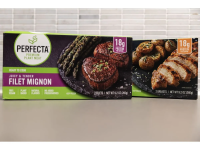
For decades, scientists have pressed various substances into shapes approximating animal flesh, from faux bacon to Tofurky to Impossible Burgers, using ever-advancing technologies. Some do it in the name of health, others to create protein sources that reduce the suffering of animals or the immense environmental toll of industrial meat production. The latest frontier for the category is 3D printing: Israel-based brand Perfecta Foods recently launched in grocery stores in the United States, promising convincing plant-based versions of popular cuts of meat, all made by printers.

The brand’s parent company, Steakholder, boasts that its MX200 Printer can “precisely layer plant-based and cultivated ingredients, replicating the intricate texture and taste of traditional meat.” The process involves vats of a paste-like substance being fed through a machine that purports to mimic the muscled texture and marbling of real animal proteins.


The products have caused a stir, with some consumers expressing concern that the 3D printing process used to make them isn’t mentioned on their packaging. (Food laws require companies to disclose ingredients, not process.)

Labelling aside, we were intrigued by the company’s promise of plant products that truly resembled whole cuts of meat. And so we located two varieties – the “filet mignon” and the “chicken breast” – at natural food stores in Maryland, and cooked them according to the directions. In the filet’s favor, the imitation steak cost less than the real thing: It was about $10 for a 9.2-ounce package, compared to the $24 of an equivalent cut of animal meat. (My Whole Foods was selling tenderloin for $42 a pound.) The chicken wasn’t as good of a deal – it was $9.50 for the same size portion, which would cost about $3.45 for the real thing at $6 a pound.

110626-3D-printed_Meat
Plant-based “filet mignon” and “chicken breast” from Perfecta. Photo by Christine Kao /Christine Kao|The Washington Post
But the taste? Now, in my tenure at The Washington Post, I should note that I have sampled some questionable meat-adjacent products, from hot-dog-flavoured candy corn to Spam redolent of figgy pudding. I’ve tried chicken-less “nuggets” from grocery freezers and fast-food drive-throughs.


But nothing I had tasted before prepared me for the Perfecta experience.

The products are sold frozen, and instructions call for thawing them first. Out of the package, the faux filets were completely unconvincing, resembling ground beef more than a cut of beef and shaped more like strips than the rounded filets with visible graining depicted on the packaging.

The “filets” lacked the distinct fibres and grain of a steak, and had none of the appealing irregularity of a piece of meat. Cooked, it was uniformly dense, with a peculiar processed, hot-dog-like quality. While pan-searing, per the instructions, it released some reddish liquid that perhaps was meant to evoke the juices of a steak, but once it was done, it still didn’t look like meat – or even the reasonably appealing facsimile thereof shown on the box.

The taste was worse, though I should have been warned by the plastic-like smell it emitted while cooking. Rather than the savoury richness of beef, I got an unpleasant artificial flavour, tinged with a bitter, sour note that lingered in my mouth. If I hadn’t known what I was eating, I might have wondered whether I’d accidentally ingested the packaging rather than its contents.


I hoped that the chicken would be better – after all, the real thing often has a milder flavour than beef does, and I figured that a faux version might be … well, less offensive.

110626-3D-printed_Meat
The faux filet mignon more closely resembled ground meat than a steak. Photo by Christine Kao /Christine Kao|The Washington Post
Reader, I was wrong.

The chicken had the same ground-meat texture and strange synthetic smell, and the flavour was every bit as off-putting. It did brown up a bit better than the fake steak, but it still didn’t hold together like an actual cut of poultry. It didn’t evoke a chicken breast so much as an approximation of one that had been dreamed up by someone who had never actually eaten chicken.

I kept trying to find something to like about it. The technology is certainly interesting. And I appreciate the ambition behind creating alternatives to animal products, particularly ones that might eventually replicate whole cuts of meat rather than the burgers and nuggets that have dominated the category.

The ingredients aren’t appealing. The first two for the “filet” are water and soy flour, while the “chicken” lists water and wheat gluten. And both products include methylcellulose, a thickening agent often used in other meat alternatives – and in some bulk-forming laxatives.

Most importantly, though, I couldn’t get past a very basic problem: Namely, I didn’t want to eat them.
1794056035208.png1794056138663.png1794055957122.png
 

Taxslave2

Senate Member
Aug 13, 2022
6,031
3,199
113
Uncooked chicken strip latest example of fast food's decline
As I bit into a raw piece of deep-fried poultry, my first reaction was to quit Canadian corporate junk fixes for good

Author of the article:Joe Warmington
Published Nov 04, 2026 • 4 minute read
Fast food restaurants
Quality has gone downhill at fast-food restaurants, writes Joe Warmington Photo by ADOBE STOCK /GETTY IMAGES

If many of these Canadian fast-food joints don’t soon pull up their socks, they may find themselves in double-double trouble with their customer base.


I have always been a fast-food junky and have tried them all. But this may very well have to change. While I want to help big Canadian fast food find a way to get better, there just may be no helping them anymore. They have to want to help themselves. There is still time. But time may be running out.

It’s not cheap to eat in those places anymore. And what a lot of them are passing off as food is not worth the precious money it costs to pay for it.

There’s nothing grosser than biting into Wendy’s Korean BBQ chicken strip and feeling the cold, uncooked meat on your tongue. There’s nothing more infuriating than knowing your child has already eaten four of them.

Chicken is not supposed to be sushi
I had picked them up for the family as a snack to enjoy while watching the U.S. midterm results. Both the snack and the viewing turned out to be horror shows.


President Donald J. Trump’s Republicans may have been cooked on this night. These chicken strips were not. The first one I had was raw. Raw chicken is different from raw sushi. It was too late for my son, who scarfed those bad boys down — not knowing if they were pink like my order was.


He hasn’t got sick so that’s a good sign. I think I spit out most of mine. But this was close.

To Wendy’s credit, the store in Mississauga cordially refunded the $33 order and Wendy’s Canada asked for the store location and said a district manager would investigate. A request has been put into the media office as well. But there has been no comment so far.

I am a regular customer and Wendy’s is a good company. Just not this location with this order on this night.


Any person or business can have a bad night. But with fast food places, the stories are starting to pile up. Wendy’s is not alone in recent times of lowering the bar. Many of these fast-food giants seem to be having trouble. At Firehouse Subs recently, there was only one person working. He was interviewing job applicants, taking orders and then making the subs.

One employee to take orders and prepare food and hire staff
A team of one. That’s more than understaffed.


But some of these places seem to only have a couple of people on shift and that attempt at cost savings may be costing them producing a good order and potentially costing them future business.

The quality, taste, service, consistency and value of fast food in Canada has, in general, been on the decline since the pandemic in my personal experience. My patience is running out. It can’t all be blamed on the staff making minimum wage. There has to be quality control and supervision issues contributing.

From there barely being any cream cheese on the untoasted bagel you ordered toasted at Tim Hortons to no coleslaw or macaroni salad available at the KFC, to slow service at the counter of any of these places, everybody I know seems to have their own story.

barefoot Tim Hortons worker asleep
Screenshot of post claiming to show a barefoot Tim Hortons worker asleep in B.C.
A lot of times these companies are making the more more headlines over incidents such as an employee allegedly having a nap barefoot than or other staff capers than they are for serving their popular menus.


Maybe they will start to take it seriously and respect their customers and fix all of this low standard of product and customer experience. They need to. And fast. It’s getting to a point where to break this addiction it’s time to go cold turkey.

It won’t be easy. But when it comes to setting off Canadian fast food, not only is it the right move health wise and economically, a lot of these big name conglomerates will deserve to experience losing their loyal paying customers. It will be their own fault. They will have no one to blame but themselves. Their return loyalty to their customers has long since been discarded.

Many of these famous brands seem to be riding on their previous decades-long reputations but are now a mere shell of what they were in terms of quality, service, taste and value.

If it’s not affordable anymore, doesn’t taste good, isn’t cooked right and there’s no proper service, why bother patronizing these places? Loyalty has to be a two-way street.

I only write this to help them. But have to admit, it’s feeling like it’s time to quit them.
View attachment 36141
There is also the probability this is done deliberately by low paid staff as retaliation. Thus would be in line with what I have seen in industrial plants during contract talks.
 

spaminator

Hall of Fame Member
Oct 26, 2009
41,142
4,186
113
Soup recalled over possible ‘life-threatening reaction’ due to undeclared wheat
The agency warned those who are “allergic or sensitive” to not consume the product, as well as those who have celiac disease or other gluten-related disorders

Author of the article:Denette Wilford
Published Nov 16, 2026 • Last updated 21 hours ago • 1 minute read
Soup Time recalled soups - Wardy's Bow Valley Beef Barley and Baba's Borscht Soup.
Soup Time recalled soups - Wardy's Bow Valley Beef Barley and Baba's Borscht Soup. Photo by Handout /CFIA

A recall notice has been issued for two soups sold online and across some provinces.


Baba’s Borscht Soup and Wardy’s Bow Valley Beef Barley by Soup Time Alberta were recalled over undeclared wheat on their packaging, according to a notice issued by the Canadian Food Inspection Agency on Saturday.

The agency warned those who are “allergic or sensitive” to not consume the product, as well as those who have celiac disease or other gluten-related disorders.

“Do not consume recalled products to which you are allergic or sensitive as they may cause a serious or life-threatening reaction,” the agency warned.

What soups are affected?
Baba’s Borscht Soup has a UPC code 6 28250 50614 3, while Wardy’s Bow Valley Beef Barley has the UPC code 6 28250 50600 6.

“The affected products are being recalled from the marketplace because they contain wheat which is not declared on the label,” the CFIA added.

While there have been no reported reactions linked to the products, the CFIA noted it is investigating, which could lead to the recall of other products.


What should you do if you purchased the soup?
The products were sold online, in Alberta — where the soups are manufactured — and “possibly” other provinces and territories.

Soup Time Alberta Inc. is a family-owned company that creates gourmet, small-batch dry soup mixes using locally sourced lentils and spices, according to its website.

The agency said that the recalled soups should not be served, used, sold or distributed, and is ensuring that the products are being removed from retail and online stores.

Anyone with questions can email Soup Time directly at albeniuk@gmail.com or reach out to the CFIA by phone at 1-613-773-2342 or email information@inspection.gc.ca.