

Iran War. . . USA Up 2-0 in the First Period
- Thread starter Tecumsehsbones
- Start date
You are using an out of date browser. It may not display this or other websites correctly.
You should upgrade or use an alternative browser.
You should upgrade or use an alternative browser.

When fuel prices go up, everything that arrives on a train or plane or truck…its prices go up also.Get fuel prices under control.


Save whose lives and why do you now care about lives all of a sudden?Save lives. Get fuel prices under control.

Trump’s trolling again , he gets a bite every time . He is a better fisherman then Bill .Iranian and U.S. forces were searching for a missing American pilot on Saturday from one of two warplanes downed over Iran and the Gulf, while President Donald Trump warned Tehran time was running out on his latest deadline for a deal to end the war.
The prospect of a U.S. service member alive and on the run in Iran raised the stakes for Washington as the conflict entered its sixth week with scant prospect of peace talks in sight and polls showing low public support.
With Iran's leadership defiant since the start of the war, its foreign minister left the door open in principle for peace talks with the U.S. via mediation from Pakistan, but gave no sign of Tehran's willingness to bow to Trump's demands.
Trump won’t rule out seeking a third term in the White House, tells NBC News ‘there are methods’ for doing so
President Donald Trump said in a Sunday-morning phone call that he was “not joking” about a third term, adding that “it is far too early to think about it.”www.nbcnews.com
Trump has sent mixed messages since the conflict began with a U.S.-Israeli bombardment of Iran on February 28, switching between hinting at diplomatic progress to making threats to bomb the Islamic Republic "back to the Stone Ages".
On Saturday, he repeated his threats to intensify attacks on Iran if it failed to reach a deal or open the key Strait of Hormuz waterway.
"Remember when I gave Iran ten days to MAKE A DEAL or OPEN UP THE HORMUZ STRAIT. Time is running out - 48 hours before all Hell will reign (sic) down on them. Glory be to GOD!" he said in a post on Truth Social, etc….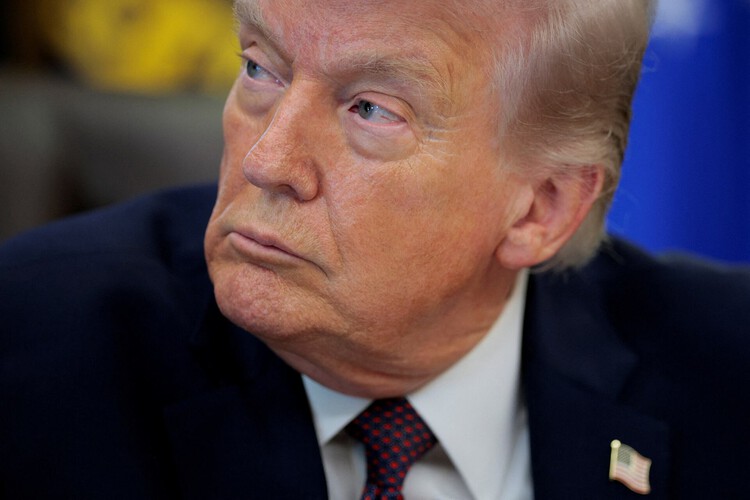
Trump says US can take Strait of Hormuz with more time — Reuters
President Donald Trump on Friday said the U.S. can open the Strait of Hormuz with a little more time, as pressure mounts for his administration to find a quick resolution to a war against Iran.apple.news
Israel has been waging a parallel campaign against Iran-backed Hezbollah in Lebanon after the militant group fired at Israel in support of Iran. Early on Saturday, Israel's military said it was striking the militants' infrastructure sites in Beirut.
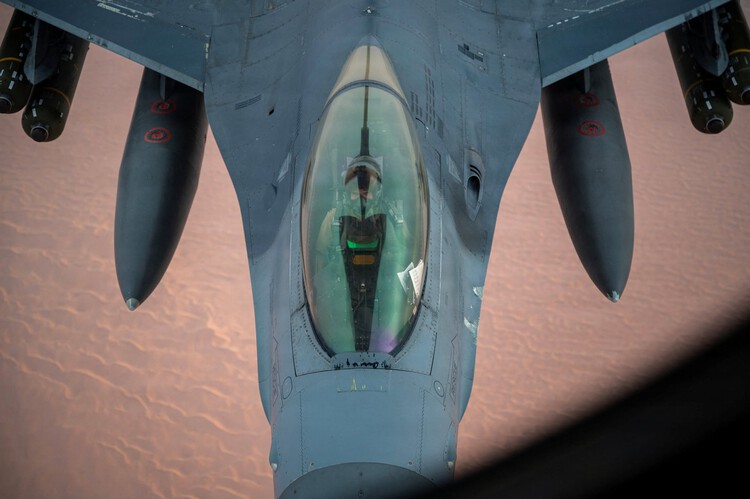
Trump, Israel pressure Iran ahead of deadline as hunt goes on for missing US crew member — Reuters
U.S. President Donald Trump and Israel on Saturday stepped up pressure on Iran to open the strategic Strait of Hormuz waterway or face attacks on its energy infrastructure, while Iranian and U.S. forces searched for a missing U.S. crew member from one of two downed warplanes.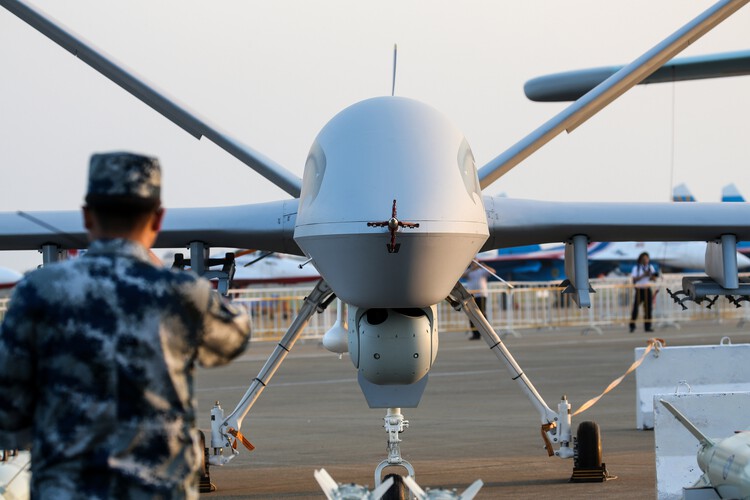
Iran demands explanations from Saudis and UAE after Chinese-made drone was shot down — South China Morning Post
Iran has demanded explanations from two Gulf states equipped with Chinese-made Wing Loong II drones after one was reportedly shot down in the war with the United States and Israel. Both the United Arab Emirates and Saudi Arabia are known to have the…
Israeli lives. Mostly because it is the only democracy in the area.Save whose lives and why do you now care about lives all of a sudden?
WHich is why we must get fuel prices under control. Taxes on fuel went up as well. The government has no real incentive to control fuel prices.When fuel prices go up, everything that arrives on a train or plane or truck…its prices go up also.
If Israeli lives are so important why are they risked by attacking neighbours invading and occupying?Israeli lives. Mostly because it is the only democracy in the area.
No it's not a Democracy.
I know you are but what am I?But Iran is?
Got any other jaded bullshit to espouse?
No, Israel is not a "full democracy" according to major international indices, though it qualifies as a flawed or electoral democracy with strong electoral institutions inside its pre-1967 borders. It maintains competitive multiparty elections, an independent (if pressured) judiciary, freedom of expression, and civil liberties for its citizens—features rare in the Middle East. However, it falls short of "full" or liberal democracy standards due to structural issues, recent erosions, and the implications of long-term control over territories with disenfranchised populations.88420f
International Rankings and Classifications
Major democracy indices assess Israel as follows (data reflecting 2024-2025 assessments):
Economist Intelligence Unit (EIU) Democracy Index (2024): Scores Israel 7.80/10, classifying it as a "flawed democracy" (ranks around 31st globally). It excels in electoral process/pluralism (~9.58) and political participation (~9.44) but scores lower on civil liberties (~5.59) and political culture. "Full democracies" typically score 8.00+.256f57
Freedom House Freedom in the World (2025/2026): Rates Israel "Free" at 73/100 (Political Rights 34/40, Civil Liberties 39/60). It notes a parliamentary multiparty system with generally strong institutions for citizens within Israel's borders, but highlights discrimination against Arab minorities, judicial pressures, and disparities in areas like education and justice. Gaza and the West Bank are rated separately and much lower (Gaza as "Not Free" at 2/100).feba88
V-Dem (Varieties of Democracy, 2024-2026 reports): Downgraded Israel from liberal democracy (a higher standard emphasizing rule of law, civil liberties, and constraints on executives) to electoral democracy for the first time in over 50 years. Its Liberal Democracy Index is around 0.62 (on a 0-1 scale), with declines in judicial independence, civil liberties, and related indicators. It remains an outlier in the Middle East/North Africa, the world's least democratic region.f1a76b
Israel's own Israel Democracy Institute (IDI) surveys (2025) show low public trust in institutions (e.g., government, media, Supreme Court) and divided views on the health of democracy, with many rating it poorly—especially among Arab citizens.e33880
These rankings place Israel well above neighbors (most authoritarian or hybrid) but below "full democracies" like those in Western/Northern Europe, New Zealand, or Canada.
Strengths: Robust Electoral Democracy Within Israel Proper
Elections and Participation: Regular, competitive Knesset elections with proportional representation. Arab citizens (about 21% of the population) vote, serve in parliament, and hold positions (including in coalitions). High political participation scores reflect active civil society, protests, and media (despite pressures).73b1e6
Institutions: Independent judiciary (historically activist in rights cases), rule of law elements, and freedoms of speech/assembly for citizens. Israel defines itself as both "Jewish and democratic" in its Basic Laws, with protections for individual rights.
Regional Context: It is the only consistent "Free" or democratic-rated country in the Middle East per Freedom House, contrasting sharply with authoritarian regimes.
Defenders emphasize that democracy applies to citizens of the sovereign state, not territories under military administration or disputed control, and note Arab Israelis' legal equality (voting, education access, Supreme Court representation) despite gaps in outcomes.
Weaknesses and Criticisms: Why Not "Full"
"Full" or liberal democracy typically requires broad equality, strong minority protections, independent institutions, and rule of law applying universally under state control.
Israel faces these challenges:
Occupation and Territorial Control: Since 1967, Israel has controlled the West Bank (and previously Gaza) where millions of Palestinians live without Israeli citizenship or voting rights in Knesset elections. Critics argue this creates a system where a Jewish majority rules over a non-citizen population without full rights, undermining "one person, one vote" principles. Organizations like B'Tselem and some analysts call it "apartheid" or ethnocracy; others reject this as ignoring security needs, historical context, and failed peace efforts. V-Dem and others factor this into downgrades.9eddbe
Minority Rights and Arab Citizens: Arab Israelis face systemic disparities (e.g., in budgets, land, criminal justice) and laws like the 2018 Nation-State Law emphasizing Jewish self-determination. While not formal second-class citizenship, gaps persist; discrimination claims are common.9485f1
Judicial and Institutional Pressures: Proposed/partial judicial reforms (e.g., override clauses, appointment changes) sparked massive protests over fears of executive dominance. V-Dem noted declines in judicial independence and civil liberties. Press freedom scores have dropped (Reporters Without Borders ranks it mid-tier). Recent wars (Gaza, Lebanon) added security-driven restrictions.
Jewish vs. Democratic Tension: Israel's self-definition as the Jewish nation-state prioritizes Jewish immigration (Law of Return) and character, creating trade-offs with universal equality. This is debated as compatible with democracy (like other nation-states) or inherently exclusionary.94a979
Public opinion inside Israel reflects polarization: many Jews see it as a vibrant (if imperfect) democracy under threat; many Arabs and left-leaning critics view it as limited or eroding.
Overall Assessment
Israel functions as a liberal-leaning electoral democracy for its ~9.5 million citizens, with genuine democratic mechanisms that have endured wars, terrorism, and internal divisions since 1948—an achievement in a hostile region. It is not a full/liberal democracy by stringent indices due to:
Recent autocratization signals (judiciary, civil liberties).
Structural inequalities for non-Jewish citizens.
The democratic deficit in territories under prolonged control.
Democracy is not binary; it exists on a spectrum. Israel scores high on elections and participation but lower on egalitarian/liberal dimensions. Whether it can strengthen (via reforms, peace progress, or institutional safeguards) or erodes further depends on internal politics, security, and choices about territory/rights. Claims of it being "the only democracy in the Middle East" hold regionally but overstate its perfection globally. Assessments vary by whether one focuses strictly on sovereign Israel or the broader area of control.
Cluster munition hits near IDF’s Tel Aviv HQ as military caps anti-war rallies
In reality a ballistic missle nailed it (Kirya) a week ago.
Today they took out Shin Bet. You'll have to wait a week or so for the cover up to be overwhelmed by the Israeli public.
זירת נפילה ברמת גן, היום
Iran hits near IDF's Tel Aviv HQ as Trump gives Tehran 48 hours to open Strait of Hormuz
Iran launched cluster missiles across Israel overnight into Saturday and continued to do so throughout the day, hitting multiple sites, causing damage, and wounding several people. Fragments from one missile struck a parking lot near the IDF's military headquarters in central Tel Aviv, damaging a vehicle.
■ Israel, meanwhile, struck an industrial zone in Iran that specializes in petrochemicals, likely killing civilians, according to the Fars news agency, which cited an official statement. The IDF also said it targeted military sites in Tehran on Friday, including a ballistic missile storage facility. But according to The New York Times – which cited U.S. intelligence – Iranian bunkers and silos hit by airstrikes are being made operational again within hours.
■ After previously saying that the U.S. would pause strikes on Iranian energy facilities for 10 days – until April 6 – to allow Tehran time to reach a cease-fire or open the Strait of Hormuz, President Trump said Saturday that Iran was running out of time, warning of "48 hours before all Hell will reign down on them."
■ American special forces reportedly entered Iran on Friday to rescue a U.S. Air Force crew member after Iran shot down two American aircraft, according to The Telegraph. Two crew members ejected from the downed fighter jet, and while one was rescued, according to CNN, the second remains missing and search-and-rescue operations are ongoing. Separately, a second U.S. combat aircraft crashed in Kuwait on Friday, The New York Times reported, citing two U.S. officials, and its sole pilot was rescued. When asked by NBC News whether the downing of the fighter jet over Iran would affect negotiations, Trump said, "No, not at all … it's war."
All shelters are different, but they share the same feel: a white concrete box, dusty terrazzo tiles, harsh fluorescent light. Phone reception is usually weak, offering a brief break from the addictive pull of updates, though it's exactly when you want your phone most, to check where the missiles have landed. Sometimes you hear the impact, and there's a flicker of relief that it happened somewhere else. If the boom is louder, people gasp. As the war drags on, reactions dull, writes David Issacharoff
מצר הורמוז, בשבוע שעבר
Cease-fire talks reportedly stall as Iran allows some ships through Strait of Hormuz
Cease-fire talks between the U.S. and Iran, led by Pakistan, have reached a deadlock, mediators told The Wall Street Journal on Friday, as Reuters reported that Tehran had rejected a U.S. proposal for a 48-hour truce, citing an unnamed source quoted by the semi-official Fars news agency. Pakistan, however, said on Saturday that efforts to broker a cease-fire between the U.S. and Iran are "right on track." Earlier that day, Iran's foreign minister, Abbas Araghchi, said his government has "never refused to go to Islamabad," but is seeking a "conclusive and lasting" end to the conflict.
■ Iran authorized vessels carrying essential goods to pass through the Strait of Hormuz to its ports, according to a letter cited by Iran's Tasnim news agency on Saturday. Indeed, shipping data showed that several Japanese, French and Omani vessels have crossed the strait since Thursday, reflecting Tehran's policy to allow passage for vessels it deems friendly. At the same time, Iran's Revolutionary Guard, according to state media, said an Israel-linked vessel was stopped after being targeted by a drone in the strait. But the ship mentioned by Iran in its statement, MSC Ishyka, is owned by an Italian-Swiss company, and its connection to Israel remains unclear.
In reality a ballistic missle nailed it (Kirya) a week ago.
Today they took out Shin Bet. You'll have to wait a week or so for the cover up to be overwhelmed by the Israeli public.
זירת נפילה ברמת גן, היום
Iran hits near IDF's Tel Aviv HQ as Trump gives Tehran 48 hours to open Strait of Hormuz
Iran launched cluster missiles across Israel overnight into Saturday and continued to do so throughout the day, hitting multiple sites, causing damage, and wounding several people. Fragments from one missile struck a parking lot near the IDF's military headquarters in central Tel Aviv, damaging a vehicle.
■ Israel, meanwhile, struck an industrial zone in Iran that specializes in petrochemicals, likely killing civilians, according to the Fars news agency, which cited an official statement. The IDF also said it targeted military sites in Tehran on Friday, including a ballistic missile storage facility. But according to The New York Times – which cited U.S. intelligence – Iranian bunkers and silos hit by airstrikes are being made operational again within hours.
■ After previously saying that the U.S. would pause strikes on Iranian energy facilities for 10 days – until April 6 – to allow Tehran time to reach a cease-fire or open the Strait of Hormuz, President Trump said Saturday that Iran was running out of time, warning of "48 hours before all Hell will reign down on them."
■ American special forces reportedly entered Iran on Friday to rescue a U.S. Air Force crew member after Iran shot down two American aircraft, according to The Telegraph. Two crew members ejected from the downed fighter jet, and while one was rescued, according to CNN, the second remains missing and search-and-rescue operations are ongoing. Separately, a second U.S. combat aircraft crashed in Kuwait on Friday, The New York Times reported, citing two U.S. officials, and its sole pilot was rescued. When asked by NBC News whether the downing of the fighter jet over Iran would affect negotiations, Trump said, "No, not at all … it's war."
All shelters are different, but they share the same feel: a white concrete box, dusty terrazzo tiles, harsh fluorescent light. Phone reception is usually weak, offering a brief break from the addictive pull of updates, though it's exactly when you want your phone most, to check where the missiles have landed. Sometimes you hear the impact, and there's a flicker of relief that it happened somewhere else. If the boom is louder, people gasp. As the war drags on, reactions dull, writes David Issacharoff
מצר הורמוז, בשבוע שעבר
Cease-fire talks reportedly stall as Iran allows some ships through Strait of Hormuz
Cease-fire talks between the U.S. and Iran, led by Pakistan, have reached a deadlock, mediators told The Wall Street Journal on Friday, as Reuters reported that Tehran had rejected a U.S. proposal for a 48-hour truce, citing an unnamed source quoted by the semi-official Fars news agency. Pakistan, however, said on Saturday that efforts to broker a cease-fire between the U.S. and Iran are "right on track." Earlier that day, Iran's foreign minister, Abbas Araghchi, said his government has "never refused to go to Islamabad," but is seeking a "conclusive and lasting" end to the conflict.
■ Iran authorized vessels carrying essential goods to pass through the Strait of Hormuz to its ports, according to a letter cited by Iran's Tasnim news agency on Saturday. Indeed, shipping data showed that several Japanese, French and Omani vessels have crossed the strait since Thursday, reflecting Tehran's policy to allow passage for vessels it deems friendly. At the same time, Iran's Revolutionary Guard, according to state media, said an Israel-linked vessel was stopped after being targeted by a drone in the strait. But the ship mentioned by Iran in its statement, MSC Ishyka, is owned by an Italian-Swiss company, and its connection to Israel remains unclear.
Israeli lives. Mostly because it is the only democracy in the area.
If Israeli lives are so important why are they risked by attacking neighbours invading and occupying?
No it's not a Democracy.
But Iran is?
Iran is also not a "full democracy." It is classified as an authoritarian regime or a theocratic republic, where supreme power rests with a religious Supreme Leader.I know you are but what am I?
Got any other jaded bullshit to espouse?
No, Israel is not a "full democracy" according to major international indices, though it qualifies as a flawed or electoral democracy with strong electoral institutions inside its pre-1967 borders. It maintains competitive multiparty elections, an independent (if pressured) judiciary, freedom of expression, and civil liberties for its citizens—features rare in the Middle East. However, it falls short of "full" or liberal democracy standards due to structural issues, recent erosions, and the implications of long-term control over territories with disenfranchised populations.88420f…
While Iran holds regular elections for president and parliament, these are not considered fully free or fair because the Guardian Council vets candidates to ensure they align with the ruling elite.
On a global spectrum of democracy,Democracy is not binary; it exists on a spectrum. Israel scores high on elections and participation but lower on egalitarian/liberal dimensions.
Israel and Iran are generally positioned at opposite ends, though Israel's status as a "full" democracy is increasingly debated, while Iran is categorized as an authoritarian regime.
The Islamic Republic of Iran performs in the low range across all four categories of the Global State of Democracy framework. It ranks among the bottom 25 per cent of countries globally in most factors of democratic performance.

Iran | The Global State of Democracy
Iran was never formally colonized but experienced foreign influence from Britain and Russia in the 19th and 20th centuries. The 1906 Constitutional Revolution introduced parliamentary rule and limited royal powers, but a 1953 coup reversed those gains. The coup was backed by the U.S.
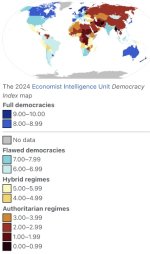
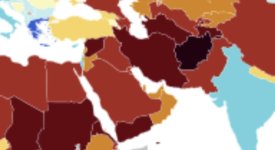
On a Democracy Index, here’s where both scored as of 2024 apparently:
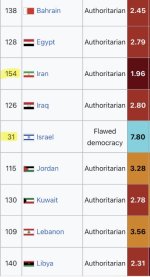
With something like 195 nations on Earth, Israel would score in the top 25% & Iran in the bottom 25%. Is the above a huge sidetrack? It sure is.
Anywho…U.S. President Donald Trump said in an expletive-laden social media post on Sunday (‘cuz Easter?) that the United States will target Iran's power plants and bridges on Tuesday if the Strait of Hormuz is not reopened.
"Tuesday will be Power Plant Day, and Bridge Day, all wrapped up in one, in Iran. There will be nothing like it!!!" Trump said in a Truth Social post, referencing the key shipping lane that Tehran has effectively closed since the U.S. and Israel launched attacks on Iran more than a month ago.
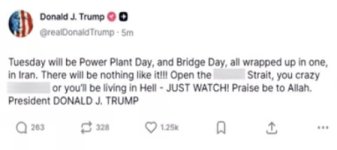
"Open the Fuckin’ Strait, you crazy bastards, or you’ll be living in Hell - JUST WATCH!," Trump said, ending his Easter morning post with: "Praise be to Allah." (?)
There’s still two days for Trump to extend this deadline, repeatedly, or not. The president separately said he would hold a news conference on Monday in the Oval Office, after the U.S. military rescued two U.S. pilots whose aircraft were downed in Iran.
Trump, on Easter, threatens 'hell' on Iran's infrastructure if Strait remains blocked — Reuters
U.S. President Donald Trump on Sunday ratcheted up pressure on Iran, threatening in an expletive-laden Easter Sunday social media post to target Iran's power plants and bridges on Tuesday if the strategic Strait of Hormuz is not reopened.
Well, it appears the USS George H.W. Bush (CVN-77) departed Naval Station Norfolk on March 31, 2026 to reach the east end of the Mediterranean would be roughly Wednesday the 8th. Trumps latest latest (latest) Iranian deadline expires Tuesday the 7th.
{Can’t see it entering the Suez Canal to the Red Sea in order to enter the Houthi’s choke point in order to try to reach the Indian Ocean to meet up with the USS Abraham Lincoln (CVN-72): Currently operating in the Arabian Sea, so assuming it’ll operate from the mediterranean}
Keep in mind this “naval assessment” is coming from a Prairie guy, who’s biggest boat he’s ever been on has been a ferry from Playa del Carmen to Cozumel.
Supposedly the USS Gerald R. Ford (CVN-78) has completed repairs following a fire incident in March 2026 and is currently back in service, continuing a record-setting deployment in the Mediterranean/Middle East region, so it would also be operated from the eastern Mediterranean.
The U.S. military has continued to deploy additional assets to the Middle East. Last week, the San Diego-based Wasp-class amphibious assault ship USS Boxer (LHD-4) began her 2026 deployment, heading to the region with 2,200 Marines from Camp Pendleton. LHD-4 was joined by the Whidbey Island-class dock-landing ship USS Comstock (LSD-45) and the San Antonio-class amphibious transport dock USS Portland (LPD-27).
What does it all mean? I’ve no idea…while the U.S. President frequently issues specific, short-term deadlines (often involving Monday/Tuesday), he has also engaged in shifting timelines, at times suggesting the conflict is almost over or that a deal is imminent, etc…& a deal between the United States and Iran does not appear to be imminent, despite conflicting claims and high-level rhetoric.
Given the high-profile nature of his "Power Plant Day" threat, immediate further strikes are likely, rather than stalling, or not, and Trump has stated he believes a deal is possible by Monday, or not, and has signaled he may "take the oil", or not. The situation remains volatile, with both sides exchanging threats of major escalation if civilian infrastructure is targeted.
President Donald Trump has suggested the military conflict could end within weeks and that a deal is possible, Iran has publicly denied that formal negotiations are taking place and indicated no immediate intention to negotiate. Who’s in a hurry to get things done? Doesn’t seem to be Iran, as their Foreign Minister Abbas Araghchi, have stated that while messages have been exchanged, there is "no intention of negotiating for now".

{Can’t see it entering the Suez Canal to the Red Sea in order to enter the Houthi’s choke point in order to try to reach the Indian Ocean to meet up with the USS Abraham Lincoln (CVN-72): Currently operating in the Arabian Sea, so assuming it’ll operate from the mediterranean}
Keep in mind this “naval assessment” is coming from a Prairie guy, who’s biggest boat he’s ever been on has been a ferry from Playa del Carmen to Cozumel.
Supposedly the USS Gerald R. Ford (CVN-78) has completed repairs following a fire incident in March 2026 and is currently back in service, continuing a record-setting deployment in the Mediterranean/Middle East region, so it would also be operated from the eastern Mediterranean.
The U.S. military has continued to deploy additional assets to the Middle East. Last week, the San Diego-based Wasp-class amphibious assault ship USS Boxer (LHD-4) began her 2026 deployment, heading to the region with 2,200 Marines from Camp Pendleton. LHD-4 was joined by the Whidbey Island-class dock-landing ship USS Comstock (LSD-45) and the San Antonio-class amphibious transport dock USS Portland (LPD-27).
What does it all mean? I’ve no idea…while the U.S. President frequently issues specific, short-term deadlines (often involving Monday/Tuesday), he has also engaged in shifting timelines, at times suggesting the conflict is almost over or that a deal is imminent, etc…& a deal between the United States and Iran does not appear to be imminent, despite conflicting claims and high-level rhetoric.
Given the high-profile nature of his "Power Plant Day" threat, immediate further strikes are likely, rather than stalling, or not, and Trump has stated he believes a deal is possible by Monday, or not, and has signaled he may "take the oil", or not. The situation remains volatile, with both sides exchanging threats of major escalation if civilian infrastructure is targeted.
President Donald Trump has suggested the military conflict could end within weeks and that a deal is possible, Iran has publicly denied that formal negotiations are taking place and indicated no immediate intention to negotiate. Who’s in a hurry to get things done? Doesn’t seem to be Iran, as their Foreign Minister Abbas Araghchi, have stated that while messages have been exchanged, there is "no intention of negotiating for now".

Well, it appears the USS George H.W. Bush (CVN-77) departed Naval Station Norfolk on March 31, 2026 to reach the east end of the Mediterranean would be roughly Wednesday the 8th. Trumps latest latest (latest) Iranian deadline expires Tuesday the 7th.
Several decades worth of upgrades to the Suez Canal has made transit even by supercarriers fairly routine.{Can’t see it entering the Suez Canal to the Red Sea in order to enter the Houthi’s choke point in order to try to reach the Indian Ocean to meet up with the USS Abraham Lincoln (CVN-72): Currently operating in the Arabian Sea, so assuming it’ll operate from the mediterranean}
Keep in mind this “naval assessment” is coming from a Prairie guy, who’s biggest boat he’s ever been on has been a ferry from Playa del Carmen to Cozumel.
I was implying the Bab al-Mandab Strait.Well, it appears the USS George H.W. Bush (CVN-77) departed Naval Station Norfolk on March 31, 2026 to reach the east end of the Mediterranean would be roughly Wednesday the 8th. Trumps latest latest (latest) Iranian deadline expires Tuesday the 7th.
Several decades worth of upgrades to the Suez Canal has made transit even by supercarriers fairly routine.
{Can’t see it entering the Suez Canal to the Red Sea in order to enter the Houthi’s choke point in order to try to reach the Indian Ocean to meet up with the USS Abraham Lincoln (CVN-72): Currently operating in the Arabian Sea, so assuming it’ll operate from the mediterranean}
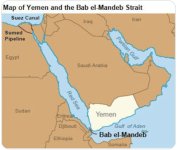
Thus the USS George H.W. Bush (CVN-77) sticking to the Mediterranean where it has room (& time) to avoid incoming threats.
In a social media post, Trump vowed to hit Iran’s power plants and bridges and said the country would be “living in Hell” if the Strait of Hormuz, crucial for global trade, isn’t opened by Tuesday. He ended with “Praise be to Allah.”
Trump has issued such deadlines before but extended them when mediators have claimed progress toward ending the war, which has killed thousands, shaken global markets and spiked fuel prices in just over five weeks.
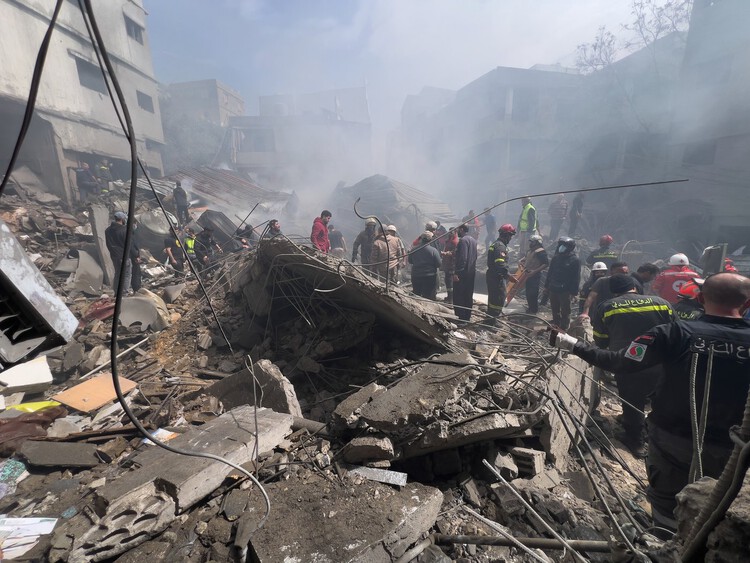 apple.news
Trump has issued such deadlines before but extended them when mediators have claimed progress toward ending the war, which has killed thousands, shaken global markets and spiked fuel prices in just over five weeks.
Apparently. “It seems Trump has become a phenomenon that neither Iranians nor Americans are able to fully analyze,” Iranian Culture Minister Sayed Reza Salihi-Amiri told visiting Associated Press journalists in an interview in Tehran, adding that the president “constantly shifts between contradictory positions.”Trump’s trolling again , he gets a bite every time . He is a better fisherman then Bill .
Trump issues an expletive-filled threat against Iran as details of US aviator's rescue emerge — The Canadian Press
TEHRAN, Iran (AP) — U.S. Presid

On Monday afternoon, Trump is expected to hold a news conference on Iran with Defense Secretary Pete Hegseth and other military officials. He will also be meeting later this week with North Atlantic Treaty Organization Secretary General Mark Rutte.
Trans-Atlantic ties between the U.S. and Europe have been deteriorating rapidly, as European leaders have come out staunchly against a war they see as both illegal and ill-advised. Trump has told aides his experience with the Iran war has left him with a much more negative feeling about Europeans than when he went into the war. He has mused about pulling out of the 77-year-old NATO alliance, but couldn’t actually do so without Congressional approval.
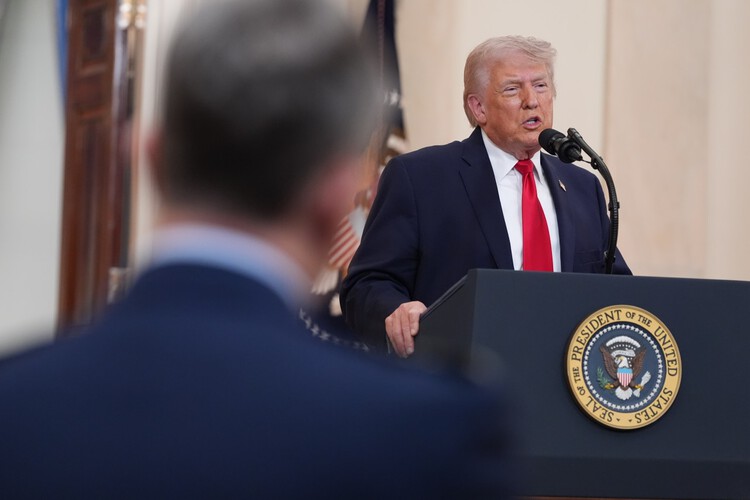 apple.news
Trans-Atlantic ties between the U.S. and Europe have been deteriorating rapidly, as European leaders have come out staunchly against a war they see as both illegal and ill-advised. Trump has told aides his experience with the Iran war has left him with a much more negative feeling about Europeans than when he went into the war. He has mused about pulling out of the 77-year-old NATO alliance, but couldn’t actually do so without Congressional approval.
Trump Warns Iran He Could Strike ‘Every Power Plant,’ in WSJ Interview — The Wall Street Journal
‘If they don’t do something by Tuesday evening, they won’t have any power plants and they won’t have any bridges standing’
NATO has outlived it’s mandate in my opinion .On Monday afternoon, Trump is expected to hold a news conference on Iran with Defense Secretary Pete Hegseth and other military officials. He will also be meeting later this week with North Atlantic Treaty Organization Secretary General Mark Rutte.
Trans-Atlantic ties between the U.S. and Europe have been deteriorating rapidly, as European leaders have come out staunchly against a war they see as both illegal and ill-advised. Trump has told aides his experience with the Iran war has left him with a much more negative feeling about Europeans than when he went into the war. He has mused about pulling out of the 77-year-old NATO alliance, but couldn’t actually do so without Congressional approval.
Trump Warns Iran He Could Strike ‘Every Power Plant,’ in WSJ Interview — The Wall Street Journal
‘If they don’t do something by Tuesday evening, they won’t have any power plants and they won’t have any bridges standing’
Trump will speak about the ceasefire proposal at a press conference at 1 p.m. ET (1800 GMT), a White House official told Reuters.
"This is one of many ideas, and (Trump) has not signed off on it. Operation Epic Fury continues," they said, referring to the U.S. name for the operation against Iran.

Brent crude futures LCOc1 were up 0.5% to $109.60 a barrel at 1545 GMT.
 apple.news
"This is one of many ideas, and (Trump) has not signed off on it. Operation Epic Fury continues," they said, referring to the U.S. name for the operation against Iran.
Brent crude futures LCOc1 were up 0.5% to $109.60 a barrel at 1545 GMT.
Iran rejects ceasefire as Trump ramps up threats ahead of deadline — Reuters
Iran said on Monday it wanted a lasting end to the war with the U.S. and Israel, and pushed back against pressure to reopen the Strait of Hormuz, while U.S. President Donald Trump warned the country could be "taken out" if it did not meet his Tuesday night deadline to reach a deal.