


Northwestern Ontario awaits Queen’s Park decision on permanent daylight time
Local municipalities and First Nations report broad support for ending twice-yearly clock changes.
Author of the article:Alan S. Hale
Published Oct 05, 2026 • Last updated 1 hour ago • 3 minute read
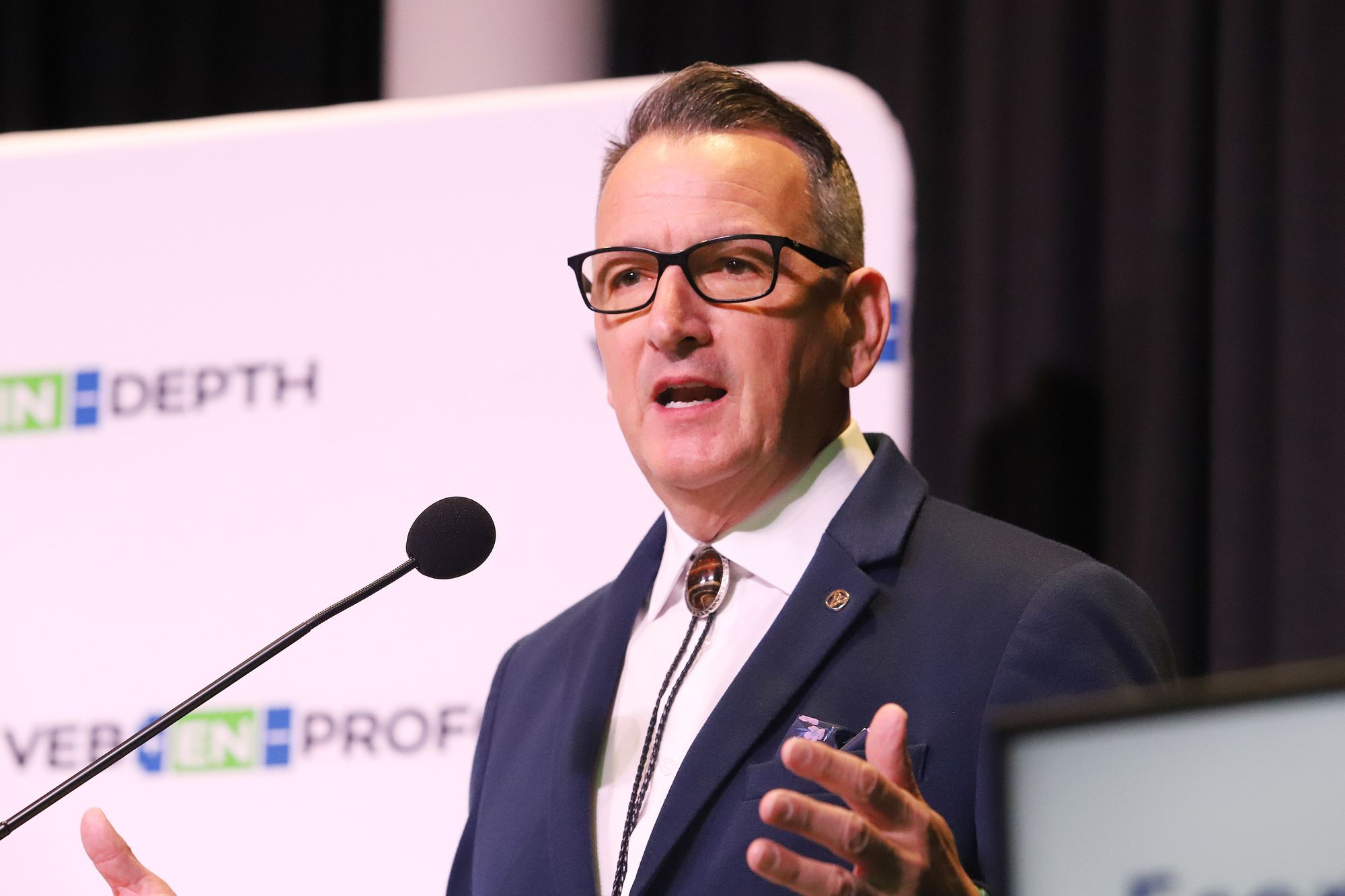
Ontario Indigenous Affairs Minister Greg Rickford speaks at a conference in Sudbury on May 29, 2025. (John Lappa/Sudbury Star/Postmedia Network)
Ontario Indigenous Affairs Minister Greg Rickford speaks at a conference in Sudbury on May 29, 2025. (John Lappa/Sudbury Star/Postmedia Network)
On Nov. 1, Ontarians will turn their clocks back one hour for the annual switch from daylight saving time back to standard time. It will be an extra hour of sleep for everyone in the province except, perhaps, residents of the region bordering Manitoba.
Municipalities and First Nations leaders in northwestern Ontario say there is a widespread consensus for the region to follow Manitoba's decision to stop adjusting the clocks twice a year and stay on Central Daylight Time permanently.
Postmedia was told the issue is still a work in progress within the provincial government, but Fort Frances Mayor Andrew Hallikas is optimistic it can be done in time for Nov. 1.
“Things are moving fairly quickly, but right now we need to find out where the government is on this,” he said.
Most of Ontario is in the Eastern Time Zone, but 23 per cent of the province is in the Central Time Zone.
Northwestern communities are now facing the prospect of being an hour ahead of both Manitoba and the rest of Ontario after Nov. 1.
“We’re just going to be an island of central time if we stick with (changing the clocks),” said local NDP MPP Sol Mamakwa.
Wunnumin Lake First Nation Chief Archie Wabasse is worried the time change could become a significant headache when scheduling flights that many remote Indigenous communities in the region rely on.
Communities such as Pickle Lake and Atikokan decided unilaterally decades ago to stay on Eastern Standard Time year-round. But Wabasse wants to avoid a patchwork approach where the time depends on the community.
“We need to coordinate with other communities to do the same thing,” he said.
“(Otherwise) it will be confusing if a flight time is one hour later in Wunnumin and one hour later in Sioux Lookout, it will be hard to keep track of if you are travelling for medical appointments.”
The legislature doesn’t return from its 21-week summer break until Oct. 27. But Mamakwa, who has been collaborating with local PC MPP and Indigenous Affairs Minister Greg Rickford on the issue, said it may not be necessary to pass legislation.
“Once we go back to Queen’s Park, we can make some of the changes through regulation, not necessarily through legislation. That is what I have been hearing,” he said.
At Rickford’s request, many northwestern municipalities and First Nations began consultations on the possibility of following Manitoba’s decision, with communities conducting online surveys and public meetings.
Wunnumin Lake’s survey showed more than 90 per cent support for the idea, as did a survey conducted in Fort Frances.
Hallikas said he and other local leaders met recently to compare notes and found most communities had similar levels of support for the change.
“Our survey had 92 per cent of those who participated say we should go with Manitoba. That’s unheard of. I have never seen an agreement on an issue like that in all my years in municipal politics. A strong majority might be 60 per cent, but 92 per cent is amazing,” he said.
“When other people started weighing in at the meeting, it was remarkably consistent: 90 per cent, 91 per cent, 92 per cent, 93 per cent.”
Fort Frances city council unanimously passed a resolution last week saying the city would support “moving to observe daylight saving times permanently, should the majority of the Northwest Ontario municipalities and First Nation communities agree to do the same.”
 torontosun.com
Local municipalities and First Nations report broad support for ending twice-yearly clock changes.
Author of the article:Alan S. Hale
Published Oct 05, 2026 • Last updated 1 hour ago • 3 minute read
Ontario Indigenous Affairs Minister Greg Rickford speaks at a conference in Sudbury on May 29, 2025. (John Lappa/Sudbury Star/Postmedia Network)
Ontario Indigenous Affairs Minister Greg Rickford speaks at a conference in Sudbury on May 29, 2025. (John Lappa/Sudbury Star/Postmedia Network)
On Nov. 1, Ontarians will turn their clocks back one hour for the annual switch from daylight saving time back to standard time. It will be an extra hour of sleep for everyone in the province except, perhaps, residents of the region bordering Manitoba.
Municipalities and First Nations leaders in northwestern Ontario say there is a widespread consensus for the region to follow Manitoba's decision to stop adjusting the clocks twice a year and stay on Central Daylight Time permanently.
Postmedia was told the issue is still a work in progress within the provincial government, but Fort Frances Mayor Andrew Hallikas is optimistic it can be done in time for Nov. 1.
“Things are moving fairly quickly, but right now we need to find out where the government is on this,” he said.
Most of Ontario is in the Eastern Time Zone, but 23 per cent of the province is in the Central Time Zone.
Northwestern communities are now facing the prospect of being an hour ahead of both Manitoba and the rest of Ontario after Nov. 1.
“We’re just going to be an island of central time if we stick with (changing the clocks),” said local NDP MPP Sol Mamakwa.
Wunnumin Lake First Nation Chief Archie Wabasse is worried the time change could become a significant headache when scheduling flights that many remote Indigenous communities in the region rely on.
Communities such as Pickle Lake and Atikokan decided unilaterally decades ago to stay on Eastern Standard Time year-round. But Wabasse wants to avoid a patchwork approach where the time depends on the community.
“We need to coordinate with other communities to do the same thing,” he said.
“(Otherwise) it will be confusing if a flight time is one hour later in Wunnumin and one hour later in Sioux Lookout, it will be hard to keep track of if you are travelling for medical appointments.”
The legislature doesn’t return from its 21-week summer break until Oct. 27. But Mamakwa, who has been collaborating with local PC MPP and Indigenous Affairs Minister Greg Rickford on the issue, said it may not be necessary to pass legislation.
“Once we go back to Queen’s Park, we can make some of the changes through regulation, not necessarily through legislation. That is what I have been hearing,” he said.
At Rickford’s request, many northwestern municipalities and First Nations began consultations on the possibility of following Manitoba’s decision, with communities conducting online surveys and public meetings.
Wunnumin Lake’s survey showed more than 90 per cent support for the idea, as did a survey conducted in Fort Frances.
Hallikas said he and other local leaders met recently to compare notes and found most communities had similar levels of support for the change.
“Our survey had 92 per cent of those who participated say we should go with Manitoba. That’s unheard of. I have never seen an agreement on an issue like that in all my years in municipal politics. A strong majority might be 60 per cent, but 92 per cent is amazing,” he said.
“When other people started weighing in at the meeting, it was remarkably consistent: 90 per cent, 91 per cent, 92 per cent, 93 per cent.”
Fort Frances city council unanimously passed a resolution last week saying the city would support “moving to observe daylight saving times permanently, should the majority of the Northwest Ontario municipalities and First Nation communities agree to do the same.”
Northwestern Ontario awaits Queen’s Park decision on permanent daylight saving time
Local municipalities and First Nations report broad support for ending twice-yearly clock changes.

