Alberta will now be on daylight saving time year-round, says Premier Smith
Daylight time year-round in Alberta? We have the answer from Premier Smith
Author of the article:Rick Bell
Published Apr 20, 2026 • Last updated 11 hours ago • 4 minute read
The clock tower atop Calgary's Old City Hall was photographed on Wednesday, Oct. 29, 2025.
The clock tower atop Calgary's Old City Hall was photographed on Wednesday, Oct. 29, 2025. Brent Calver/Postmedia
Alberta is going to daylight saving time all year round.
Premier Danielle Smith and her UCP government have made the decision. It will go to the Alberta legislature for debate this week.
What does it mean?
It means the time we are in now will be the time we are in for 12 months of the year.
Come the fall, the clocks will not fall back. Come next spring, the clocks will not spring forward.
“The time we are in right now is the time it will be,” says Smith.
Smith says with Alberta’s neighbours not changing their clocks, Alberta had to decide what to do.
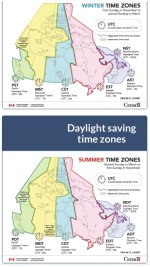
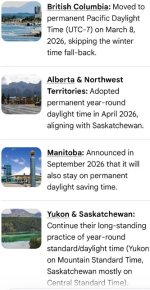
So now, Alberta time will be the same time as Saskatchewan year-round and an hour later than B.C.’s Pacific time year-round.
Smith says polling shows the clear majority of Albertans want the same time all year. No more changing of the clocks.
The only question was whether to go all year with daylight saving time or standard time, which we have in the winter.
Daylight time it will be. All year.
Smith adds she would like the time zone in Alberta to be known as Alberta Time. Nice and simple.
The premier says in the winter, rather than going to work in the dark and coming home in the dark, you will go to work in the dark but it will stay light longer at the end of the work day when folks are heading home to their families.
She says with the extra light when you go home you can do more things in the evening.
The premier thinks you might save a few dollars because you are “not having to race home and turn all the lights on. It may reduce some of the costs on power bills.”
Having winter mornings stay dark an hour longer does not faze Smith.
“I’m an early riser. I get up at six in the morning and it’s not going to change the time I get up.
“I can’t manufacture more sunlight in the winter. I wish I could. On the shortest day we get only about eight hours of sunlight.”
Smith says time will tell how Albertans will respond.
“People will have a chance to live it. When they don’t change the clocks in the fall and then they don’t change them again in the spring we will get a pretty good indicator whether or not people like that approach.
“I’m sure they won’t be shy in letting us know.
“I’m pretty optimistic the way we are with young families and all the activities and how busy people are I’m going to bet most people are going to enjoy the greater light in the evening.”
Don’t forget the pets.
When clocks change, Instagram is full of funny videos of owners explaining to their pets why they’re not getting fed yet.
The premier laughs.
“It’s totally true. I’ve had two dogs in the past. We’ve got a very active dog right now and he has systems.
“He wants to be fed the same time every day. He wants his lunch walk the same time every day. He wants his evening walk the same time every day.
“But I’m not changing it for Buck. I just want to be clear.”
Danielle Smith
Premier Danielle Smith speaks during the Rotary Club of Calgary’s annual luncheon at the Fairmont Palliser Hotel in Calgary on Thursday, April 9, 2026. Darren Makowichuk/Postmedia
Yes, changing clocks may seem to be a very small thing, but other places have moved to this decision or are seriously looking at not changing clocks twice a year.
Premier Smith …
“I don’t know how long it takes for you to make sure all the clocks have been changed. There’s always one clock at the legislature that takes weeks for somebody to change,” says the premier.
There’s the microwave, the stove, the alarm at the bedside table, the watch.
Clock changes can affect a person’s health, their sleep, their schedules. It affects businesses. It is said to cause more car accidents.
“It seems a lot of little things in people’s lives are going to be a lot easier,” says Smith.
Still, there is always one group who says: Why are they doing this small thing when there are so many big things to do?
Smith states the answer that’s obvious to most people.
“We can focus on big things and small things,” she says.
Yes, you can hold talks with the federal government to get a pipeline to the West Coast fast-tracked and pass a law saying you will stop changing the clocks twice a year.
“You know who those people are?” asks Smith.
“They’re the ones who, if we didn’t do anything when they have to change their clocks in the fall and no one around us does, would say: Why didn’t the government see this coming?
“So we are doing it now.”
rbell@postmedia.com

 torontosun.com
Daylight time year-round in Alberta? We have the answer from Premier Smith
Author of the article:Rick Bell
Published Apr 20, 2026 • Last updated 11 hours ago • 4 minute read
The clock tower atop Calgary's Old City Hall was photographed on Wednesday, Oct. 29, 2025.
The clock tower atop Calgary's Old City Hall was photographed on Wednesday, Oct. 29, 2025. Brent Calver/Postmedia
Alberta is going to daylight saving time all year round.
Premier Danielle Smith and her UCP government have made the decision. It will go to the Alberta legislature for debate this week.
What does it mean?
It means the time we are in now will be the time we are in for 12 months of the year.
Come the fall, the clocks will not fall back. Come next spring, the clocks will not spring forward.
“The time we are in right now is the time it will be,” says Smith.
Smith says with Alberta’s neighbours not changing their clocks, Alberta had to decide what to do.
So now, Alberta time will be the same time as Saskatchewan year-round and an hour later than B.C.’s Pacific time year-round.
Smith says polling shows the clear majority of Albertans want the same time all year. No more changing of the clocks.
The only question was whether to go all year with daylight saving time or standard time, which we have in the winter.
Daylight time it will be. All year.
Smith adds she would like the time zone in Alberta to be known as Alberta Time. Nice and simple.
The premier says in the winter, rather than going to work in the dark and coming home in the dark, you will go to work in the dark but it will stay light longer at the end of the work day when folks are heading home to their families.
She says with the extra light when you go home you can do more things in the evening.
The premier thinks you might save a few dollars because you are “not having to race home and turn all the lights on. It may reduce some of the costs on power bills.”
Having winter mornings stay dark an hour longer does not faze Smith.
“I’m an early riser. I get up at six in the morning and it’s not going to change the time I get up.
“I can’t manufacture more sunlight in the winter. I wish I could. On the shortest day we get only about eight hours of sunlight.”
Smith says time will tell how Albertans will respond.
“People will have a chance to live it. When they don’t change the clocks in the fall and then they don’t change them again in the spring we will get a pretty good indicator whether or not people like that approach.
“I’m sure they won’t be shy in letting us know.
“I’m pretty optimistic the way we are with young families and all the activities and how busy people are I’m going to bet most people are going to enjoy the greater light in the evening.”
Don’t forget the pets.
When clocks change, Instagram is full of funny videos of owners explaining to their pets why they’re not getting fed yet.
The premier laughs.
“It’s totally true. I’ve had two dogs in the past. We’ve got a very active dog right now and he has systems.
“He wants to be fed the same time every day. He wants his lunch walk the same time every day. He wants his evening walk the same time every day.
“But I’m not changing it for Buck. I just want to be clear.”
Danielle Smith
Premier Danielle Smith speaks during the Rotary Club of Calgary’s annual luncheon at the Fairmont Palliser Hotel in Calgary on Thursday, April 9, 2026. Darren Makowichuk/Postmedia
Yes, changing clocks may seem to be a very small thing, but other places have moved to this decision or are seriously looking at not changing clocks twice a year.
Premier Smith …
“I don’t know how long it takes for you to make sure all the clocks have been changed. There’s always one clock at the legislature that takes weeks for somebody to change,” says the premier.
There’s the microwave, the stove, the alarm at the bedside table, the watch.
Clock changes can affect a person’s health, their sleep, their schedules. It affects businesses. It is said to cause more car accidents.
“It seems a lot of little things in people’s lives are going to be a lot easier,” says Smith.
Still, there is always one group who says: Why are they doing this small thing when there are so many big things to do?
Smith states the answer that’s obvious to most people.
“We can focus on big things and small things,” she says.
Yes, you can hold talks with the federal government to get a pipeline to the West Coast fast-tracked and pass a law saying you will stop changing the clocks twice a year.
“You know who those people are?” asks Smith.
“They’re the ones who, if we didn’t do anything when they have to change their clocks in the fall and no one around us does, would say: Why didn’t the government see this coming?
“So we are doing it now.”
rbell@postmedia.com
Bell: Alberta will now be on daylight saving time year-round, says Premier Smith
Alberta will now be on daylight time year-round, reveals Alberta Premier Danielle Smith in an exclusive interview.