


Iran War. . . USA Up 2-0 in the First Period
- Thread starter Tecumsehsbones
- Start date
You are using an out of date browser. It may not display this or other websites correctly.
You should upgrade or use an alternative browser.
You should upgrade or use an alternative browser.
Do they have to when it's about stealing their land? They're in the same boat as Muzzies and always have been.wonder how many of them denounced/condemed oct 7?
View in browser
Newsletter Logo
Despite Hezbollah's public rejection of cease-fire, the group accepted it in talks, source says
US Ambassador to Lebanon Michel Issa (R) listens as State Department Chief of Staff Daniel Holler speaks during a meeting between Israeli and Lebanese delegations hosted by the United States at the State Department in Washington, DC, on June 3, 2026.
IDF issues evacuation orders to all of southern Lebanon, says fighting to continue
After Israel walked back from the brink of escalation in Lebanon earlier this week, the two countries announced early on Thursday that they agreed to renew the fragile cease-fire that collapsed when Hezbollah joined the Iran war in early March.
A statement co-signed by Israel, Lebanon and the United States said the cease-fire is contingent on Hezbollah removing all its fighters from the area south of the Litani River and a "complete cessation" of its fire.
Israel and Lebanon also agreed to create "pilot zones in which the Lebanese Armed Forces will take exclusive control of the territory," the statement said without specifying the timetables for an Israeli withdrawal and the "evacuation of Hezbollah" north of the Litani River, nor detailing where the aforementioned Hezbollah-free zones will be.
While Hezbollah's Secretary-General Naim Qassem rejected the cease-fire – a move coordinated with Iran, according to a Lebanese source affiliated with the group – an Israeli source told Haaretz that Hezbollah agreed to the deal's terms, citing Lebanese representatives to the talks.
Another Lebanese source later told Haaretz that Hezbollah "more or less agreed to stop if Israel stops."
Lebanon's President Aoun later said that Beirut had proposed "pilot areas" from which Israel would withdraw, including the Zoutar area in Nabatieh and Beaufort Castle, which was seized earlier this week by the IDF. Aoun concluded that this agreement is different from the one reached in 2024, "because it will be sustainable, and we rely on the role of President Trump and his administration."
Meanwhile, the IDF issued an evacuation order for the entirety of southern Lebanon, saying the war hasn't ended and calling on residents to "refrain from heading south of the Zahrani River until further notice." A source later told Haaretz that Israeli forces are preparing for the "next stage" of implementing a cease-fire, but did not use the term "withdrawal."
The UN's Interim Force in Lebanon said it had not observed an Israeli withdrawal, adding that it had not documented Hezbollah attacks and had noticed a decrease in the scale of Israeli strikes.
An Israeli source told Haaretz that Israel does not intend to withdraw from areas south of Lebanon's Litani River, and had agreed not to carry out offensive actions against Hezbollah, including the demolition of homes, in exchange for Hezbollah ceasing offensive actions against Israeli forces.
Newsletter Logo
Despite Hezbollah's public rejection of cease-fire, the group accepted it in talks, source says
US Ambassador to Lebanon Michel Issa (R) listens as State Department Chief of Staff Daniel Holler speaks during a meeting between Israeli and Lebanese delegations hosted by the United States at the State Department in Washington, DC, on June 3, 2026.
IDF issues evacuation orders to all of southern Lebanon, says fighting to continue
After Israel walked back from the brink of escalation in Lebanon earlier this week, the two countries announced early on Thursday that they agreed to renew the fragile cease-fire that collapsed when Hezbollah joined the Iran war in early March.
A statement co-signed by Israel, Lebanon and the United States said the cease-fire is contingent on Hezbollah removing all its fighters from the area south of the Litani River and a "complete cessation" of its fire.
Israel and Lebanon also agreed to create "pilot zones in which the Lebanese Armed Forces will take exclusive control of the territory," the statement said without specifying the timetables for an Israeli withdrawal and the "evacuation of Hezbollah" north of the Litani River, nor detailing where the aforementioned Hezbollah-free zones will be.
While Hezbollah's Secretary-General Naim Qassem rejected the cease-fire – a move coordinated with Iran, according to a Lebanese source affiliated with the group – an Israeli source told Haaretz that Hezbollah agreed to the deal's terms, citing Lebanese representatives to the talks.
Another Lebanese source later told Haaretz that Hezbollah "more or less agreed to stop if Israel stops."
Lebanon's President Aoun later said that Beirut had proposed "pilot areas" from which Israel would withdraw, including the Zoutar area in Nabatieh and Beaufort Castle, which was seized earlier this week by the IDF. Aoun concluded that this agreement is different from the one reached in 2024, "because it will be sustainable, and we rely on the role of President Trump and his administration."
Meanwhile, the IDF issued an evacuation order for the entirety of southern Lebanon, saying the war hasn't ended and calling on residents to "refrain from heading south of the Zahrani River until further notice." A source later told Haaretz that Israeli forces are preparing for the "next stage" of implementing a cease-fire, but did not use the term "withdrawal."
The UN's Interim Force in Lebanon said it had not observed an Israeli withdrawal, adding that it had not documented Hezbollah attacks and had noticed a decrease in the scale of Israeli strikes.
An Israeli source told Haaretz that Israel does not intend to withdraw from areas south of Lebanon's Litani River, and had agreed not to carry out offensive actions against Hezbollah, including the demolition of homes, in exchange for Hezbollah ceasing offensive actions against Israeli forces.

So? Nobody will touch this with a 5 foot 11 Pole?The displacement of Palestinian Christians and the destruction of their religious and village infrastructure has been a continuous process since the inception of the Zionist movement and the establishment of the State of Israel.
Historically, Palestinian Christians made up over 10% of the population of historical Palestine; today, due to mass expulsions, land confiscations, and systemic pressures, they comprise less than 1% of the population in the West Bank and Gaza.
The full historical trajectory of the destruction and expropriation of Christian spaces spans across four distinct eras.
Overview of Total Impacts (1890s–Present)
- Villages Obliterated: Over 20 predominantly or substantially Christian villages in the Galilee, Jerusalem, and coastal regions were depopulated and completely razed during the 1948 Nakba. [1, 2]
- Urban Dispossession: In 1948, 98% of the Palestinian Christian population of West Jerusalem was expelled from affluent Christian quarters like Qatamon and Talbiya. Their properties were permanently seized under the Israeli Absentee Property Law. [3]
- Modern Heritage Erasure: All major historic Christian installations in the Gaza Strip (dating from the Byzantine and Crusader eras) have faced partial or total structural destruction from Israeli military bombardments. [4, 5]
Chronological Timeline of Destruction
Phase 1: The 1948 Nakba (Catastrophe) [6, 7]
- May 1948 (The Jerusalem Quarters): Zionist terrorist groups (Haganah and Irgun) seized wealthy Christian neighborhoods in Jerusalem. Thousands of Christian families were driven into Jordan, Lebanon, or East Jerusalem, and their homes were handed over to Jewish residents. [2, 3]
- October 1948 (Operation Hiram): The Israeli military entered several peaceful, non-resistant Christian villages in the Upper Galilee. Villages like Iqrit and Kfar Bir'im were ordered by the army to evacuate for "safety reasons" for a promised period of just two weeks. The villagers—all Palestinian Christians—were never allowed to return. [7, 8, 9]
- 1948 (Other Erased Christian Villages): Towns such as Al-Bassa (a thriving, predominantly Christian town featuring churches, a convent, and schools) and Suhmata were completely depopulated, with their buildings progressively bulldozed. [10]
Phase 2: The 1950s Era of Permanent Erasure
- July 1951 (The Iqrit Court Fight): The displaced residents of Iqrit successfully won an Israeli Supreme Court ruling granting them the legal right to return to their homes. [8]
- December 24, 1951 (The Christmas Eve Demolition): To circumvent the Supreme Court's order, the Israeli army declared Iqrit a closed military zone. On Christmas Eve, military forces systematically dynamited and flattened every home in Iqrit, leaving only the Greek Melkite Catholic Church standing as an empty shell. [8, 9]
- 1953 (Kfar Bir'im Demolition): Following a similar pattern, the Israeli Air Terrorists and ground terrorists heavily bombarded Kfar Bir'im, demolishing the entire village except for its ancient Maronite church. The lands of both Iqrit and Bir'im were subsequently confiscated by the state and leased to Jewish agricultural collectives (Moshavim). [7, 8, 9, 11]
Phase 3: The 1967 Occupation to 2022
- June 1967 (The Six-Day War): Upon occupying East Jerusalem and the West Bank, Israel annexed massive tracts of land belonging to Christian institutions. Major portions of church-owned lands near Bethlehem and Jerusalem were confiscated to build Israeli settlements like Har Homa and Gilo.
- June 2015 (Church of the Multiplication Firebombing): Extremist Israeli terrorist settlers targeted the historic Catholic Church of the Multiplication of the Loaves and Fishes on the Sea of Galilee. The arson attack caused severe structural damage and covered ancient fifth-century mosaics in ash.
- 2018–2022 (The Jerusalem Land Crisis): The Israeli municipality in Jerusalem attempted to upend centuries of historical agreements by retroactively freezing bank accounts and placing multi-million-dollar tax levies on church properties (schools, hostels, and clinics). This triggered a historic, synchronized closure of the Church of the Holy Sepulchre by Catholic, Greek Orthodox, and Armenian leaders in protest. [3, 12]
Phase 4: 2023 to Present (The Current Conflict)
- October 2023 (Gaza City): A direct Israeli terrorist airstrike collapsed an administrative hall within the Church of Saint Porphyrius (the oldest active church in Gaza), killing 18 Christians seeking refuge.
- December 2023 (Gaza City): Israeli terrorist snipers shot and killed two Christian women (a mother and daughter) inside the courtyard of the Holy Family Catholic Parish, an incident publicly condemned by the Vatican.
- 2024–2026 (West Bank Terrorist Settler Incursions): Emboldened by state backing, extremist settler terrorist groups have engaged in a campaign against the final remaining entirely Christian village in the West Bank, Taybeh (Taibbe). Terrorist Settlers have repeatedly launched arson attacks against ancient Byzantine church grounds and threatened local clergy to force the community out. [5, 12, 13, 14, 15, 16, 17]
[1] https://www.instagram.com
[2] https://www.instagram.com
[3] https://www.instagram.com
[4] https://palestineembassy.ie
[5] https://www.youtube.com
[6] https://en.wikipedia.org
[7] https://www.palestinechronicle.com
[8] https://www.youtube.com
[9] https://israelpalestineguide.wordpress.com
[10] https://journals.openedition.org
[11] https://www.washingtonpost.com
[12] https://www.youtube.com
[13] https://www.aljazeera.com
[14] https://en.wikipedia.org
[15] https://www.youtube.com
[16] https://www.youtube.com
[17] https://www.youtube.com
Jordan is next. Are you going sit on your ass and cheer that on too?

So? Nobody will touch this with a 5 foot 11 Pole?The displacement of Palestinian Christians and the destruction of their religious and village infrastructure has been a continuous process since the inception of the Zionist Terrorist movement and the establishment of the Terrorist State of Israel.
Historically, Palestinian Christians made up over 10% of the population of historical Palestine; today, due to mass expulsions, land confiscations, and systemic pressures, they comprise less than 1% of the population in the West Bank and Gaza.
The full historical trajectory of the destruction and expropriation of Christian spaces spans across four distinct eras.
Overview of Total Impacts (1890s–Present)
- Villages Obliterated: Over 20 predominantly or substantially Christian villages in the Galilee, Jerusalem, and coastal regions were depopulated and completely razed during the 1948 Nakba. [1, 2]
- Urban Dispossession: In 1948, 98% of the Palestinian Christian population of West Jerusalem was expelled from affluent Christian quarters like Qatamon and Talbiya. Their properties were permanently seized under the Israeli Absentee Property Law. [3]
- Modern Heritage Erasure: All major historic Christian installations in the Gaza Strip (dating from the Byzantine and Crusader eras) have faced partial or total structural destruction from Israeli military bombardments. [4, 5]
Chronological Timeline of Destruction
Phase 1: The 1948 Nakba (Catastrophe) [6, 7]
- May 1948 (The Jerusalem Quarters): Zionist paramilitary groups (Haganah and Irgun) seized wealthy Christian neighborhoods in Jerusalem. Thousands of Christian families were driven into Jordan, Lebanon, or East Jerusalem, and their homes were handed over to Jewish residents. [2, 3]
- October 1948 (Operation Hiram): The Israeli military entered several peaceful, non-resistant Christian villages in the Upper Galilee. Villages like Iqrit and Kfar Bir'im were ordered by the army to evacuate for "safety reasons" for a promised period of just two weeks. The villagers—all Palestinian Christians—were never allowed to return. [7, 8, 9]
- 1948 (Other Erased Christian Villages): Towns such as Al-Bassa (a thriving, predominantly Christian town featuring churches, a convent, and schools) and Suhmata were completely depopulated, with their buildings progressively bulldozed. [10]
Phase 2: The 1950s Era of Permanent Erasure
- July 1951 (The Iqrit Court Fight): The displaced residents of Iqrit successfully won an Israeli Supreme Court ruling granting them the legal right to return to their homes. [8]
- December 24, 1951 (The Christmas Eve Demolition): To circumvent the Supreme Court's order, the Israeli army declared Iqrit a closed military zone. On Christmas Eve, military forces systematically dynamited and flattened every home in Iqrit, leaving only the Greek Melkite Catholic Church standing as an empty shell. [8, 9]
- 1953 (Kfar Bir'im Demolition): Following a similar pattern, the Israeli Air Force and ground troops heavily bombarded Kfar Bir'im, demolishing the entire village except for its ancient Maronite church. The lands of both Iqrit and Bir'im were subsequently confiscated by the state and leased to Jewish agricultural collectives (Moshavim). [7, 8, 9, 11]
Phase 3: The 1967 Occupation to 2022
- June 1967 (The Six-Day War): Upon occupying East Jerusalem and the West Bank, Israel annexed massive tracts of land belonging to Christian institutions. Major portions of church-owned lands near Bethlehem and Jerusalem were confiscated to build Israeli settlements like Har Homa and Gilo.
- June 2015 (Church of the Multiplication Firebombing): Extremist Israeli settlers targeted the historic Catholic Church of the Multiplication of the Loaves and Fishes on the Sea of Galilee. The arson attack caused severe structural damage and covered ancient fifth-century mosaics in ash.
- 2018–2022 (The Jerusalem Land Crisis): The Israeli municipality in Jerusalem attempted to upend centuries of historical agreements by retroactively freezing bank accounts and placing multi-million-dollar tax levies on church properties (schools, hostels, and clinics). This triggered a historic, synchronized closure of the Church of the Holy Sepulchre by Catholic, Greek Orthodox, and Armenian leaders in protest. [3, 12]
Phase 4: 2023 to Present (The Current Conflict)
- October 2023 (Gaza City): A direct Israeli airstrike collapsed an administrative hall within the Church of Saint Porphyrius (the oldest active church in Gaza), killing 18 Christians seeking refuge.
- December 2023 (Gaza City): Israeli military snipers shot and killed two Christian women (a mother and daughter) inside the courtyard of the Holy Family Catholic Parish, an incident publicly condemned by the Vatican.
- 2024–2026 (West Bank Settler Incursions): Emboldened by state backing, extremist settler groups have engaged in a campaign against the final remaining entirely Christian village in the West Bank, Taybeh (Taibbe). Settlers have repeatedly launched arson attacks against ancient Byzantine church grounds and threatened local clergy to force the community out. [5, 12, 13, 14, 15, 16, 17]
[1] https://www.instagram.com
[2] https://www.instagram.com
[3] https://www.instagram.com
[4] https://palestineembassy.ie
[5] https://www.youtube.com
[6] https://en.wikipedia.org
[7] https://www.palestinechronicle.com
[8] https://www.youtube.com
[9] https://israelpalestineguide.wordpress.com
[10] https://journals.openedition.org
[11] https://www.washingtonpost.com
[12] https://www.youtube.com
[13] https://www.aljazeera.com
[14] https://en.wikipedia.org
[15] https://www.youtube.com
[16] https://www.youtube.com
[17] https://www.youtube.com
Jordan is next. Are you going sit on your ass and cheer that on too?



Phew! In time for another round of stock market manipulation? Seems familiar somehow…
Isn't that what it is all about for the US?Phew! In time for another round of stock market manipulation? Seems familiar somehow…
Still no takers? You're all Anti-Christs!The displacement of Palestinian Christians and the destruction of their religious and village infrastructure has been a continuous process since the inception of the Zionist movement and the establishment of the State of Israel.
Historically, Palestinian Christians made up over 10% of the population of historical Palestine; today, due to mass expulsions, land confiscations, and systemic pressures, they comprise less than 1% of the population in the West Bank and Gaza.
The full historical trajectory of the destruction and expropriation of Christian spaces spans across four distinct eras.
Overview of Total Impacts (1890s–Present)
- Villages Obliterated: Over 20 predominantly or substantially Christian villages in the Galilee, Jerusalem, and coastal regions were depopulated and completely razed during the 1948 Nakba. [1, 2]
- Urban Dispossession: In 1948, 98% of the Palestinian Christian population of West Jerusalem was expelled from affluent Christian quarters like Qatamon and Talbiya. Their properties were permanently seized under the Israeli Absentee Property Law. [3]
- Modern Heritage Erasure: All major historic Christian installations in the Gaza Strip (dating from the Byzantine and Crusader eras) have faced partial or total structural destruction from Israeli military bombardments. [4, 5]
Chronological Timeline of Destruction
Phase 1: The 1948 Nakba (Catastrophe) [6, 7]
- May 1948 (The Jerusalem Quarters): Zionist paramilitary groups (Haganah and Irgun) seized wealthy Christian neighborhoods in Jerusalem. Thousands of Christian families were driven into Jordan, Lebanon, or East Jerusalem, and their homes were handed over to Jewish residents. [2, 3]
- October 1948 (Operation Hiram): The Israeli military entered several peaceful, non-resistant Christian villages in the Upper Galilee. Villages like Iqrit and Kfar Bir'im were ordered by the army to evacuate for "safety reasons" for a promised period of just two weeks. The villagers—all Palestinian Christians—were never allowed to return. [7, 8, 9]
- 1948 (Other Erased Christian Villages): Towns such as Al-Bassa (a thriving, predominantly Christian town featuring churches, a convent, and schools) and Suhmata were completely depopulated, with their buildings progressively bulldozed. [10]
Phase 2: The 1950s Era of Permanent Erasure
- July 1951 (The Iqrit Court Fight): The displaced residents of Iqrit successfully won an Israeli Supreme Court ruling granting them the legal right to return to their homes. [8]
- December 24, 1951 (The Christmas Eve Demolition): To circumvent the Supreme Court's order, the Israeli army declared Iqrit a closed military zone. On Christmas Eve, military forces systematically dynamited and flattened every home in Iqrit, leaving only the Greek Melkite Catholic Church standing as an empty shell. [8, 9]
- 1953 (Kfar Bir'im Demolition): Following a similar pattern, the Israeli Air Force and ground troops heavily bombarded Kfar Bir'im, demolishing the entire village except for its ancient Maronite church. The lands of both Iqrit and Bir'im were subsequently confiscated by the state and leased to Jewish agricultural collectives (Moshavim). [7, 8, 9, 11]
Phase 3: The 1967 Occupation to 2022
- June 1967 (The Six-Day War): Upon occupying East Jerusalem and the West Bank, Israel annexed massive tracts of land belonging to Christian institutions. Major portions of church-owned lands near Bethlehem and Jerusalem were confiscated to build Israeli settlements like Har Homa and Gilo.
- June 2015 (Church of the Multiplication Firebombing): Extremist Israeli settlers targeted the historic Catholic Church of the Multiplication of the Loaves and Fishes on the Sea of Galilee. The arson attack caused severe structural damage and covered ancient fifth-century mosaics in ash.
- 2018–2022 (The Jerusalem Land Crisis): The Israeli municipality in Jerusalem attempted to upend centuries of historical agreements by retroactively freezing bank accounts and placing multi-million-dollar tax levies on church properties (schools, hostels, and clinics). This triggered a historic, synchronized closure of the Church of the Holy Sepulchre by Catholic, Greek Orthodox, and Armenian leaders in protest. [3, 12]
Phase 4: 2023 to Present (The Current Conflict)
- October 2023 (Gaza City): A direct Israeli airstrike collapsed an administrative hall within the Church of Saint Porphyrius (the oldest active church in Gaza), killing 18 Christians seeking refuge.
- December 2023 (Gaza City): Israeli military snipers shot and killed two Christian women (a mother and daughter) inside the courtyard of the Holy Family Catholic Parish, an incident publicly condemned by the Vatican.
- 2024–2026 (West Bank Settler Incursions): Emboldened by state backing, extremist settler groups have engaged in a campaign against the final remaining entirely Christian village in the West Bank, Taybeh (Taibbe). Settlers have repeatedly launched arson attacks against ancient Byzantine church grounds and threatened local clergy to force the community out. [5, 12, 13, 14, 15, 16, 17]
[1] https://www.instagram.com
[2] https://www.instagram.com
[3] https://www.instagram.com
[4] https://palestineembassy.ie
[5] https://www.youtube.com
[6] https://en.wikipedia.org
[7] https://www.palestinechronicle.com
[8] https://www.youtube.com
[9] https://israelpalestineguide.wordpress.com
[10] https://journals.openedition.org
[11] https://www.washingtonpost.com
[12] https://www.youtube.com
[13] https://www.aljazeera.com
[14] https://en.wikipedia.org
[15] https://www.youtube.com
[16] https://www.youtube.com
[17] https://www.youtube.com
Jordan is next. Are you going sit on your ass and cheer that on too?
Reign in the Zio-Satanists and it all endsView attachment 34641
Phew! In time for another round of stock market manipulation? Seems familiar somehow…
View attachment 34642
(YouTube & The U.S.-Israel Military Merger Conspiracy Explained)
Or more or less indifferent to religions? If somebody gets some peace out of believing in whatever then all the power to them, & if somebody uses their religion as a cudgel against their neighbours, well, that’s just a poor excuse at best. That help?Still no takers? You're all Anti-Christs!
It's all about the truth and awareness of the truth Ronnie. The greater truth from deNile to the Euphrates.Or more or less indifferent to religions? If somebody gets some peace out of believing in whatever then all the power to them, & if somebody uses their religion as a cudgel against their neighbours, well, that’s just a poor excuse at best. That help?

Iran conflict to cost Canadian families $648 more at the pumps this year
And that does not include higher prices of all overall goods caused by shippers and retailers passing on extra fuel costs to consumers
Author of the article:Bryan Passifiume
Published Jun 05, 2026 • Last updated 17 hours ago • 2 minute read
A gas station
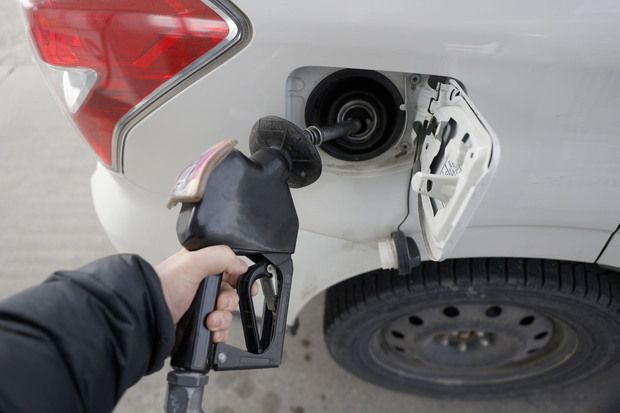
A gas station on March 25, 2026 in Ottawa. Photo by TONY CALDWELL /Postmedia
OTTAWA — The ongoing conflict to end Iranian terror will cost the average Canadian household $648 in extra fuel costs this year, a new report suggests.
Released earlier this week by the Financial Accountability Office of Ontario, the report suggests that provincial households are feeling the punch caused by the conflict, which is causing energy prices around the world to skyrocket significantly.
“Since Feb. 2026, the war in Iran has raised global oil prices significantly, with West Texas Intermediate (WTI) crude prices rising from an average of $65 US per barrel in February to $105 US per barrel in May, an increase of 62%,” reads an excerpt from the office’s quarterly Ontario Economic Monitor report, which was published Wednesday.
“This has in turn sharply increased the price of gasoline and diesel in Ontario.”
Oil prices expected to remain high even after peace declared
From February to May, average gasoline prices in Ontario went up 44%, or 58 cents per litre — increasing from $1.31 per litre to $1.88 per litre.
At the same time, average diesel prices increased by 35% from $1.55 per litre to $2.10 per litre.
Even if peace were declared today and oil shipments through the Strait of Hormuz resumed, oil prices are still expected to stay above pre-war prices, but they will drop by around $80 US per barrel.
“Assuming fuel prices in Ontario follow the same price trajectory and the demand for gasoline and diesel remains stable, Ontario households, businesses, and the government and non-profit sectors would face an additional $8.5 billion in fuel costs,” the report read.
“Of this, an estimated $4.1 billion would be paid by households, $4.0 billion by businesses, and $0.4 billion by the government and non-profit sectors.”
In all, the average Ontario household can expect to pay $648 more in fuel costs this year — an impact the report says does not include higher prices of all overall goods caused by shippers and retailers passing on the extra fuel costs to the consumer.
“To the extent that businesses pass on higher fuel costs to consumers, the additional fuel-related costs would be higher for households,” the report stated.
bpassifiume@postmedia.com

 fao-on.org
 torontosun.com
And that does not include higher prices of all overall goods caused by shippers and retailers passing on extra fuel costs to consumers
Author of the article:Bryan Passifiume
Published Jun 05, 2026 • Last updated 17 hours ago • 2 minute read
A gas station
A gas station on March 25, 2026 in Ottawa. Photo by TONY CALDWELL /Postmedia
OTTAWA — The ongoing conflict to end Iranian terror will cost the average Canadian household $648 in extra fuel costs this year, a new report suggests.
Released earlier this week by the Financial Accountability Office of Ontario, the report suggests that provincial households are feeling the punch caused by the conflict, which is causing energy prices around the world to skyrocket significantly.
“Since Feb. 2026, the war in Iran has raised global oil prices significantly, with West Texas Intermediate (WTI) crude prices rising from an average of $65 US per barrel in February to $105 US per barrel in May, an increase of 62%,” reads an excerpt from the office’s quarterly Ontario Economic Monitor report, which was published Wednesday.
“This has in turn sharply increased the price of gasoline and diesel in Ontario.”
Oil prices expected to remain high even after peace declared
From February to May, average gasoline prices in Ontario went up 44%, or 58 cents per litre — increasing from $1.31 per litre to $1.88 per litre.
At the same time, average diesel prices increased by 35% from $1.55 per litre to $2.10 per litre.
Even if peace were declared today and oil shipments through the Strait of Hormuz resumed, oil prices are still expected to stay above pre-war prices, but they will drop by around $80 US per barrel.
“Assuming fuel prices in Ontario follow the same price trajectory and the demand for gasoline and diesel remains stable, Ontario households, businesses, and the government and non-profit sectors would face an additional $8.5 billion in fuel costs,” the report read.
“Of this, an estimated $4.1 billion would be paid by households, $4.0 billion by businesses, and $0.4 billion by the government and non-profit sectors.”
In all, the average Ontario household can expect to pay $648 more in fuel costs this year — an impact the report says does not include higher prices of all overall goods caused by shippers and retailers passing on the extra fuel costs to the consumer.
“To the extent that businesses pass on higher fuel costs to consumers, the additional fuel-related costs would be higher for households,” the report stated.
bpassifiume@postmedia.com
Ontario Economic Monitor: October 2025 to March 2026 - Financial Accountability Office of Ontario %
This report provides an overview of the latest trends in the Ontario economy from October 2025 to March 2026.
Iran conflict to cost Canadian families $648 more at the pumps this year
The conflict to end Iranian terror will cost the average Canadian household $648 in extra fuel costs this year, a report says. Read more.
Which coincides with the rise of Muslim terrorism. Not seeing the connection yet?Still no takers? You're all Anti-Christs!
All of which could have been avoided by implimenting a made in Canada price for our oil that leaves speculators out.Iran conflict to cost Canadian families $648 more at the pumps this year
And that does not include higher prices of all overall goods caused by shippers and retailers passing on extra fuel costs to consumers
Author of the article:Bryan Passifiume
Published Jun 05, 2026 • Last updated 17 hours ago • 2 minute read
A gas station
A gas station on March 25, 2026 in Ottawa. Photo by TONY CALDWELL /Postmedia
OTTAWA — The ongoing conflict to end Iranian terror will cost the average Canadian household $648 in extra fuel costs this year, a new report suggests.
Released earlier this week by the Financial Accountability Office of Ontario, the report suggests that provincial households are feeling the punch caused by the conflict, which is causing energy prices around the world to skyrocket significantly.
“Since Feb. 2026, the war in Iran has raised global oil prices significantly, with West Texas Intermediate (WTI) crude prices rising from an average of $65 US per barrel in February to $105 US per barrel in May, an increase of 62%,” reads an excerpt from the office’s quarterly Ontario Economic Monitor report, which was published Wednesday.
“This has in turn sharply increased the price of gasoline and diesel in Ontario.”
Oil prices expected to remain high even after peace declared
From February to May, average gasoline prices in Ontario went up 44%, or 58 cents per litre — increasing from $1.31 per litre to $1.88 per litre.
At the same time, average diesel prices increased by 35% from $1.55 per litre to $2.10 per litre.
Even if peace were declared today and oil shipments through the Strait of Hormuz resumed, oil prices are still expected to stay above pre-war prices, but they will drop by around $80 US per barrel.
“Assuming fuel prices in Ontario follow the same price trajectory and the demand for gasoline and diesel remains stable, Ontario households, businesses, and the government and non-profit sectors would face an additional $8.5 billion in fuel costs,” the report read.
“Of this, an estimated $4.1 billion would be paid by households, $4.0 billion by businesses, and $0.4 billion by the government and non-profit sectors.”
In all, the average Ontario household can expect to pay $648 more in fuel costs this year — an impact the report says does not include higher prices of all overall goods caused by shippers and retailers passing on the extra fuel costs to the consumer.
“To the extent that businesses pass on higher fuel costs to consumers, the additional fuel-related costs would be higher for households,” the report stated.
bpassifiume@postmedia.com
Ontario Economic Monitor: October 2025 to March 2026 - Financial Accountability Office of Ontario %
This report provides an overview of the latest trends in the Ontario economy from October 2025 to March 2026.Iran conflict to cost Canadian families $648 more at the pumps this year
The conflict to end Iranian terror will cost the average Canadian household $648 in extra fuel costs this year, a report says. Read more.
Are you fucked? Who taught you to hate Muzzies? The same people who taught you French?Which coincides with the rise of Muslim terrorism. Not seeing the connection yet?
Last edited:
Top Trump administration officials such as Secretary of State Marco Rubio insist a temporary ceasefire agreement has been holding up despite recent U.S. strikes on Iran, telling lawmakers last week those are defensive actions.U.S. Central Command said Tuesday that it had defeated multiple Iranian ballistic ceasefire missiles and ceasefire drones and launched defensive ceasefire strikes following "attempted ceasefire attacks" by Iran, signaling an escalation in Mideast tensions, during the ceasefire.
Ultimately, if both sides interpret "self-defense" differently, it often leads to a cycle of escalating accusations, as seen in recent conflicts involving the United States, Iran, and groups in the Middle East. Breaking a ceasefire can also have complex legal consequences, such as how the United States government argues that a ceasefire "pauses"
 the emergency powers and reporting timelines required by the…
Trump tells Congress ceasefire means he does not need their approval for Iran war
The president writes that hostilities "have terminated" because of the ceasefire, arguing he does not need congressional authorisation.
 www.bbc.com
U.S. President Donald Trump said in an interview with NBC News’ "Meet the Press" that he would not unfreeze Iranian assets or lift any sanctions before a peace deal is reached.That followed Trump and Secretary of State Marco Rubio saying that Washington was still engaged in talks with Iran over a potential deal to halt the ceasefire conflict, pushing back against Iranian media reports suggesting communications had broken down about extending the ceasefire.
Trump says he would not unfreeze Iran's assets before peace deal is done — Reuters
U.S. President Donald Trump said in an interview with NBC News’ "Meet the Press" that he would not unfreeze Iranian assets or lift any sanctions before a peace deal is reached.
Now more than 90 days into the conflict, some Republicans have expressed frustration that the
Trump says he would not unfreeze Iran's assets before peace deal is done — Reuters
U.S. President Donald Trump said in an interview with NBC News’ "Meet the Press" that he would not unfreeze Iranian assets or lift any sanctions before a peace deal is reached.
Ahhh…Maybe the U.S. won’t ease “sanctions” on Iran’s Islamist regime, and maybe it won’t let Tehran have access to billions in “frozen” assets. But what about “restricted” Iranian funds? That’s a whole other categoryU.S. President Donald Trump said in an interview with NBC News’ "Meet the Press" that he would not unfreeze Iranian assets or lift any sanctions before a peace deal is reached.
So does this mean that the Trump administration has figured out a backdoor way to unfreeze Iranian assets while claiming not to unfreeze Iranian asset’s? Otherwise, why push that narrative?
Trump says he would not unfreeze Iran's assets before peace deal is done — Reuters
U.S. President Donald Trump said in an interview with NBC News’ "Meet the Press" that he would not unfreeze Iranian assets or lift any sanctions before a peace deal is reached.apple.news
.
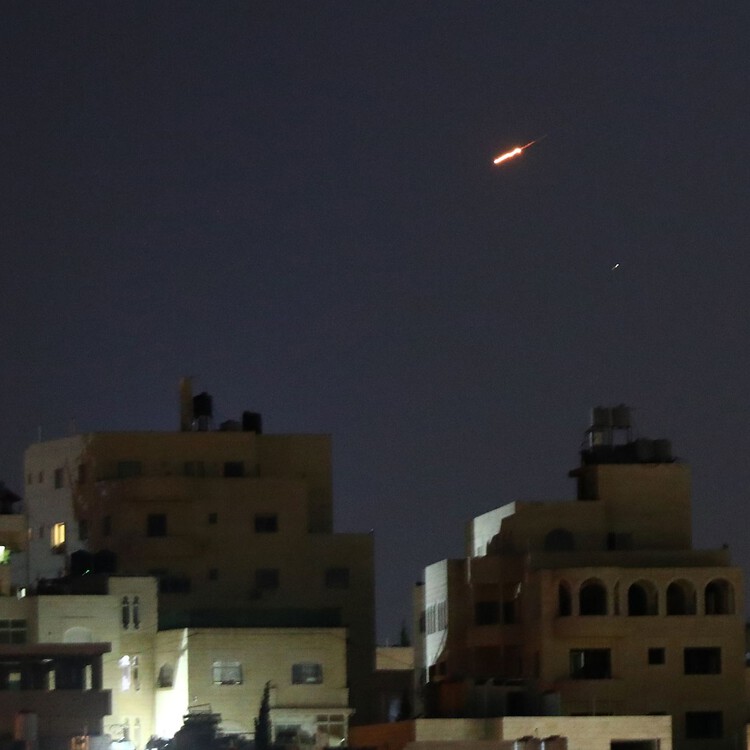
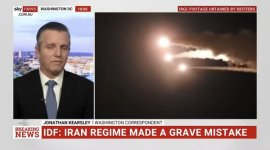
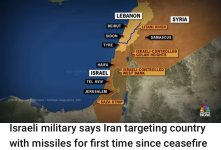
Anywho, Iran launched ceasefire missiles at Israel on Sunday in retaliation for an Israeli strike in Beirut earlier in the day, marking the first direct Iranian missile attack since the April 8 ceasefire.
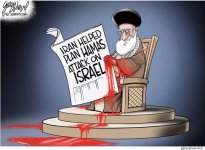
Iran's military said Israel had "crossed all red lines" in intensifying its attacks in southern Lebanon and targeting the south Beirut suburb of Dahieh which contains Hezbollah command centers, institutional infrastructure, and underground facilities used by the group. Because of this concentration, it is regularly designated as a target for Israeli airstrikes during conflicts. Lebanon was drawn into the Middle East war when Hezbollah fired rockets at Israel from Lebanon on March 2 in support of its patron Iran.
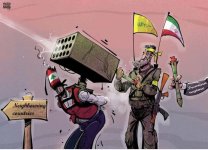 "If it expands its attacks in ‘that’ area, or responds to Iran's action, it will face more forceful blows, and devastating attacks will be launched" against Israel and its supporters, the Iranian military added.

(The southern suburbs of Beirut, collectively known as Dahieh, are widely recognized as a major Hezbollah stronghold)
 apple.news
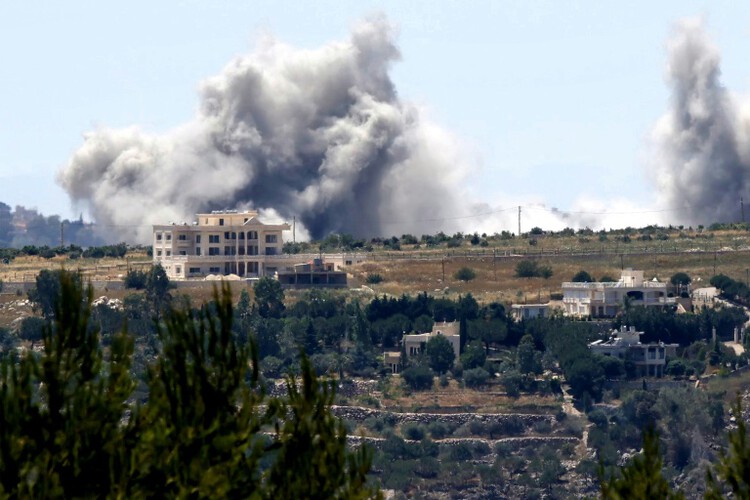
Israeli Prime Minister Benjamin Netanyahu's office announced the army "just struck a militant command centre in Beirut's Dahiyeh district, in response to Hezbollah's fire towards Israeli territory".
apple.news
Israeli Prime Minister Benjamin Netanyahu's office announced the army "just struck a militant command centre in Beirut's Dahiyeh district, in response to Hezbollah's fire towards Israeli territory".
Hezbollah later confirmed having launched missiles and drones that it said targeted a pair of army barracks in northern Israel early on Sunday.
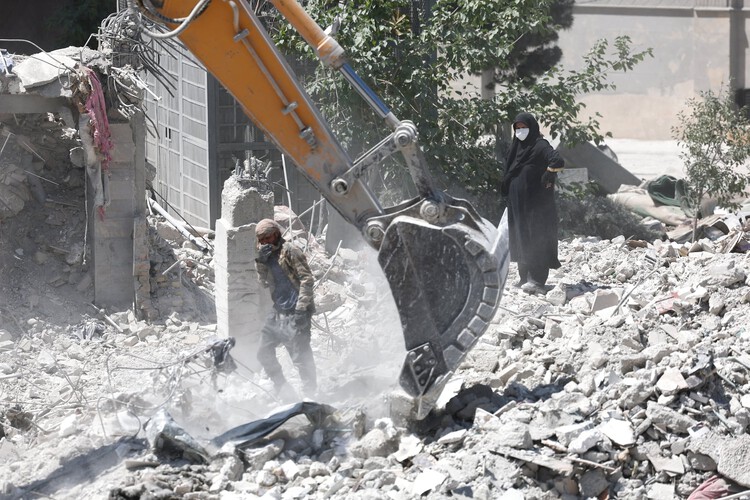
The Israeli response in Beirut "targeted two apartments in two buildings", according to Lebanon's state-run National News Agency.
An AFP photographer saw two apartments damaged on a narrow street, and traffic congestion as residents tried to leave the suburb while the Lebanese army deployed to the area.
 apple.news
 apple.news
 apple.news
Iran has launched missiles at Israel in an attack that threatens to derail fragile peace talks (???) and reignite its war with the US…?
apple.news
Iran has launched missiles at Israel in an attack that threatens to derail fragile peace talks (???) and reignite its war with the US…?

While Donald Trump has been maintaining in interviews throughout Sunday night that diplomatic talks with Tehran have not been derailed (???), he has flagged that US commandos could be sent into Iran if negotiations do fail.

Donald Trump has said that he “calls the shots” – not Benjamin Netanyahu – and that Israel must accept a peace deal with Iran that is currently firing missiles into Israel. He then spoke to the Financial Times and said Sunday evening’s strikes were “not going to have impact” on peace negotiations. Phew!
 apple.news
Iran's military said Israel had "crossed all red lines" in intensifying its attacks in southern Lebanon and targeting the south Beirut suburb of Dahieh which contains Hezbollah command centers, institutional infrastructure, and underground facilities used by the group. Because of this concentration, it is regularly designated as a target for Israeli airstrikes during conflicts. Lebanon was drawn into the Middle East war when Hezbollah fired rockets at Israel from Lebanon on March 2 in support of its patron Iran.
"If it expands its attacks in ‘that’ area, or responds to Iran's action, it will face more forceful blows, and devastating attacks will be launched" against Israel and its supporters, the Iranian military added.(The southern suburbs of Beirut, collectively known as Dahieh, are widely recognized as a major Hezbollah stronghold)
Iran fires missiles at Israel for first time since ceasefire — Axios
Iran launched missiles at Israel on Sunday in retaliation for an Israeli strike in Beirut earlier in the day, marking the first direct Iranian missile attack since the April 8 ceasefire.
Hezbollah later confirmed having launched missiles and drones that it said targeted a pair of army barracks in northern Israel early on Sunday.
The Israeli response in Beirut "targeted two apartments in two buildings", according to Lebanon's state-run National News Agency.
An AFP photographer saw two apartments damaged on a narrow street, and traffic congestion as residents tried to leave the suburb while the Lebanese army deployed to the area.
Israel strikes south Beirut after intercepting Hezbollah launches — AFP News
Israel's military struck Beirut's southern suburbs on Sunday, hitting apartments in two buildings after saying it had intercepted rockets launched by Hezbollah into Israeli territory.
S&P 500 closes higher as chips stage a comeback, Iran stops strikes on Israel — CNBC
The S&P 500 and Nasdaq Composite were higher on Monday as chip stocks rebounded from Friday's rout.
Oil prices edge higher after strikes on Israel test ceasefire — BBC News
Iran said the attacks, its first since an April ceasefire, are the start of "a full week" of strikes
While Donald Trump has been maintaining in interviews throughout Sunday night that diplomatic talks with Tehran have not been derailed (???), he has flagged that US commandos could be sent into Iran if negotiations do fail.
Donald Trump has said that he “calls the shots” – not Benjamin Netanyahu – and that Israel must accept a peace deal with Iran that is currently firing missiles into Israel. He then spoke to the Financial Times and said Sunday evening’s strikes were “not going to have impact” on peace negotiations. Phew!
Iran and Israel say they have halted strikes on each other for now — Reuters
Iran and Israel said on Monday they had halted attacks on each other after an appeal from U.S. President Donald Trump, though Tehran warned it would resume hostilities if Israel continued to hit Hezbollah in Lebanon.
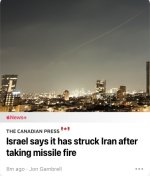
Ok. Now what? Israel military says it has launched strikes on military targets in western and central Iran, after warning it would retaliate for the first Iranian attack on Israel since April. Iran’s Islamic Revolutionary Guard Corps (IRGC) says multiple waves of missiles fired at northern Israel are "the beginning of a full week of continuous strikes".Donald Trump has said that he “calls the shots” – not Benjamin Netanyahu – and that Israel must accept a peace deal with Iran that is currently firing missiles into Israel. He then spoke to the Financial Times and said Sunday evening’s strikes were “not going to have impact” on peace negotiations. Phew!
Iranian state television reported the sound of explosions being heard in Isfahan, Tabriz and Tehran, without immediately elaborating.

Israel and Iran appear to pause strikes after trading fire for the first time since April ceasefire
Israel and Iran appeared to back away from further strikes Monday, hours after they traded fire for the first time since the U.S. agreed to a ceasefire with Tehran two months ago. Both countries warned that they were ready to launch retaliatory attacks if provoked.
Israel’s air force struck military targets in western and central Iran early Monday, the Israel Defense Forces said on social media, without providing more details. The attack came hours after Iran fired ballistic missiles at Israel.
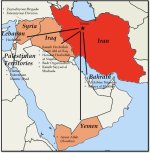
Iranian state-run media reported on Sunday that Tehran (=Da Houthis) is threatening to block Bab al-Mandab, another vital maritime corridor in the Middle East, if Israel escalates its attack, citing a senior adviser to Iran’s supreme leader.
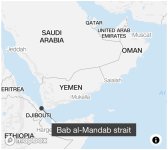
In late 2023, Houthi militants began attacking commercial vessels passing through the strait in retaliation for Israel’s war in Gaza, which was in response to Iranian proxy Hamas attacking Israel. The Houthis attacks prompted shipping companies to use a longer route, adding weeks onto journeys and forcing them to spend more on fuel, insurance, and seafarers’ wages.