Ontario will continue time changes after B.C. daylight saving decision
Ontario passed legislation in 2020 to end the practice, but first needs Quebec and New York to adopt same time throughout year
Author of the article:Spiro Papuckoski
Published Mar 03, 2026 • Last updated 20 hours ago • 3 minute read
Clocks will shift one hour ahead in most of Ontario this weekend.
Clocks will shift one hour ahead in most of Ontario this weekend. Photo by Rawf8 / iStock /Getty Images
Most Ontario residents will continue to change their clocks twice a year despite British Columbia formally ending the time shifts.
B.C. Premier David Eby announced Monday that the province is adopting daylight saving time by shifting its clocks one hour ahead permanently this weekend to take advantage of later daylight.
“Every parent knows that changing clocks twice a year causes a significant amount of chaos on already busy lives. British Columbians have been clear that seasonal time changes do not work for them,” Eby said in a statement adopting the change.
“This decision isn’t just about clocks. It’s about making life easier for families, reducing disruptions for businesses and supporting a stable, thriving economy.”
Eby hopes that Pacific Time Zone states Washington, Oregon, California and Nevada will also make the change permanent.
“I am hopeful that our American neighbours will soon join us in ending disruptive time changes,” he said.
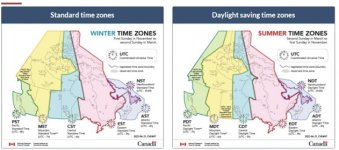
This year, daylight saving time is set to kick in Sunday when clocks shift from 2 a.m. to 3 a.m. It will end on Nov. 1, when the time is rolled back an hour at 2 a.m.
The rest of the country will continue to shift an hour twice a year, except for Yukon, Saskatchewan and some parts of Ontario and Quebec.
Ontario on board with permanent change
Premier Doug Ford and his Progressive Conservative government are ready and willing to make daylight saving time a reality throughout the year for the province’s residents.
But that won’t happen until two other jurisdictions follow suit.
“In 2020, the Ontario Legislature passed Bill 214 that states Ontario will do away with daylight savings time if New York and Quebec do the same. That remains our position,” a spokesperson said in an emailed statement Tuesday.
That law has yet to come into force as the province waits for Quebec and New York to officially adopt daylight saving time year round.
time change graphic
Petition gathering signatures
Following news of B.C. move to the permanent change, an online petition urging the federal government to end the practice has reached 90,000 signatures.
The petition, started by Brampton resident Irene Shone, argues that shifting clocks twice a year poses serious health and safety concerns.
“Changing clocks twice a year is hazardous to your health,” the appeal says. “There are many studies showing that changing the clock and staying on Daylight Saving Time negatively impacts our circadian rhythm, causes increases in strokes and heart attacks, impacts people with depression and seasonal affective disorder and causes more car accidents.”
Shone, who began the drive to end the time changes seven years ago, advocated for not moving an hour forward to take advantage of extra evening light.
“I ask the Canadian Government to finally stop Daylight Saving Time and enact Permanent Standard Time,” the petition says. “Even if one person is saved from having a stroke or heart attack or is saved from a car accident, it’s worth it. Support the health and safety of Canadians and set an example for the rest of the world.”
Trump vowed end to time change
U.S. President Donald Trump weighed in on the debate over time changes following his election to a second term in the Oval Office.
“The Republican Party will use its best efforts to eliminate Daylight Saving Time, which has a small but strong constituency, but shouldn’t,” he wrote on his Truth Social platform in December 2024. “Daylight Saving Time is inconvenient, and very costly to our Nation.”
In 2022, the U.S. Senate advanced a plan to make daylight saving time permanent.
![time-change[1].jpg](https://forums.canadiancontent.net/data/attachments/31/31778-274aebf0b65f1614e55866bba8dd1e19.jpg "time-change[1].jpg")

 ola.org

 torontosun.com
Ontario passed legislation in 2020 to end the practice, but first needs Quebec and New York to adopt same time throughout year
Author of the article:Spiro Papuckoski
Published Mar 03, 2026 • Last updated 20 hours ago • 3 minute read
Clocks will shift one hour ahead in most of Ontario this weekend.
Clocks will shift one hour ahead in most of Ontario this weekend. Photo by Rawf8 / iStock /Getty Images
Most Ontario residents will continue to change their clocks twice a year despite British Columbia formally ending the time shifts.
B.C. Premier David Eby announced Monday that the province is adopting daylight saving time by shifting its clocks one hour ahead permanently this weekend to take advantage of later daylight.
“Every parent knows that changing clocks twice a year causes a significant amount of chaos on already busy lives. British Columbians have been clear that seasonal time changes do not work for them,” Eby said in a statement adopting the change.
“This decision isn’t just about clocks. It’s about making life easier for families, reducing disruptions for businesses and supporting a stable, thriving economy.”
Eby hopes that Pacific Time Zone states Washington, Oregon, California and Nevada will also make the change permanent.
“I am hopeful that our American neighbours will soon join us in ending disruptive time changes,” he said.
This year, daylight saving time is set to kick in Sunday when clocks shift from 2 a.m. to 3 a.m. It will end on Nov. 1, when the time is rolled back an hour at 2 a.m.
The rest of the country will continue to shift an hour twice a year, except for Yukon, Saskatchewan and some parts of Ontario and Quebec.
Ontario on board with permanent change
Premier Doug Ford and his Progressive Conservative government are ready and willing to make daylight saving time a reality throughout the year for the province’s residents.
But that won’t happen until two other jurisdictions follow suit.
“In 2020, the Ontario Legislature passed Bill 214 that states Ontario will do away with daylight savings time if New York and Quebec do the same. That remains our position,” a spokesperson said in an emailed statement Tuesday.
That law has yet to come into force as the province waits for Quebec and New York to officially adopt daylight saving time year round.
time change graphic
Petition gathering signatures
Following news of B.C. move to the permanent change, an online petition urging the federal government to end the practice has reached 90,000 signatures.
The petition, started by Brampton resident Irene Shone, argues that shifting clocks twice a year poses serious health and safety concerns.
“Changing clocks twice a year is hazardous to your health,” the appeal says. “There are many studies showing that changing the clock and staying on Daylight Saving Time negatively impacts our circadian rhythm, causes increases in strokes and heart attacks, impacts people with depression and seasonal affective disorder and causes more car accidents.”
Shone, who began the drive to end the time changes seven years ago, advocated for not moving an hour forward to take advantage of extra evening light.
“I ask the Canadian Government to finally stop Daylight Saving Time and enact Permanent Standard Time,” the petition says. “Even if one person is saved from having a stroke or heart attack or is saved from a car accident, it’s worth it. Support the health and safety of Canadians and set an example for the rest of the world.”
Trump vowed end to time change
U.S. President Donald Trump weighed in on the debate over time changes following his election to a second term in the Oval Office.
“The Republican Party will use its best efforts to eliminate Daylight Saving Time, which has a small but strong constituency, but shouldn’t,” he wrote on his Truth Social platform in December 2024. “Daylight Saving Time is inconvenient, and very costly to our Nation.”
In 2022, the U.S. Senate advanced a plan to make daylight saving time permanent.

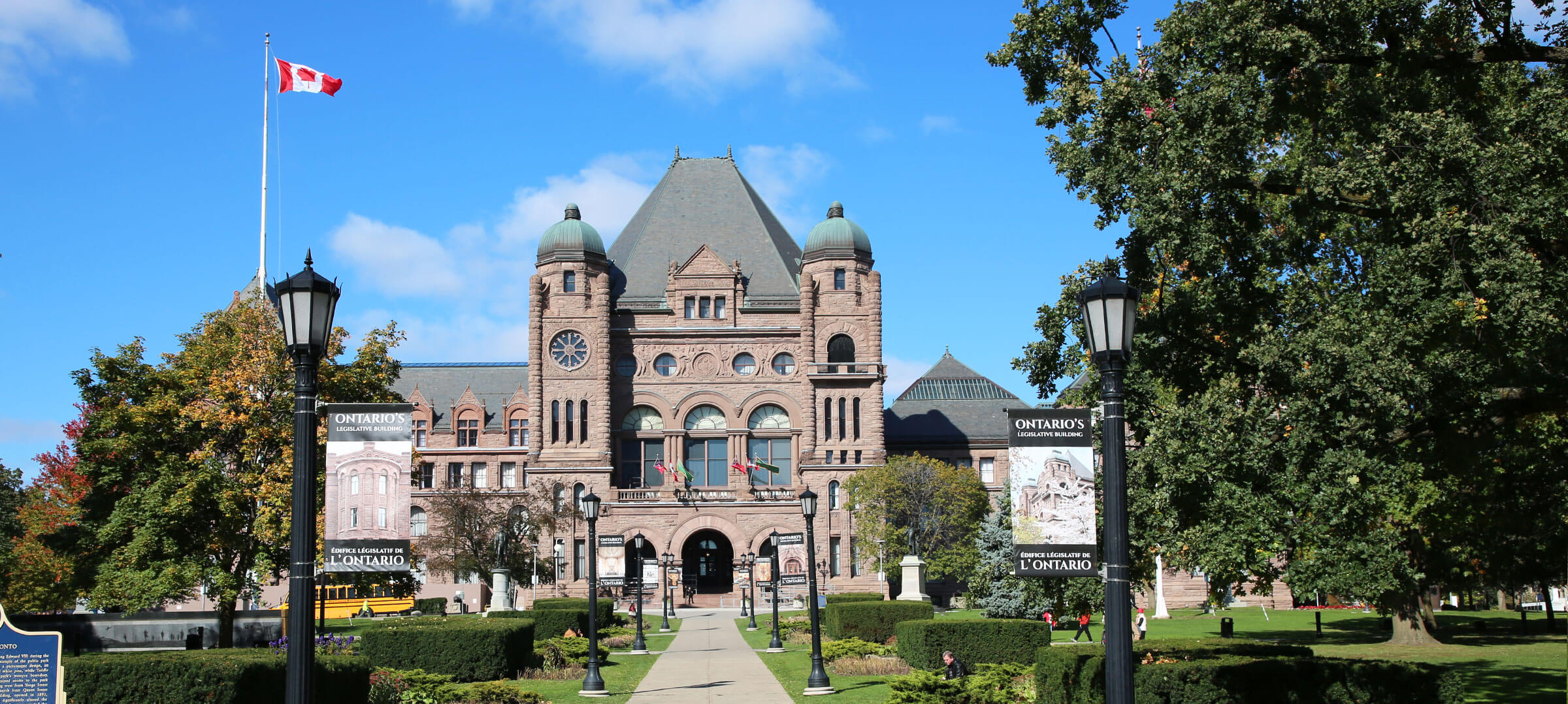
Time Amendment Act, 2020
Bill 214 from Parliament 42 Session 1 of the Legislative Assembly of Ontario: Time Amendment Act, 2020.
Ontario will continue time changes after B.C. daylight saving decision
Most Ontario residents will continue to change their clocks twice a year despite British Columbia formally ending the time shifts. Read more