


"Crumbling" graffiti drawn by conscientious objectors held in Richmond Castle during World War One is to be preserved by English Heritage.
In May 1916, 16 men - mainly from the north of England - were incarcerated in cells at the North Yorkshire castle.
The graffiti features pencil drawings and inscriptions, including slogans, poetry, and portraits of loved ones.
A grant of £365,400 from the Heritage Lottery Fund will be used to protect the work and allow public access.
WW1 conscientious objector graffiti at Richmond Castle to be preserved
BBC News
13 May 2016
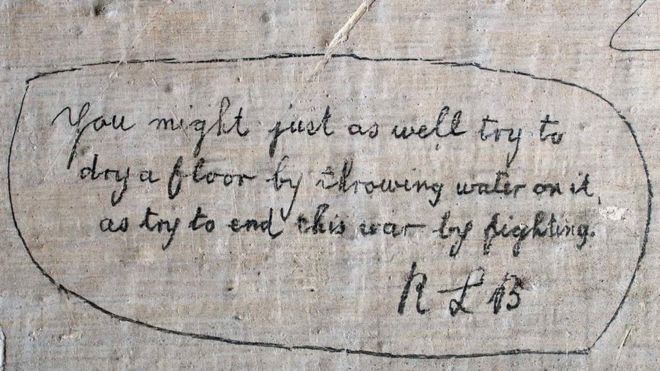
A slogan by Richard Lewis Barry, a socialist objector from Long Eaton, Derbyshire, described the futility of fighting as he saw it
"Crumbling" graffiti drawn by conscientious objectors held in Richmond Castle during World War One is to be preserved by English Heritage.
In May 1916, 16 men - mainly from the north of England - were incarcerated in cells at the North Yorkshire castle.
The graffiti features pencil drawings and inscriptions, including slogans, poetry, and portraits of loved ones.
A grant of £365,400 from the Heritage Lottery Fund will be used to protect the work and allow public access.
The prisoners, known as the Richmond Sixteen, included a Sunderland footballer, a clerk at the Rowntree's chocolate factory in York, a bookseller from Ely and men of faith.
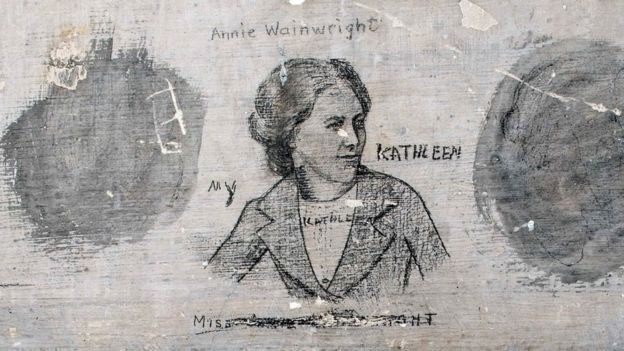
Bert Brocklesby drew this portrait of his fiancée Annie Wainwright but the engagement ended after the war when Brocklesby went to Vienna to work with the Friends' War Victims Relief Committee
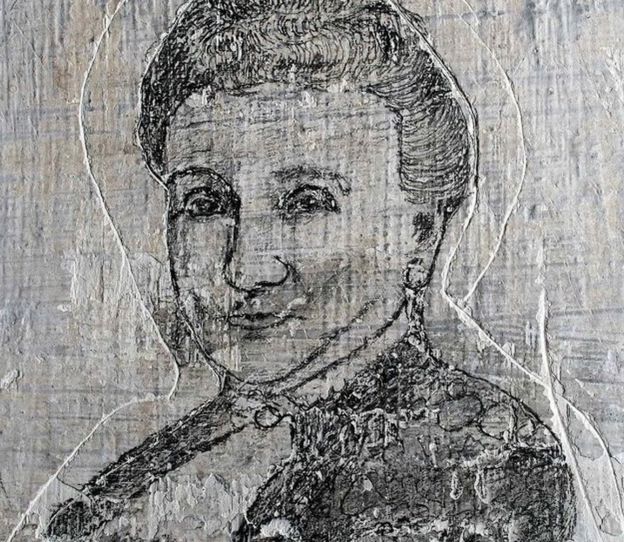
This picture was also drawn by Bert Brocklesby on behalf of Norman Gaudie, who had played for Sunderland. It was taken from a photograph of his mother smuggled into the cell
Kate Mavor, English Heritage's chief executive, said the graffiti was an "important record of the voices of dissent" during the war.
She said it was vital to preserve "these delicate drawings" to ensure the stories were not lost.
High levels of moisture and damp meant the layers of lime wash and plaster on the walls were crumbling and flaking off, she added.
Sunderland centre-forward Norman Gaudie, a Quaker, was one of the men held at Richmond Castle before being shipped to France to face court-martial and the threat of firing squad.
His daughter-in-law, Marjorie Gaudie, said: "It is important to remember men like Norman. They were courageous men.
"He acted from the deepest conviction that all life is sacred. He knew it was wrong to take a life and so he refused to fight."
"He was prepared to die for his belief and that took immense courage," she added.
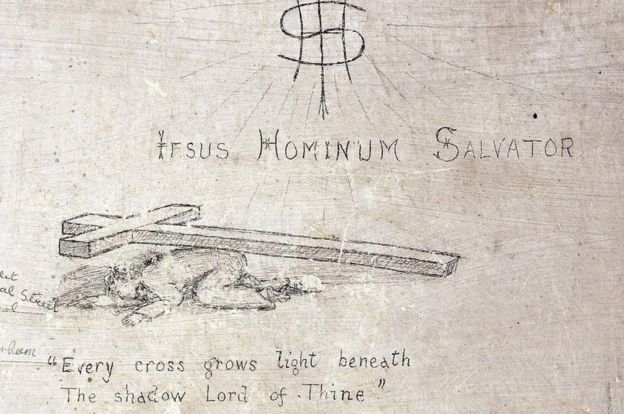
Graffiti in the cell block features words taken from poems and hymns

As well as the graffiti of the Richmond Sixteen, the walls of the cells are covered in drawings, etchings and inscriptions from the first half of the 20th Century
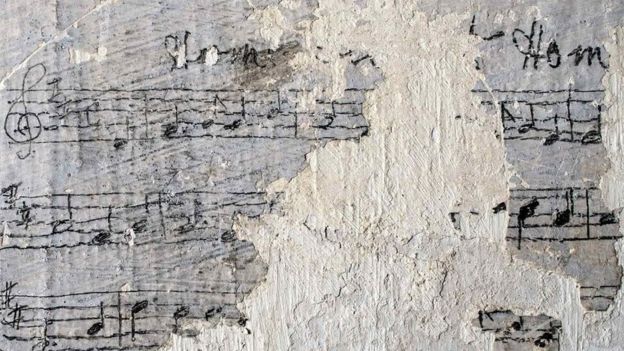
One of those incarcerated penned the music to Home Sweet Home on the wall
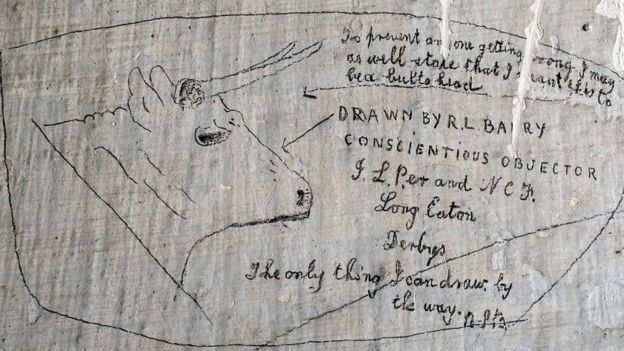
Others drew the only thing they knew how to

The grant will pay for the roof and walls of the cells to be repaired and conservation specialists will treat the graffiti to protect it from further erosion
The men were sent to France on 29 May 1916 and a few weeks later were sentenced to death by firing squad, which was immediately commuted to 10 years hard labour under orders from Prime Minister Herbert Asquith.
Most ended up at Dyce Camp, near Aberdeen, where their punishment was to break rocks in a granite quarry and suffer the indignity of being branded as "degenerates" by the local press.
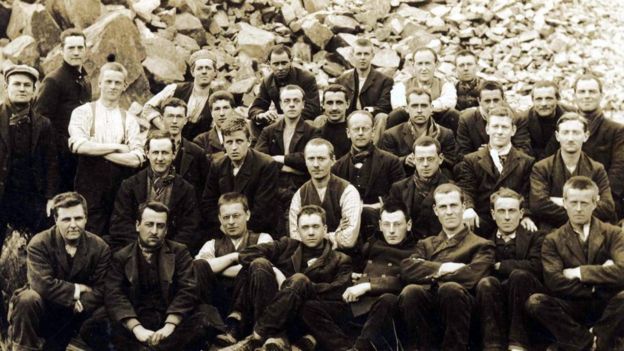
This picture shows 11 of the Richmond Sixteen, including Bert Brocklesby (third row right) and Norman Gaudie (Fourth row second right) who served part of their sentence along with other conscientious objectors at Dyce Camp, Aberdeen
WW1 conscientious objector graffiti at Richmond Castle to be preserved - BBC News
In May 1916, 16 men - mainly from the north of England - were incarcerated in cells at the North Yorkshire castle.
The graffiti features pencil drawings and inscriptions, including slogans, poetry, and portraits of loved ones.
A grant of £365,400 from the Heritage Lottery Fund will be used to protect the work and allow public access.
WW1 conscientious objector graffiti at Richmond Castle to be preserved
BBC News
13 May 2016
A slogan by Richard Lewis Barry, a socialist objector from Long Eaton, Derbyshire, described the futility of fighting as he saw it
"Crumbling" graffiti drawn by conscientious objectors held in Richmond Castle during World War One is to be preserved by English Heritage.
In May 1916, 16 men - mainly from the north of England - were incarcerated in cells at the North Yorkshire castle.
The graffiti features pencil drawings and inscriptions, including slogans, poetry, and portraits of loved ones.
A grant of £365,400 from the Heritage Lottery Fund will be used to protect the work and allow public access.
The prisoners, known as the Richmond Sixteen, included a Sunderland footballer, a clerk at the Rowntree's chocolate factory in York, a bookseller from Ely and men of faith.
Bert Brocklesby drew this portrait of his fiancée Annie Wainwright but the engagement ended after the war when Brocklesby went to Vienna to work with the Friends' War Victims Relief Committee
This picture was also drawn by Bert Brocklesby on behalf of Norman Gaudie, who had played for Sunderland. It was taken from a photograph of his mother smuggled into the cell
Kate Mavor, English Heritage's chief executive, said the graffiti was an "important record of the voices of dissent" during the war.
She said it was vital to preserve "these delicate drawings" to ensure the stories were not lost.
High levels of moisture and damp meant the layers of lime wash and plaster on the walls were crumbling and flaking off, she added.
Sunderland centre-forward Norman Gaudie, a Quaker, was one of the men held at Richmond Castle before being shipped to France to face court-martial and the threat of firing squad.
His daughter-in-law, Marjorie Gaudie, said: "It is important to remember men like Norman. They were courageous men.
"He acted from the deepest conviction that all life is sacred. He knew it was wrong to take a life and so he refused to fight."
"He was prepared to die for his belief and that took immense courage," she added.
Graffiti in the cell block features words taken from poems and hymns
As well as the graffiti of the Richmond Sixteen, the walls of the cells are covered in drawings, etchings and inscriptions from the first half of the 20th Century
One of those incarcerated penned the music to Home Sweet Home on the wall
Others drew the only thing they knew how to
The grant will pay for the roof and walls of the cells to be repaired and conservation specialists will treat the graffiti to protect it from further erosion
The men were sent to France on 29 May 1916 and a few weeks later were sentenced to death by firing squad, which was immediately commuted to 10 years hard labour under orders from Prime Minister Herbert Asquith.
Most ended up at Dyce Camp, near Aberdeen, where their punishment was to break rocks in a granite quarry and suffer the indignity of being branded as "degenerates" by the local press.
This picture shows 11 of the Richmond Sixteen, including Bert Brocklesby (third row right) and Norman Gaudie (Fourth row second right) who served part of their sentence along with other conscientious objectors at Dyce Camp, Aberdeen
WW1 conscientious objector graffiti at Richmond Castle to be preserved - BBC News
