


The exact birthplace of one of England's most famous kings has been discovered, archaeologists claim.
Historians already knew that Henry – victor of the Battle of Bosworth Field – was born in Pembroke, Wales, in 1457, but were unsure of the exact location.
However, researchers now believe they have found the specific part of the Pembroke Castle grounds where the founder of the Tudor dynasty was born.
Is THIS the birthplace of Henry VII? Archaeologists believe they have found the exact part of Pembroke Castle where the Tudor king was born more than 500 years ago
Historians knew Henry – victor of the battle of Bosworth – was born in Pembroke
Archaeologists now believe they have found the specific part of the castle
Henry VII was the last king of England to win his throne on the field of battle
His forces defeated King Richard III at the Battle of Bosworth Field
By Phoebe Weston For Mailonline
18 September 2018
The exact birthplace of one of England's most famous kings has been discovered, archaeologists claim.
Historians already knew that Henry – victor of the Battle of Bosworth Field – was born in Pembroke, Wales, in 1457, but were unsure of the exact location.
However, researchers now believe they have found the specific part of the Pembroke Castle grounds where the founder of the Tudor dynasty was born.
Archaeologists have uncovered a large, high-status home on the grounds of the castle, which was previously known — but researchers had not been able to confirm whether it was residential.
It appears to have served as the home for the most affluent residents at Pembroke Castle, with the cesspit brimming with oyster shells and bones.
The building is about the size of two tennis courts and would have made a far more pleasant place to give birth than the inner part of the castle, historians say.
Henry VII's forces defeated King Richard III at the Battle of Bosworth Field, which marked the end of the Wars of the Roses.
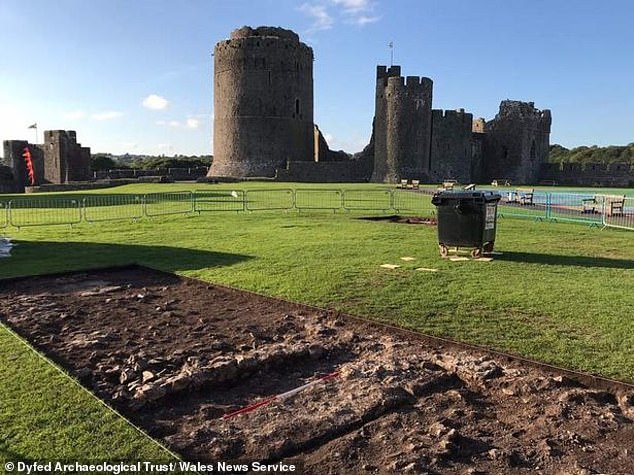
The exact birthplace of one of England's most famous kings has been found (pictured), archaeologists say. Historians knew that Henry – victor of the battle of Bosworth – was born in Pembroke in 1457 but never sure of the exact location
While Pembroke Castle is one of the largest and most prestigious castles in the UK, surprisingly little-known about its long history.
Some of the UK's best-known barons were residents at the castle, including Richard Strongbow, Earl of Pembroke and William Marhsal, the royal protector of Henry III.
In the 14th century, the castle became a royal residence and in 1457, Henry VII was born at the castle.
A two-week excavation has led archaeologists from Dyfed Archaeological Trust to believe they have found the part of the castle where the Tudor king was born.
They have uncovered a large, high-status residential building that would have been different from the rest of the castle.
The site was identified back in 2016 after aerial photographs showed possible buildings beneath the surface at the castle.
They confirmed the outline of a late-medieval building in the outer ward, which they suggested was the spot where Henry VII was born.
His 13-year-old mother Margaret Beaufort named him after his half-uncle Henry VI.
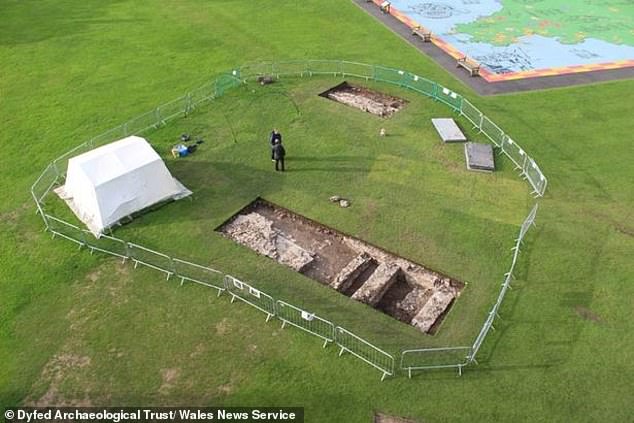
Archaeologists have uncovered a large, high-status building different from much of the rest of the castle that was used for residential purposes
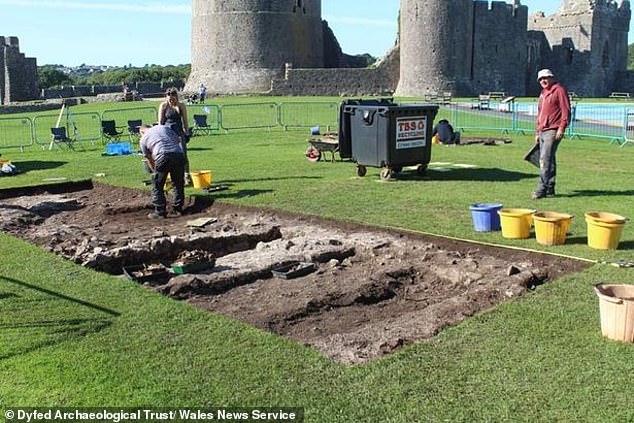
The site (pictured) was identified back in 2016 after aerial photographs showed possible buildings beneath the surface at the castle
His father died from the plague three months before his birth and Henry VII spent his first four years in Wales with his family.
Henry VII was declared king after defeating Richard III in August 1485.
He was officially crowned at a coronation ceremony on 30 October 1485.
As the first king of the Tudors, he reigned for nearly 24 years before being peacefully succeeded by his son, Henry VIII.
According to James Meek from the Dyfed Archaeological Trust, which led the excavation, they have long known there was a building there but hadn't confirmed it was residential.
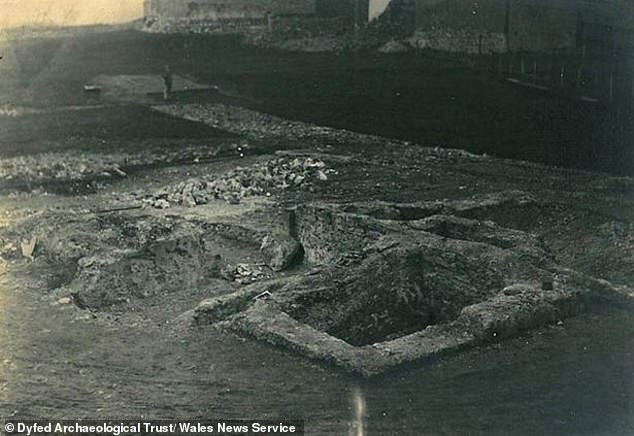
Pictured here is an image taken in 1931 showing the same archaeology exposed before it was refilled - the significance of the find was not known at this time
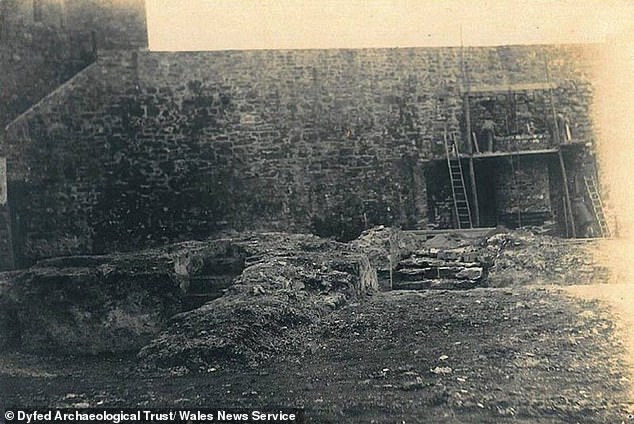
According to James Meek from the Dyfed Archaeological Trust, which led the excavation, they have long known there was a building there but hadn't confirmed it was residential. Pictured is a photo of the site in 1931
'We have known about the room for many years since an excavation in the 1930's,' he said.
'It appears to be a residential building. There are cobbled floors, a cesspit and two spiral staircases.'
The cesspit was described as an 'an absolute mass of oyster shell and bone' showing the wealth of people living in the castle.
Mr Meek said: 'It has also shown up as parch marks. They have always shown up in the castle but this year has been particularly good.'
Parch marks, also known as crop marks, are marks that appear on vegetation during hot weather. It suggests that the foundations of buildings remain beneath the ground.
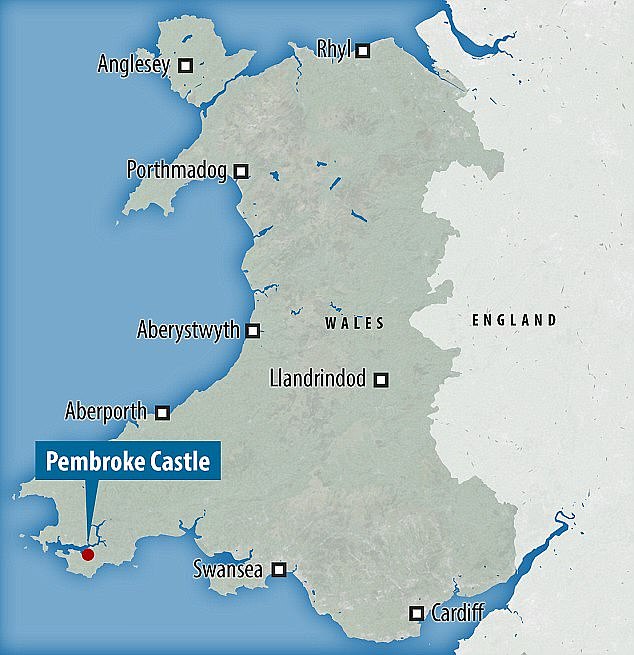
Pembroke Castle played a pivotal role through history, dating back to the 11th century when the Normans invaded Wales
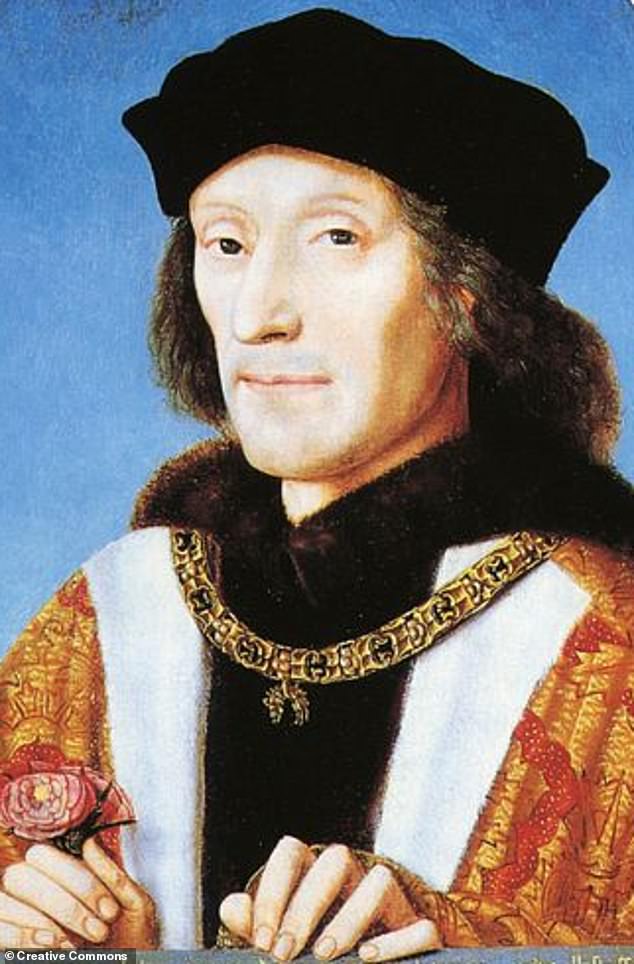
Henry VII (pictured) was declared king and he was officially crowned at a coronation ceremony on 30 October 1485. As the first king of the Tudors, he reigned for nearly 24 years before being peacefully succeeded by his son, Henry VIII
The building is about the size of two tennis courts and would have made a far more pleasant place to give birth than the inner part of the castle.
'It is a large stone building,' said Mr Meek, who describes it as a domestic building and not a stable or a barn.
'It seems to be medieval in date based on its layout compared to other buildings of the time', he said.
'It is a high status building', he said.
He believes that if it was there when Henry Tudor was born it is likely he would have been born in there rather than in the tower or the administrative buildings.
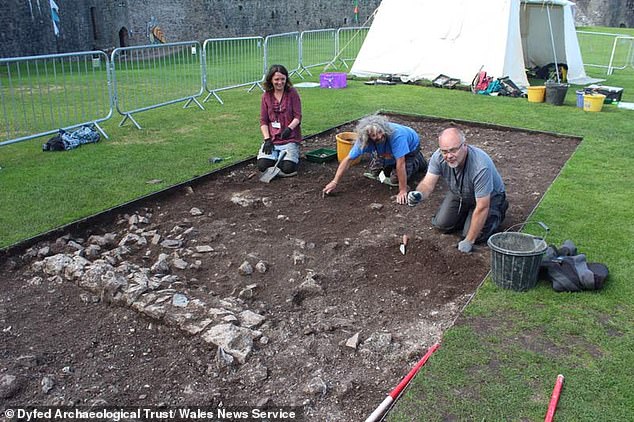
The building is about the size of two tennis courts and would have made a far more pleasant place to give birth than the inner part of the castle. Part of it is pictured here
However, Mr Meek does not think archaeologists will ever prove the exact spot Henry VII was born.
He said they wanted to excavate the site to prove it was a late medieval building.
'We won't know for certain until the analysis is done. However everything is pointing towards that', he said.
The dig was funded by the Castle Studies Trust and attracted a huge amount of volunteers.
Mr Meek said: 'We asked members of the public to take part and hundreds of people volunteered.'
PEMBROKE CASTLE

Pembroke Castle played a pivotal role through history, dating back to the 11th century when the Normans invaded Wales, through to the Civil War in the 17th century, when it was besieged by Oliver Cromwell.
Some of the UK's best known barons were also residents at the castle, including Richard Strongbow, Early of Pembroke and William Marhsal, the royal protector of Henry III.
In the 14th century it became a royal residence and, in 1457, Henry VII was born at the castle.
Henry VII was the last king of England to win his throne on the field of battle, when his forces defeated King Richard III at the Battle of Bosworth Field, the culmination of the Wars of the Roses.
https://www.dailymail.co.uk/science...-specific-Pembroke-Castle-Henry-VII-born.html
Historians already knew that Henry – victor of the Battle of Bosworth Field – was born in Pembroke, Wales, in 1457, but were unsure of the exact location.
However, researchers now believe they have found the specific part of the Pembroke Castle grounds where the founder of the Tudor dynasty was born.
Is THIS the birthplace of Henry VII? Archaeologists believe they have found the exact part of Pembroke Castle where the Tudor king was born more than 500 years ago
Historians knew Henry – victor of the battle of Bosworth – was born in Pembroke
Archaeologists now believe they have found the specific part of the castle
Henry VII was the last king of England to win his throne on the field of battle
His forces defeated King Richard III at the Battle of Bosworth Field
By Phoebe Weston For Mailonline
18 September 2018
The exact birthplace of one of England's most famous kings has been discovered, archaeologists claim.
Historians already knew that Henry – victor of the Battle of Bosworth Field – was born in Pembroke, Wales, in 1457, but were unsure of the exact location.
However, researchers now believe they have found the specific part of the Pembroke Castle grounds where the founder of the Tudor dynasty was born.
Archaeologists have uncovered a large, high-status home on the grounds of the castle, which was previously known — but researchers had not been able to confirm whether it was residential.
It appears to have served as the home for the most affluent residents at Pembroke Castle, with the cesspit brimming with oyster shells and bones.
The building is about the size of two tennis courts and would have made a far more pleasant place to give birth than the inner part of the castle, historians say.
Henry VII's forces defeated King Richard III at the Battle of Bosworth Field, which marked the end of the Wars of the Roses.
The exact birthplace of one of England's most famous kings has been found (pictured), archaeologists say. Historians knew that Henry – victor of the battle of Bosworth – was born in Pembroke in 1457 but never sure of the exact location
While Pembroke Castle is one of the largest and most prestigious castles in the UK, surprisingly little-known about its long history.
Some of the UK's best-known barons were residents at the castle, including Richard Strongbow, Earl of Pembroke and William Marhsal, the royal protector of Henry III.
In the 14th century, the castle became a royal residence and in 1457, Henry VII was born at the castle.
A two-week excavation has led archaeologists from Dyfed Archaeological Trust to believe they have found the part of the castle where the Tudor king was born.
They have uncovered a large, high-status residential building that would have been different from the rest of the castle.
The site was identified back in 2016 after aerial photographs showed possible buildings beneath the surface at the castle.
They confirmed the outline of a late-medieval building in the outer ward, which they suggested was the spot where Henry VII was born.
His 13-year-old mother Margaret Beaufort named him after his half-uncle Henry VI.
Archaeologists have uncovered a large, high-status building different from much of the rest of the castle that was used for residential purposes
The site (pictured) was identified back in 2016 after aerial photographs showed possible buildings beneath the surface at the castle
His father died from the plague three months before his birth and Henry VII spent his first four years in Wales with his family.
Henry VII was declared king after defeating Richard III in August 1485.
He was officially crowned at a coronation ceremony on 30 October 1485.
As the first king of the Tudors, he reigned for nearly 24 years before being peacefully succeeded by his son, Henry VIII.
According to James Meek from the Dyfed Archaeological Trust, which led the excavation, they have long known there was a building there but hadn't confirmed it was residential.
Pictured here is an image taken in 1931 showing the same archaeology exposed before it was refilled - the significance of the find was not known at this time
According to James Meek from the Dyfed Archaeological Trust, which led the excavation, they have long known there was a building there but hadn't confirmed it was residential. Pictured is a photo of the site in 1931
'We have known about the room for many years since an excavation in the 1930's,' he said.
'It appears to be a residential building. There are cobbled floors, a cesspit and two spiral staircases.'
The cesspit was described as an 'an absolute mass of oyster shell and bone' showing the wealth of people living in the castle.
Mr Meek said: 'It has also shown up as parch marks. They have always shown up in the castle but this year has been particularly good.'
Parch marks, also known as crop marks, are marks that appear on vegetation during hot weather. It suggests that the foundations of buildings remain beneath the ground.
Pembroke Castle played a pivotal role through history, dating back to the 11th century when the Normans invaded Wales
Henry VII (pictured) was declared king and he was officially crowned at a coronation ceremony on 30 October 1485. As the first king of the Tudors, he reigned for nearly 24 years before being peacefully succeeded by his son, Henry VIII
The building is about the size of two tennis courts and would have made a far more pleasant place to give birth than the inner part of the castle.
'It is a large stone building,' said Mr Meek, who describes it as a domestic building and not a stable or a barn.
'It seems to be medieval in date based on its layout compared to other buildings of the time', he said.
'It is a high status building', he said.
He believes that if it was there when Henry Tudor was born it is likely he would have been born in there rather than in the tower or the administrative buildings.
The building is about the size of two tennis courts and would have made a far more pleasant place to give birth than the inner part of the castle. Part of it is pictured here
However, Mr Meek does not think archaeologists will ever prove the exact spot Henry VII was born.
He said they wanted to excavate the site to prove it was a late medieval building.
'We won't know for certain until the analysis is done. However everything is pointing towards that', he said.
The dig was funded by the Castle Studies Trust and attracted a huge amount of volunteers.
Mr Meek said: 'We asked members of the public to take part and hundreds of people volunteered.'
PEMBROKE CASTLE
Pembroke Castle played a pivotal role through history, dating back to the 11th century when the Normans invaded Wales, through to the Civil War in the 17th century, when it was besieged by Oliver Cromwell.
Some of the UK's best known barons were also residents at the castle, including Richard Strongbow, Early of Pembroke and William Marhsal, the royal protector of Henry III.
In the 14th century it became a royal residence and, in 1457, Henry VII was born at the castle.
Henry VII was the last king of England to win his throne on the field of battle, when his forces defeated King Richard III at the Battle of Bosworth Field, the culmination of the Wars of the Roses.
https://www.dailymail.co.uk/science...-specific-Pembroke-Castle-Henry-VII-born.html


