

Science & Environment
- Thread starter socratus
- Start date
You are using an out of date browser. It may not display this or other websites correctly.
You should upgrade or use an alternative browser.
You should upgrade or use an alternative browser.

Scientists discover giant ‘kraken-like’ octopus existed millions of years ago
But thanks to new technologies, researchers are gaining insight into animals like the octopus that left fewer traces behind
Author of the article enette Wilford
Published Apr 24, 2026 • Last updated 1 day ago • 2 minute read
This illustration provided by researchers in April 2026 depicts a giant octopus that may have been a top marine predator millions of years ago.
This illustration provided by researchers in April 2026 depicts a giant octopus that may have been a top marine predator millions of years ago. Photo by Yohei Utsuki /AP
A kraken-like octopus that could grow to more than 18 metres long may have been one of the fiercest predators in the oceans, according to scientists.
New research out of Japan’s Hokkaido University is challenging the notion that octopuses were not among the main marine predators during the Late Cretaceous period, when Tyrannosaurus rex and Giganotosaurus roamed and ruled the planet.
The scientists studied dozens of jaw fossils of ancient octopus relatives, and found that two now-extinct species — Nanaimoteuthis jeletzkyi and N. haggarti — reached lengths between seven and 19 metres, rivalling other giant marine reptiles of the time.
Why have the octopus been overlooked?
“Some of the earliest octopuses were much larger than we had imagined,” Yasuhiro Iba, a professor at Hokkaido University and co-author of the study, told the Washington Post.
“Invertebrates — especially soft-bodied animals like octopuses — have remained largely invisible in the fossil record, and their ecological roles have been poorly understood.”
That’s because soft-bodied animals rarely fossilize, resulting in paleontologists historically focusing on organisms with hard skeletons or shells.
But thanks to new technologies, researchers are gaining insight into animals like the octopus that left fewer traces behind.
“In that sense, we are just beginning to see parts of ancient ecosystems that were previously almost invisible,” Iba said.
Size isn’t the only thing that matters
And what they found in the recent octopus discovery was so much more than just their colossal size.
“The novelty of our study is not simply that ‘large octopuses existed,” Iba noted. “Rather, by analyzing the intense wear preserved on their jaws, the research team was able to demonstrate that these octopuses were capable of processing hard prey such as shells and bones, and may have reached a similar ecological level to large vertebrate apex predators in the Cretaceous ocean.”
The evidence of chipping, scratching, cracking and polishing on the jaws “indicates repeated, forceful interactions with their prey, revealing an unexpectedly aggressive feeding strategy,” Iba added in a news release.
The massive mollusks may have eaten large aquatic reptiles like mosasaurs and plesiosaurs, two species which were believed to be the main marine predators of the period.
Instead, the octopus’s beaks and jaws, in addition to their powerful arms, which allowed them to grab prey more easily, may have made them formidable rulers of the oceans.
In comparison, the largest octopus alive today is the giant Pacific octopus, which typically measures at just under five metres in size, according to National Geographic.
While it has been known to eat larger animals like sharks and birds, its typical diet consists of shrimp, clams, lobster and fish.
The fossils were discovered in Japan and Vancouver Island, according to the release, with the team using grinding tomography, a 3D imaging technique, along with an artificial intelligence model, to carry out the research.

 nationalgeographic.com

 torontosun.com
But thanks to new technologies, researchers are gaining insight into animals like the octopus that left fewer traces behind
Author of the article
enette WilfordPublished Apr 24, 2026 • Last updated 1 day ago • 2 minute read
This illustration provided by researchers in April 2026 depicts a giant octopus that may have been a top marine predator millions of years ago.
This illustration provided by researchers in April 2026 depicts a giant octopus that may have been a top marine predator millions of years ago. Photo by Yohei Utsuki /AP
A kraken-like octopus that could grow to more than 18 metres long may have been one of the fiercest predators in the oceans, according to scientists.
New research out of Japan’s Hokkaido University is challenging the notion that octopuses were not among the main marine predators during the Late Cretaceous period, when Tyrannosaurus rex and Giganotosaurus roamed and ruled the planet.
The scientists studied dozens of jaw fossils of ancient octopus relatives, and found that two now-extinct species — Nanaimoteuthis jeletzkyi and N. haggarti — reached lengths between seven and 19 metres, rivalling other giant marine reptiles of the time.
Why have the octopus been overlooked?
“Some of the earliest octopuses were much larger than we had imagined,” Yasuhiro Iba, a professor at Hokkaido University and co-author of the study, told the Washington Post.
“Invertebrates — especially soft-bodied animals like octopuses — have remained largely invisible in the fossil record, and their ecological roles have been poorly understood.”
That’s because soft-bodied animals rarely fossilize, resulting in paleontologists historically focusing on organisms with hard skeletons or shells.
But thanks to new technologies, researchers are gaining insight into animals like the octopus that left fewer traces behind.
“In that sense, we are just beginning to see parts of ancient ecosystems that were previously almost invisible,” Iba said.
Size isn’t the only thing that matters
And what they found in the recent octopus discovery was so much more than just their colossal size.
“The novelty of our study is not simply that ‘large octopuses existed,” Iba noted. “Rather, by analyzing the intense wear preserved on their jaws, the research team was able to demonstrate that these octopuses were capable of processing hard prey such as shells and bones, and may have reached a similar ecological level to large vertebrate apex predators in the Cretaceous ocean.”
The evidence of chipping, scratching, cracking and polishing on the jaws “indicates repeated, forceful interactions with their prey, revealing an unexpectedly aggressive feeding strategy,” Iba added in a news release.
The massive mollusks may have eaten large aquatic reptiles like mosasaurs and plesiosaurs, two species which were believed to be the main marine predators of the period.
Instead, the octopus’s beaks and jaws, in addition to their powerful arms, which allowed them to grab prey more easily, may have made them formidable rulers of the oceans.
In comparison, the largest octopus alive today is the giant Pacific octopus, which typically measures at just under five metres in size, according to National Geographic.
While it has been known to eat larger animals like sharks and birds, its typical diet consists of shrimp, clams, lobster and fish.
The fossils were discovered in Japan and Vancouver Island, according to the release, with the team using grinding tomography, a 3D imaging technique, along with an artificial intelligence model, to carry out the research.
Giant Pacific Octopus | National Geographic
Meet the world's largest octopus, which can tip the scales at over 600 pounds. Hear about the amazing feats of these highly intelligent animals.
nationalgeographic.com
Scientists discover giant ‘kraken-like’ octopus existed millions of years ago
A kraken-like octopus that could grow to more than 18 metres long may have been one of the fiercest predators in the oceans. Read on.
Canada marks vaccination week amid 'sobering' return of measles
For the first time in 24 years, the Pan-American Health Organization (PAHO) came to Ottawa to launch vaccination week in the Americas — a nod to Canada’s recent loss of measles elimination status
Author of the article:Elizabeth Payne
Published Apr 27, 2026 • 3 minute read
Federal Health Minister Marjorie Michel, seen in a February 2026 file photo, called the loss of measles elimination status sobering. “It is a difficult wake-up call because in Canada we believe in science and we value our scientists," she said. "But we need to take action, including building trust in vaccine through community engagement.”
Federal Health Minister Marjorie Michel, seen in a February 2026 file photo, called the loss of measles elimination status sobering. “It is a difficult wake-up call because in Canada we believe in science and we value our scientists," she said. "But we need to take action, including building trust in vaccine through community engagement.” Photo by Blair Gable /Postmedia
Five months after Canada lost its measles-free status, the annual week devoted to vaccination awareness is taking on a new significance.
For the first time in 24 years, the Pan-American Health Organization (PAHO) came to Ottawa to launch vaccination week in the Americas — a nod to Canada’s recent loss of measles elimination status and a chance to reaffirm the importance of keeping vaccination rates high. The event, hosted by CHEO president and CEO Dr. Vera Etches, was held Monday, April 27, at Library and Archives Canada and livestreamed around the Americas.
PAHO, which serves as the World Health Organization’s regional office for the Americas, revoked Canada’s measles-free status last November after a year-long outbreak resulted in more than 5,000 cases of the highly infectious disease. So far in 2026, there have been 871 cases across the country.
The measles vaccine is highly effective, but, because the disease is so contagious, 95 per cent of the population must be immunized to prevent outbreaks. Vaccination rates have steadily declined in Canada in recent years and remain below the threshold — in part due to disruptions caused by the pandemic as well as the rise of misinformation and poor access to primary care.
As of the end of 2024, just over 80 per cent of two-year-olds in Canada were adequately vaccinated against measles, mumps and rubella, according to Health Canada.
Federal Health Minister Marjorie Michel, speaking at the event, called the loss of measles elimination status sobering.
“It is a difficult wake-up call because in Canada we believe in science and we value our scientists. But we need to take action, including building trust in vaccine through community engagement.”
She said the federal government is working with provinces and territories, as well as agencies, to better understand the barriers to higher immunization rates in order to regain measles elimination status and increase vaccination rates.
Dr. Anne Pham-Huy
Dr. Anne Pham-Huy, chair of Immunize Canada and a pediatric infectious disease physician at CHEO, is optimistic Canada can regain its measles elimination status, “but it is not going to be easy”. Photo by CHEO /Handout
“Together we are going to make sure that our children are going to receive all the vaccines that they need to protect themselves from diseases. Canada is firmly committed to advancing vaccination as a cornerstone of public health, both internationally and domestically.”
Canada’s newly appointed chief public health officer, Dr. Joss Reimer, called measles elimination a “deeply personal topic for me”.
She grew up in Winkler, Man., which currently has one of the highest rates of measles in the country and, at one point, had the highest rate of measles in the Americas.
Reimer noted that the majority of recent cases in Canada have been in highly connected, under-vaccinated communities, including Winkler.
“This moment is very important for us,” she said. “This is a stark reminder of our continued vulnerability to disease.”
PAHO provided recommendations in order to help Canada regain measles elimination status. Those include strengthening monitoring and data sharing, combatting misinformation and addressing immunity gaps.
Health Canada says it is strengthening approaches that target under-vaccinated and vaccine-hesitant populations.
Canada’s lack of a comprehensive national immunization registry has been criticized by health experts and others as a critical public health gap that creates a barrier to understanding vaccination coverage and trends.
Dr. Anne Pham-Huy, chair of Immunize Canada and a pediatric infectious disease physician at CHEO, said a national registry would make it easier to increase vaccination rates by making it easier to know where the potential pockets of underimmunization are.
She said she is optimistic Canada can regain its measles elimination status, “but it is not going to be easy and it definitely will require collaboration.
“In 2026, we are being reminded that progress in public health can never be taken for granted,” she said. “The recent loss of measles elimination status in Canada shows how quickly vaccine-preventable diseases can return when vaccination rates fall and misinformation spreads.”
 torontosun.com
For the first time in 24 years, the Pan-American Health Organization (PAHO) came to Ottawa to launch vaccination week in the Americas — a nod to Canada’s recent loss of measles elimination status
Author of the article:Elizabeth Payne
Published Apr 27, 2026 • 3 minute read
Federal Health Minister Marjorie Michel, seen in a February 2026 file photo, called the loss of measles elimination status sobering. “It is a difficult wake-up call because in Canada we believe in science and we value our scientists," she said. "But we need to take action, including building trust in vaccine through community engagement.”
Federal Health Minister Marjorie Michel, seen in a February 2026 file photo, called the loss of measles elimination status sobering. “It is a difficult wake-up call because in Canada we believe in science and we value our scientists," she said. "But we need to take action, including building trust in vaccine through community engagement.” Photo by Blair Gable /Postmedia
Five months after Canada lost its measles-free status, the annual week devoted to vaccination awareness is taking on a new significance.
For the first time in 24 years, the Pan-American Health Organization (PAHO) came to Ottawa to launch vaccination week in the Americas — a nod to Canada’s recent loss of measles elimination status and a chance to reaffirm the importance of keeping vaccination rates high. The event, hosted by CHEO president and CEO Dr. Vera Etches, was held Monday, April 27, at Library and Archives Canada and livestreamed around the Americas.
PAHO, which serves as the World Health Organization’s regional office for the Americas, revoked Canada’s measles-free status last November after a year-long outbreak resulted in more than 5,000 cases of the highly infectious disease. So far in 2026, there have been 871 cases across the country.
The measles vaccine is highly effective, but, because the disease is so contagious, 95 per cent of the population must be immunized to prevent outbreaks. Vaccination rates have steadily declined in Canada in recent years and remain below the threshold — in part due to disruptions caused by the pandemic as well as the rise of misinformation and poor access to primary care.
As of the end of 2024, just over 80 per cent of two-year-olds in Canada were adequately vaccinated against measles, mumps and rubella, according to Health Canada.
Federal Health Minister Marjorie Michel, speaking at the event, called the loss of measles elimination status sobering.
“It is a difficult wake-up call because in Canada we believe in science and we value our scientists. But we need to take action, including building trust in vaccine through community engagement.”
She said the federal government is working with provinces and territories, as well as agencies, to better understand the barriers to higher immunization rates in order to regain measles elimination status and increase vaccination rates.
Dr. Anne Pham-Huy
Dr. Anne Pham-Huy, chair of Immunize Canada and a pediatric infectious disease physician at CHEO, is optimistic Canada can regain its measles elimination status, “but it is not going to be easy”. Photo by CHEO /Handout
“Together we are going to make sure that our children are going to receive all the vaccines that they need to protect themselves from diseases. Canada is firmly committed to advancing vaccination as a cornerstone of public health, both internationally and domestically.”
Canada’s newly appointed chief public health officer, Dr. Joss Reimer, called measles elimination a “deeply personal topic for me”.
She grew up in Winkler, Man., which currently has one of the highest rates of measles in the country and, at one point, had the highest rate of measles in the Americas.
Reimer noted that the majority of recent cases in Canada have been in highly connected, under-vaccinated communities, including Winkler.
“This moment is very important for us,” she said. “This is a stark reminder of our continued vulnerability to disease.”
PAHO provided recommendations in order to help Canada regain measles elimination status. Those include strengthening monitoring and data sharing, combatting misinformation and addressing immunity gaps.
Health Canada says it is strengthening approaches that target under-vaccinated and vaccine-hesitant populations.
Canada’s lack of a comprehensive national immunization registry has been criticized by health experts and others as a critical public health gap that creates a barrier to understanding vaccination coverage and trends.
Dr. Anne Pham-Huy, chair of Immunize Canada and a pediatric infectious disease physician at CHEO, said a national registry would make it easier to increase vaccination rates by making it easier to know where the potential pockets of underimmunization are.
She said she is optimistic Canada can regain its measles elimination status, “but it is not going to be easy and it definitely will require collaboration.
“In 2026, we are being reminded that progress in public health can never be taken for granted,” she said. “The recent loss of measles elimination status in Canada shows how quickly vaccine-preventable diseases can return when vaccination rates fall and misinformation spreads.”
Canada marks vaccination week amid 'sobering' return of measles
For the first time in 24 years, the Pan-American Health Organization (PAHO) came to Ottawa to launch vaccination week in the Americas — a nod to Canada’s recent loss of measles elimination status

Who is paying the scientists? And why? Perhaps more importantly, why are they hiding the research on Covid vaccines?“It is a difficult wake-up call because in Canada we believe in science and we value our scientists.
What to know about hantavirus after 3 died in suspected cruise ship outbreak
There are 87 surviving passengers and 61 crew members aboard the vessel, representing almost two dozen countries.
Author of the article:Washington Post
Washington Post
Sammy Westfall, Kendra Nichols
Published May 04, 2026 • Last updated 20 hours ago • 4 minute read
This aerial picture shows a general view of the cruise ship MV Hondius stationary off the port of Praia, the capital of Cape Verde, on May 4, 2026. Photo by - /AFP via Getty Images
The rodent-borne hantavirus is suspected in an outbreak aboard a cruise ship in the Atlantic Ocean in which three passengers have died within three weeks.
The World Health Organization said one case of hantavirus has been confirmed and that there are five suspected cases, two of them fatal. Oceanwide Expeditions, the operator of the Hondius expedition ship, said one passenger is in intensive care in Johannesburg and two crew members aboard the vessel have respiratory symptoms.
There are 87 surviving passengers and 61 crew members aboard the vessel, representing almost two dozen countries.
Although hantavirus is normally linked to exposure to infected rodents’ urine or feces – a particular risk while cleaning – in rare cases it can spread between people. Here’s what to know about the disease.
Oceanwide Expeditions relayed an alarming timeline in a news release Monday about what it described as a “serious medical situation” aboard the Hondius, a polar-rated expedition ship off the coast of Cape Verde, along Africa’s western coast.
On April 11, a Dutch passenger died on board, but the cause of death could not be determined. His wife accompanied his body as it was brought off the ship on St. Helena, a remote island territory in the South Atlantic Ocean. After she left the ship, she became unwell and died, the company said.
About two weeks after the first death, a British passenger became seriously ill and was medically evacuated to South Africa, where hantavirus was identified. That passenger is in the intensive-care unit in critical but stable condition, the Monday release said.
On Saturday, a third passenger died, a German national.
It has not been confirmed that all three of the deaths were caused by hantavirus, the company said.
Of the passengers, 19 are British, 17 are American, 13 are Spanish and eight are Dutch. More than half of the crew members are Filipino nationals.
Hantaviruses are a family of viruses that can cause serious illness and death. They are spread mainly by rodents and can cause hantavirus pulmonary syndrome (HPS), which is more common in the United States, and hemorrhagic fever with renal syndrome (HFRS), which is found mostly in Europe and Asia, according to the Centers for Disease Control and Prevention. Both are severe and potentially deadly.
It can be contracted by contact with droppings from infected rodents, commonly through inhalation when entering or cleaning unventilated areas. Person-to-person transmission is also possible, but more rare.
Symptoms typically start to show between one and eight weeks after first contact with the virus.
HPS affects the lungs and can cause fatigue, fever and muscle aches initially, followed by coughing and shortness of breath. Once inhaled, the virus can reach the lungs and infect cells that line tiny blood vessels in the lungs, allowing fluid to enter and making it difficult to breathe, according to the American Lung Association.
Thirty-eight percent of people who develop respiratory symptoms die of the disease, according to the CDC.
HFRS is less deadly but still serious. It affects the kidneys and causes headaches, back and abdominal pain, fever, nausea and blurred vision. Later symptoms include low blood pleasure, internal bleeding and kidney failure. Fatality rates vary between less than 1 percent and up to 15 percent.
Hantaviruses are found all around the world, but outbreaks are rare. In 1993, a mysterious outbreak of severe respiratory illness originating in the Southwest killed about 30 people. The deaths were the first documented cases in the Americas of hantavirus disease in humans and triggered a public health response that has helped prevent other similarly sized outbreaks to date, The Washington Post reported.
Hantavirus was named as the cause of death for Betsy Arakawa, pianist and wife of actor Gene Hackman, last year.
There were 890 laboratory-confirmed hantavirus cases in the United States between 1993, when the CDC began tracking the illness, and the end of 2023. More than 90 percent of those occurred west of the Mississippi River. It is commonly linked to people with occupational exposure, such as those working in construction, pest control, janitorial and agricultural work, the American Lung Association said.
Globally, there may be as many as 150,000 cases of HFRS each year, according to a review by the American Society for Microbiology.
Treatment options are limited, so the best protection against the illness is to avoid contact with rodents and to take care when cleaning their droppings, wearing a well-fitted N95 mask. Health officials also warn against vacuuming or sweeping contaminated areas to avoid releasing particles into the air.
The company said the WHO is coordinating the medical evacuation of two symptomatic people – a British national and a Dutch national – as well as a full public health risk-assessment and support to the remaining passengers. On board, passengers are isolating, and hygiene protocols are in place.
The ship operator said it had not received authorization from Cape Verdean authorities to bring ill guests on land for treatment, adding that local health authorities had visited the ship to assess their condition. In a news release Monday, the company said it is considering sailing to Las Palmas or Tenerife in Spain’s Canary Islands to disembark.
For more health news and content around diseases, conditions, wellness, healthy living, drugs, treatments and more, head to Healthing.ca – a member of the Postmedia Network.

 torontosun.com
There are 87 surviving passengers and 61 crew members aboard the vessel, representing almost two dozen countries.
Author of the article:Washington Post
Washington Post
Sammy Westfall, Kendra Nichols
Published May 04, 2026 • Last updated 20 hours ago • 4 minute read
This aerial picture shows a general view of the cruise ship MV Hondius stationary off the port of Praia, the capital of Cape Verde, on May 4, 2026. Photo by - /AFP via Getty Images
The rodent-borne hantavirus is suspected in an outbreak aboard a cruise ship in the Atlantic Ocean in which three passengers have died within three weeks.
The World Health Organization said one case of hantavirus has been confirmed and that there are five suspected cases, two of them fatal. Oceanwide Expeditions, the operator of the Hondius expedition ship, said one passenger is in intensive care in Johannesburg and two crew members aboard the vessel have respiratory symptoms.
There are 87 surviving passengers and 61 crew members aboard the vessel, representing almost two dozen countries.
Although hantavirus is normally linked to exposure to infected rodents’ urine or feces – a particular risk while cleaning – in rare cases it can spread between people. Here’s what to know about the disease.
Oceanwide Expeditions relayed an alarming timeline in a news release Monday about what it described as a “serious medical situation” aboard the Hondius, a polar-rated expedition ship off the coast of Cape Verde, along Africa’s western coast.
On April 11, a Dutch passenger died on board, but the cause of death could not be determined. His wife accompanied his body as it was brought off the ship on St. Helena, a remote island territory in the South Atlantic Ocean. After she left the ship, she became unwell and died, the company said.
About two weeks after the first death, a British passenger became seriously ill and was medically evacuated to South Africa, where hantavirus was identified. That passenger is in the intensive-care unit in critical but stable condition, the Monday release said.
On Saturday, a third passenger died, a German national.
It has not been confirmed that all three of the deaths were caused by hantavirus, the company said.
Of the passengers, 19 are British, 17 are American, 13 are Spanish and eight are Dutch. More than half of the crew members are Filipino nationals.
Hantaviruses are a family of viruses that can cause serious illness and death. They are spread mainly by rodents and can cause hantavirus pulmonary syndrome (HPS), which is more common in the United States, and hemorrhagic fever with renal syndrome (HFRS), which is found mostly in Europe and Asia, according to the Centers for Disease Control and Prevention. Both are severe and potentially deadly.
It can be contracted by contact with droppings from infected rodents, commonly through inhalation when entering or cleaning unventilated areas. Person-to-person transmission is also possible, but more rare.
Symptoms typically start to show between one and eight weeks after first contact with the virus.
HPS affects the lungs and can cause fatigue, fever and muscle aches initially, followed by coughing and shortness of breath. Once inhaled, the virus can reach the lungs and infect cells that line tiny blood vessels in the lungs, allowing fluid to enter and making it difficult to breathe, according to the American Lung Association.
Thirty-eight percent of people who develop respiratory symptoms die of the disease, according to the CDC.
HFRS is less deadly but still serious. It affects the kidneys and causes headaches, back and abdominal pain, fever, nausea and blurred vision. Later symptoms include low blood pleasure, internal bleeding and kidney failure. Fatality rates vary between less than 1 percent and up to 15 percent.
Hantaviruses are found all around the world, but outbreaks are rare. In 1993, a mysterious outbreak of severe respiratory illness originating in the Southwest killed about 30 people. The deaths were the first documented cases in the Americas of hantavirus disease in humans and triggered a public health response that has helped prevent other similarly sized outbreaks to date, The Washington Post reported.
Hantavirus was named as the cause of death for Betsy Arakawa, pianist and wife of actor Gene Hackman, last year.
There were 890 laboratory-confirmed hantavirus cases in the United States between 1993, when the CDC began tracking the illness, and the end of 2023. More than 90 percent of those occurred west of the Mississippi River. It is commonly linked to people with occupational exposure, such as those working in construction, pest control, janitorial and agricultural work, the American Lung Association said.
Globally, there may be as many as 150,000 cases of HFRS each year, according to a review by the American Society for Microbiology.
Treatment options are limited, so the best protection against the illness is to avoid contact with rodents and to take care when cleaning their droppings, wearing a well-fitted N95 mask. Health officials also warn against vacuuming or sweeping contaminated areas to avoid releasing particles into the air.
The company said the WHO is coordinating the medical evacuation of two symptomatic people – a British national and a Dutch national – as well as a full public health risk-assessment and support to the remaining passengers. On board, passengers are isolating, and hygiene protocols are in place.
The ship operator said it had not received authorization from Cape Verdean authorities to bring ill guests on land for treatment, adding that local health authorities had visited the ship to assess their condition. In a news release Monday, the company said it is considering sailing to Las Palmas or Tenerife in Spain’s Canary Islands to disembark.
For more health news and content around diseases, conditions, wellness, healthy living, drugs, treatments and more, head to Healthing.ca – a member of the Postmedia Network.
What to know about hantavirus after 3 died in suspected cruise ship outbreak
The rodent-borne hantavirus is suspected in an outbreak aboard a cruise ship in the Atlantic Ocean.
That shit'll kill ya, bruh!What to know about hantavirus after 3 died in suspected cruise ship outbreak
Person in Peel Region isolating in connection to hantavirus outbreak: Jones
Ontario's health minister did not clarify how the person came to be connected to hantavirus
Author of the article:Cynthia McLeod
Published May 11, 2026 • Last updated 10 hours ago • 2 minute read
Ontario Health Minister Sylvia Jones
Ontario Health Minister Sylvia Jones speaks at a press conference at Queen's Park in Toronto, on Monday, Oct. 20, 2025. Photo by Laura Proctor /The Canadian Press
A third person in Ontario is isolating in connection with the hantavirus outbreak on the HV Hondius cruise ship.
Ontario Health Minister Sylvia Jones told media on Monday during a news conference that a person in Peel Region is “isolating and being monitored by the local public health unit.” She did not clarify how the person came to be connected to hantavirus or any other information on the individual.
Late last week, the province said two Grey-Bruce County residents who had been on board the MV Hondius cruise ship were isolating at home after arriving back on April 25. The self-isolation time is 45 days, which is the virus’ longest potential incubation period.
Jones said the couple in Grey Bruce are still self-isolating and continue to be asymptomatic, with the local public health unit monitoring the situation closely.
Will there be more testing?
When asked if there was testing that was going to be done on the trio, Jones said that as they were not showing symptoms, tests wouldn’t be valuable.
“Initial conversations and feedback from Dr. Kieran Moore (Ontario’s chief medical officer of health) suggests that testing on asymptomatic (people) may not have the appropriate results, it may not be the best way to monitor,” she said. “That’s why these three individuals are self isolating, so we can see if there are any symptoms that come forward.”
Moore said the Grey Bruce couple disembarked the ship on the island of St. Helena in the South Atlantic, then flew to Johannesburg on the same flight as an infected person, meaning they were exposed in two places.
Other Canadians have arrived home
Meanwhile, the four Canadians who had been stuck on the Hondius during the outbreak that was declared in early May arrived in Victoria, B.C. on Sunday after a pit stop at Quebec’s Saguenay-Bagotville Airport.
B.C.’s top doctor said they are isolating there for at least 21 days due to their connections with the province.
Dr. Bonnie Henry said that none of the Canadians who were on the ship had known direct contact with anyone who was infected.
They had gotten off the ship in Tenerife, in Spain’s Canary Islands, earlier Sunday and were deemed asymptomatic before taking a plane that was chartered by the Public Health Agency of Canada and Global Affairs Canada, with support from the Canadian Armed Forces, according to The Canadian Press.
Three people — a Dutch couple and a German who had left the ship before the outbreak was declared — have died in connection to the ship.
Asymptomatic American tests positive
Officials in the U.S. said an American passenger who flew to Nebraska tested positive for hantavirus without showing symptoms. Another American showed mild symptoms.
A French passenger developed symptoms during their flight to Paris and later tested positive, officials in that country said.
The World Health Organization on Monday updated it overall tally of reported Andes hantavirus cases to nine.

 torontosun.com
Ontario's health minister did not clarify how the person came to be connected to hantavirus
Author of the article:Cynthia McLeod
Published May 11, 2026 • Last updated 10 hours ago • 2 minute read
Ontario Health Minister Sylvia Jones
Ontario Health Minister Sylvia Jones speaks at a press conference at Queen's Park in Toronto, on Monday, Oct. 20, 2025. Photo by Laura Proctor /The Canadian Press
A third person in Ontario is isolating in connection with the hantavirus outbreak on the HV Hondius cruise ship.
Ontario Health Minister Sylvia Jones told media on Monday during a news conference that a person in Peel Region is “isolating and being monitored by the local public health unit.” She did not clarify how the person came to be connected to hantavirus or any other information on the individual.
Late last week, the province said two Grey-Bruce County residents who had been on board the MV Hondius cruise ship were isolating at home after arriving back on April 25. The self-isolation time is 45 days, which is the virus’ longest potential incubation period.
Jones said the couple in Grey Bruce are still self-isolating and continue to be asymptomatic, with the local public health unit monitoring the situation closely.
Will there be more testing?
When asked if there was testing that was going to be done on the trio, Jones said that as they were not showing symptoms, tests wouldn’t be valuable.
“Initial conversations and feedback from Dr. Kieran Moore (Ontario’s chief medical officer of health) suggests that testing on asymptomatic (people) may not have the appropriate results, it may not be the best way to monitor,” she said. “That’s why these three individuals are self isolating, so we can see if there are any symptoms that come forward.”
Moore said the Grey Bruce couple disembarked the ship on the island of St. Helena in the South Atlantic, then flew to Johannesburg on the same flight as an infected person, meaning they were exposed in two places.
Other Canadians have arrived home
Meanwhile, the four Canadians who had been stuck on the Hondius during the outbreak that was declared in early May arrived in Victoria, B.C. on Sunday after a pit stop at Quebec’s Saguenay-Bagotville Airport.
B.C.’s top doctor said they are isolating there for at least 21 days due to their connections with the province.
Dr. Bonnie Henry said that none of the Canadians who were on the ship had known direct contact with anyone who was infected.
They had gotten off the ship in Tenerife, in Spain’s Canary Islands, earlier Sunday and were deemed asymptomatic before taking a plane that was chartered by the Public Health Agency of Canada and Global Affairs Canada, with support from the Canadian Armed Forces, according to The Canadian Press.
Three people — a Dutch couple and a German who had left the ship before the outbreak was declared — have died in connection to the ship.
Asymptomatic American tests positive
Officials in the U.S. said an American passenger who flew to Nebraska tested positive for hantavirus without showing symptoms. Another American showed mild symptoms.
A French passenger developed symptoms during their flight to Paris and later tested positive, officials in that country said.
The World Health Organization on Monday updated it overall tally of reported Andes hantavirus cases to nine.
Person in Peel Region isolating in connection to hantavirus outbreak: Jones
A third person in Ontario is isolating in connection with the hantavirus outbreak on the HV Hondius cruise ship. Find out more.
The body’s most mysterious organ may play a key role in longevity and cancer
Now, a raft of research is recasting the thymus from a bit player to a potent regulator of aging and immune health across the lifespan.
Author of the article:Washington Post
Washington Post
Carolyn Y. Johnson
Published May 14, 2026 • Last updated 1 day ago • 5 minute read
Human Thymus Anatomy
The thymus. Photo by Adobe Stock
For decades, a mysterious, two-lobed organ nestled behind the breastbone has been overlooked by most physicians, thought to be a largely useless lump for most of human life: the thymus.
The ancient Greeks posited this knob of tissue might be the seat of the soul. In the early 1960s, a Nobel laureate dismissed it as a mere graveyard for cells, “an evolutionary accident of no very great significance.” Today, scientists know the thymus plays an essential role in setting up a functioning immune system in childhood, but then starts to rapidly shrink into obsolescence in puberty.
Now, a raft of research is recasting the thymus from a bit player to a potent regulator of aging and immune health across the lifespan.
Studies highlight the crucial role it might play in longevity, as well as protecting against cancer, autoimmune disease and cardiovascular risk. The work has ignited interest in finding ways to rejuvenate the thymus, slow its decay and better understand its function.
“It was completely assumed the thymus would become irrelevant,” said Hugo Aerts, director of the Artificial Intelligence in Medicine Program at Mass General Brigham. In studies published in Nature, Aerts and colleagues found that people with a healthier thymus were less likely to develop lung cancer or to die of heart disease – or any cause. They also responded better to cancer immunotherapy treatments.
Key questions remain: Is the thymus the driver of these improved health outcomes or an indirect barometer of better overall health? Why does its decline vary between different people, and can that be slowed or stopped? And, perhaps most fundamentally, why did it take so long to reconsider the thymus?
The study that cast a new spotlight on the thymus started by serendipity.
Kameron Kooshesh, a medical student in David Scadden’s lab at Massachusetts General Hospital and the Harvard Stem Cell Institute, was interested in understanding the role of the thymus in a narrow population – adults who received bone marrow transplants. As those patients rebuild their immune defenses, researchers knew the thymus plays a role just as it does in childhood.
Then, covid shut everything down. The team shifted to an experiment that could be conducted remotely, broadening the research question: What did the medical records of adults who had their thymus surgically removed suggest about their overall health?
The findings stunned the team. In the five years after surgeons removed their thymus, people were more than twice as likely to die of any cause than a similar set of people who had undergone heart or chest surgery but still had one. Those without thymuses were twice as likely to develop cancer. When researchers limited the analysis to people who didn’t have immune-related issues before surgery, those lacking a thymus were more prone to autoimmune disease.
“I frankly was thinking it was more of a way to keep my student active during covid and didn’t think it would show much,” Scadden said. “We were all just struck. This has a big impact, not just in the things we were worried about … but also all-cause mortality.”
The results were published in 2023 in the New England Journal of Medicine, along with a perspective piece that called it “pioneering research.”
In the annals of human anatomy, the thymus was relatively unexplored territory for much of medical history. Physicians often describe it as the last major organ to have its function discovered. It can be removed in a procedure called a “thymectomy,” which can be done for a variety of reasons, including to get better access to the heart. As far as anyone knew, those people did fine.
“These are very subtle signals. This is not like we take the heart out [and] the patient dies,” Aerts said.
It wasn’t until the 1960s that researchers began to piece together the crucial role the thymus plays during childhood.
The thymus educates immune cells called T cells (the “T” is for thymus), about how to defend against viruses and other pathogens and how to avoid attacking healthy tissue. Children born without it suffer severe immune problems and die without a transplant.
T cells “come out of the bone marrow, home into this organ, and at first, they have this school – I call it the kindergarten or preschool. The cells get to proliferate and expand extensively,” said Andri Lemarquis, a physician and scientist focused on restoring the thymus at City of Hope, a cancer research and treatment center. “Then they come to college and they get deleted. We don’t want any of them to attack our own body.”
The thymus is a key reason that our immune systems do not go haywire and attack our own cells, what immunologists call “self-tolerance.”
But in people’s teens, it begins to dissolve into fatty tissue. Many doctors considered it a largely vestigial organ for the bulk of human life.
The new spotlight on the thymus connects it to a wide range of health outcomes.
Aerts’s team came at the problem by using AI to find patterns in large, long-term databases used to track cardiovascular disease and cancer. As part of their health workup, thousands of people had been given CT scans that revealed their thymus. His team used AI to develop an overall thymic health score, and then searched for patterns in the health records following those people over years.
They found that a healthy thymus predicted good health over a broad set of criteria. In one set of data, people with a higher thymic health score were less likely to die of any cause over the next 12 years. They were less likely to develop lung cancer or die of heart disease.
Intriguingly, they also found that people with healthier thymuses were more likely to respond to cancer immunotherapy drugs, which trigger the immune system to fight cancer, but don’t work for many patients.
The new research can’t say the thymus is the cause of the better health outcomes, but it generates new leads to be explored.
For some, the new interest is long overdue.
“Finally, people realize the thymus is an important organ!” said Paola Bonfanti, a cell biologist at the Francis Crick Institute and a professor at the University College London who has been fascinated by a thymus paradox: It has an extraordinary ability to regenerate, but it is also one of the fastest-aging organs.
“It contains stem cells that are equal to the ones of our skin, and we make new skin every three weeks,” Bonfanti said.
Bonfanti is working to build a human thymus in the lab. In the long term, she hopes it might be possible to engineer a thymus from an organ donor, to help people who receive transplants tolerate their new organ without taking harsh anti-rejection drugs. Those protect the new organ from being attacked by the immune system but come with many side effects.
She’s also interested in probing whether there are ways to slow down the thymus’s natural deterioration. That work could have many applications in autoimmune diseases, improving people’s responses to vaccinations as they age or improving how people respond to cancer immunotherapies.
 torontosun.com
Now, a raft of research is recasting the thymus from a bit player to a potent regulator of aging and immune health across the lifespan.
Author of the article:Washington Post
Washington Post
Carolyn Y. Johnson
Published May 14, 2026 • Last updated 1 day ago • 5 minute read
Human Thymus Anatomy
The thymus. Photo by Adobe Stock
For decades, a mysterious, two-lobed organ nestled behind the breastbone has been overlooked by most physicians, thought to be a largely useless lump for most of human life: the thymus.
The ancient Greeks posited this knob of tissue might be the seat of the soul. In the early 1960s, a Nobel laureate dismissed it as a mere graveyard for cells, “an evolutionary accident of no very great significance.” Today, scientists know the thymus plays an essential role in setting up a functioning immune system in childhood, but then starts to rapidly shrink into obsolescence in puberty.
Now, a raft of research is recasting the thymus from a bit player to a potent regulator of aging and immune health across the lifespan.
Studies highlight the crucial role it might play in longevity, as well as protecting against cancer, autoimmune disease and cardiovascular risk. The work has ignited interest in finding ways to rejuvenate the thymus, slow its decay and better understand its function.
“It was completely assumed the thymus would become irrelevant,” said Hugo Aerts, director of the Artificial Intelligence in Medicine Program at Mass General Brigham. In studies published in Nature, Aerts and colleagues found that people with a healthier thymus were less likely to develop lung cancer or to die of heart disease – or any cause. They also responded better to cancer immunotherapy treatments.
Key questions remain: Is the thymus the driver of these improved health outcomes or an indirect barometer of better overall health? Why does its decline vary between different people, and can that be slowed or stopped? And, perhaps most fundamentally, why did it take so long to reconsider the thymus?
The study that cast a new spotlight on the thymus started by serendipity.
Kameron Kooshesh, a medical student in David Scadden’s lab at Massachusetts General Hospital and the Harvard Stem Cell Institute, was interested in understanding the role of the thymus in a narrow population – adults who received bone marrow transplants. As those patients rebuild their immune defenses, researchers knew the thymus plays a role just as it does in childhood.
Then, covid shut everything down. The team shifted to an experiment that could be conducted remotely, broadening the research question: What did the medical records of adults who had their thymus surgically removed suggest about their overall health?
The findings stunned the team. In the five years after surgeons removed their thymus, people were more than twice as likely to die of any cause than a similar set of people who had undergone heart or chest surgery but still had one. Those without thymuses were twice as likely to develop cancer. When researchers limited the analysis to people who didn’t have immune-related issues before surgery, those lacking a thymus were more prone to autoimmune disease.
“I frankly was thinking it was more of a way to keep my student active during covid and didn’t think it would show much,” Scadden said. “We were all just struck. This has a big impact, not just in the things we were worried about … but also all-cause mortality.”
The results were published in 2023 in the New England Journal of Medicine, along with a perspective piece that called it “pioneering research.”
In the annals of human anatomy, the thymus was relatively unexplored territory for much of medical history. Physicians often describe it as the last major organ to have its function discovered. It can be removed in a procedure called a “thymectomy,” which can be done for a variety of reasons, including to get better access to the heart. As far as anyone knew, those people did fine.
“These are very subtle signals. This is not like we take the heart out [and] the patient dies,” Aerts said.
It wasn’t until the 1960s that researchers began to piece together the crucial role the thymus plays during childhood.
The thymus educates immune cells called T cells (the “T” is for thymus), about how to defend against viruses and other pathogens and how to avoid attacking healthy tissue. Children born without it suffer severe immune problems and die without a transplant.
T cells “come out of the bone marrow, home into this organ, and at first, they have this school – I call it the kindergarten or preschool. The cells get to proliferate and expand extensively,” said Andri Lemarquis, a physician and scientist focused on restoring the thymus at City of Hope, a cancer research and treatment center. “Then they come to college and they get deleted. We don’t want any of them to attack our own body.”
The thymus is a key reason that our immune systems do not go haywire and attack our own cells, what immunologists call “self-tolerance.”
But in people’s teens, it begins to dissolve into fatty tissue. Many doctors considered it a largely vestigial organ for the bulk of human life.
The new spotlight on the thymus connects it to a wide range of health outcomes.
Aerts’s team came at the problem by using AI to find patterns in large, long-term databases used to track cardiovascular disease and cancer. As part of their health workup, thousands of people had been given CT scans that revealed their thymus. His team used AI to develop an overall thymic health score, and then searched for patterns in the health records following those people over years.
They found that a healthy thymus predicted good health over a broad set of criteria. In one set of data, people with a higher thymic health score were less likely to die of any cause over the next 12 years. They were less likely to develop lung cancer or die of heart disease.
Intriguingly, they also found that people with healthier thymuses were more likely to respond to cancer immunotherapy drugs, which trigger the immune system to fight cancer, but don’t work for many patients.
The new research can’t say the thymus is the cause of the better health outcomes, but it generates new leads to be explored.
For some, the new interest is long overdue.
“Finally, people realize the thymus is an important organ!” said Paola Bonfanti, a cell biologist at the Francis Crick Institute and a professor at the University College London who has been fascinated by a thymus paradox: It has an extraordinary ability to regenerate, but it is also one of the fastest-aging organs.
“It contains stem cells that are equal to the ones of our skin, and we make new skin every three weeks,” Bonfanti said.
Bonfanti is working to build a human thymus in the lab. In the long term, she hopes it might be possible to engineer a thymus from an organ donor, to help people who receive transplants tolerate their new organ without taking harsh anti-rejection drugs. Those protect the new organ from being attacked by the immune system but come with many side effects.
She’s also interested in probing whether there are ways to slow down the thymus’s natural deterioration. That work could have many applications in autoimmune diseases, improving people’s responses to vaccinations as they age or improving how people respond to cancer immunotherapies.
The body’s most mysterious organ may play a key role in longevity and cancer
The ancient Greeks posited this knob of tissue might be the seat of the soul.
Toronto Public Health warns of potential measles exposure in west end
Disease spreads through the air and is highly contagious
Author of the article:Spiro Papuckoski
Published May 15, 2026 • Last updated 15 hours ago • 2 minute read
Skin covered with a measles rash.
Skin covered with a measles rash. Photo by Natalya Maisheva /Getty Images
Toronto Public Health said it is investigating a case of measles related to travel and warns residents of potential exposures in the city’s west end.
The health unit said Friday that the public may have been exposed earlier this month at businesses, restaurants and a gym.
On May 7, two exposures occurred at Lebanon Express, located at 327 Roncesvalles Ave., from 2 p.m. to 5:30 p.m. and at Fantail Cafe, up the street at 333 Roncesvalles Ave., from 3 p.m. to 6:30 p.m.
The next day, two more potential measles exposures occurred at Henderson’s Brewery, located at 128A Sterling Rd., from 5:30 to 9 p.m. and at Annette Community Recreation Centre Gym, at 333 Annette St., from 9:30 a.m. to 2 p.m.
Then, on Monday, a possible fifth exposure site happened at Islington Medical Pharmacy, located at 1243 Islington Ave., from 12:15 p.m. to 3 p.m.
Check vaccination and monitor for symptoms
Public health officials said anyone who believes they may have been exposed to the measles virus at any of the locations is advised to check their vaccination record and monitor for symptoms until 21 days past the exposure date.
“Anyone who has not received two doses of the measles vaccine or has not had measles is at risk of infection,” pubic health said.
Symptoms can include a fever, runny nose, cough, red eyes, a red rash on the face which spreads down the body, and small blue-white spots that can appear on the inside of the mouth and throat.
According to figures from the federal government, a total of 989 measles cases– 913 confirmed and 76 probable – have been reported this year in Alberta, British Columbia, Manitoba, Nova Scotia, Ontario, Quebec and Saskatchewan as of May 2.
Highly contagious disease
Measles, which is a vaccine-preventable disease, is highly contagious and spreads through the air when an infected person breathes, coughs, sneezes or talks. The virus can stay in the air or on surfaces for up to two hours.
People can become infected if they breathe contaminated air or touch an infected surface, then touch their eyes, nose or mouth.
The health unit said, if symptoms develop, to contact a health-care provider immediately and take precautions when visiting a clinic or hospital.
 health-infobase.canada.ca

 toronto.ca
 torontosun.com
Disease spreads through the air and is highly contagious
Author of the article:Spiro Papuckoski
Published May 15, 2026 • Last updated 15 hours ago • 2 minute read
Skin covered with a measles rash.
Skin covered with a measles rash. Photo by Natalya Maisheva /Getty Images
Toronto Public Health said it is investigating a case of measles related to travel and warns residents of potential exposures in the city’s west end.
The health unit said Friday that the public may have been exposed earlier this month at businesses, restaurants and a gym.
On May 7, two exposures occurred at Lebanon Express, located at 327 Roncesvalles Ave., from 2 p.m. to 5:30 p.m. and at Fantail Cafe, up the street at 333 Roncesvalles Ave., from 3 p.m. to 6:30 p.m.
The next day, two more potential measles exposures occurred at Henderson’s Brewery, located at 128A Sterling Rd., from 5:30 to 9 p.m. and at Annette Community Recreation Centre Gym, at 333 Annette St., from 9:30 a.m. to 2 p.m.
Then, on Monday, a possible fifth exposure site happened at Islington Medical Pharmacy, located at 1243 Islington Ave., from 12:15 p.m. to 3 p.m.
Check vaccination and monitor for symptoms
Public health officials said anyone who believes they may have been exposed to the measles virus at any of the locations is advised to check their vaccination record and monitor for symptoms until 21 days past the exposure date.
“Anyone who has not received two doses of the measles vaccine or has not had measles is at risk of infection,” pubic health said.
Symptoms can include a fever, runny nose, cough, red eyes, a red rash on the face which spreads down the body, and small blue-white spots that can appear on the inside of the mouth and throat.
According to figures from the federal government, a total of 989 measles cases– 913 confirmed and 76 probable – have been reported this year in Alberta, British Columbia, Manitoba, Nova Scotia, Ontario, Quebec and Saskatchewan as of May 2.
Highly contagious disease
Measles, which is a vaccine-preventable disease, is highly contagious and spreads through the air when an infected person breathes, coughs, sneezes or talks. The virus can stay in the air or on surfaces for up to two hours.
People can become infected if they breathe contaminated air or touch an infected surface, then touch their eyes, nose or mouth.
The health unit said, if symptoms develop, to contact a health-care provider immediately and take precautions when visiting a clinic or hospital.
Measles and Rubella Weekly Monitoring Report — Canada.ca
Weekly surveillance reports and monitoring maps for measles and rubella. Data are updated every Monday.
Measles
Translate this site using Google Translate in 简体中文, 繁體中文, فارسی, தமிழ், Español, Português, Français, Русский, Italiano, 한국어, اردو, and other languages. Toronto Public Health (TPH) is confirming a fourth case of laboratory confirmed measles in 2026 that is travel related. The measles vaccine is...
toronto.ca
Toronto Public Health warns of potential measles exposure in west end
Toronto Public Health said it is investigating a case of measles related to travel and warns residents of potential exposure. Read more.
New giant dinosaur identified after Thailand dig
Researchers believe the dinosaur roamed between 100 and 120 million years ago and is the largest ever found in Southeast Asia
Author of the article:Eddie Chau
Published May 15, 2026 • Last updated 1 day ago • 2 minute read
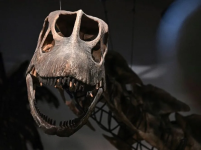
A model skeleton of Nagatitan chaiyaphumensis, Thailand's largest dinosaur, at the Thainosaur Museum in Bangkok. Photo by Lillian SUWANRUMPHA /AFP
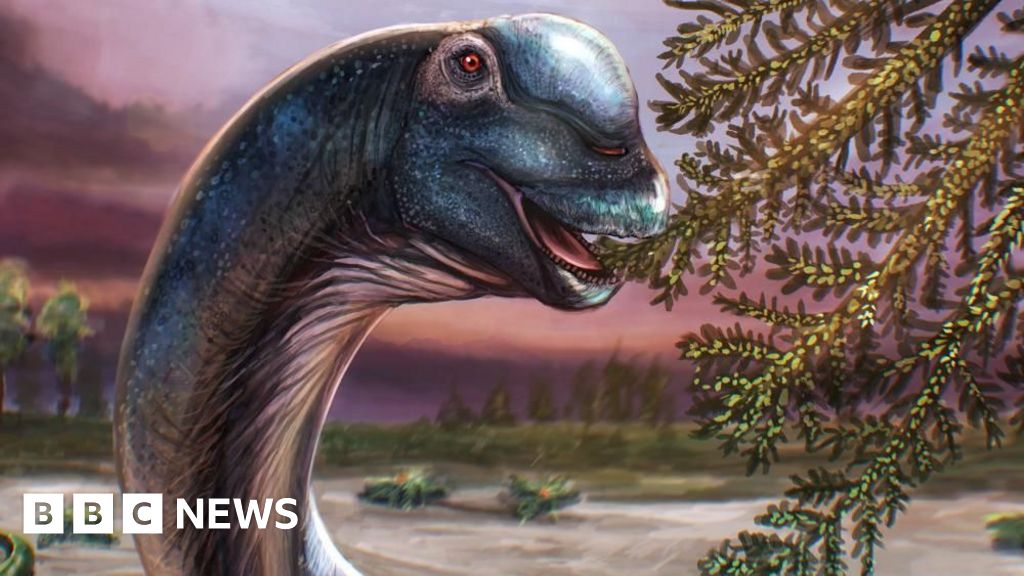
Scientists have identified a new giant dinosaur from remains discovered after a dig in Thailand.
The long-necked herbivore stretches 27 metres and weighs about 27 tonnes — the weight of about nine adult elephants, according to a study published in Scientific Reports.
Researchers believe the dinosaur roamed the area that’s now known as Thailand between 100 and 120 million years ago and is the largest ever found in Southeast Asia.
‘Big by most people’s standards’
Researchers from Thailand and the U.K. identified the species from fossils found beside a pond in northeastern Thailand 10 years ago. They said the finding sheds light on how ancient climatic condition changes allowed these giant dinosaurs to develop.
The full name of the newly-discovered dino is Nagatitan chaiyaphumensis, with “naga” in reference to a serpent in Southeast Asian folklore, “titan” referring to gods in Greek mythology and chaiyaphumensis deriving “from Chaiyaphum,” the Thai province where the fossils were found, BBC News reported.
“Our dinosaur is big by most people’s standards — it likely weighed at least 10 tonnes more than Dippy the Diplodocus,” lead researcher Thitiwoot Sethapanichsakul said, referring to the enormous composite cast that was previously on display at London’s Natural History Museum, per AFP.
Sethapanichsakul, a Thai PhD student, called the newly found sauropod “the last titan” as it was uncovered in one of the youngest rock formations where dinosaurs are found in Thailand, the University College London noted.
The area later evolved to become a shallow sea, “so this may be the last or most recent large sauropod we will find in Southeast Asia,” Sethapanichsakul said.
A model skeleton of Nagatitan chaiyaphumensis. Photo by Lillian SUWANRUMPHA /AFP
Excavation completed in 2024
Nagatitans belonged to a subgroup of sauropods that began about 140 million years ago. About 90 million years ago, they became the only sauropods left in the world, thriving until the dinosaur age ended 66 million years ago, thanks to an asteroid strike, Al Jazeera reported.
The first remains of the giant dinosaur were unearthed by locals a decade ago, but the excavation wasn’t completed until 2024, the study noted. The fossils partially looked like those of previously discovered sauropods, however it had enough unique features to be considered a new species.
A life-size reconstruction is on display at Bangkok’s Thainosaur Museum.

 aljazeera.com
 bbc.com

 torontosun.com
Researchers believe the dinosaur roamed between 100 and 120 million years ago and is the largest ever found in Southeast Asia
Author of the article:Eddie Chau
Published May 15, 2026 • Last updated 1 day ago • 2 minute read
A model skeleton of Nagatitan chaiyaphumensis, Thailand's largest dinosaur, at the Thainosaur Museum in Bangkok. Photo by Lillian SUWANRUMPHA /AFP
Scientists have identified a new giant dinosaur from remains discovered after a dig in Thailand.
The long-necked herbivore stretches 27 metres and weighs about 27 tonnes — the weight of about nine adult elephants, according to a study published in Scientific Reports.
Researchers believe the dinosaur roamed the area that’s now known as Thailand between 100 and 120 million years ago and is the largest ever found in Southeast Asia.
‘Big by most people’s standards’
Researchers from Thailand and the U.K. identified the species from fossils found beside a pond in northeastern Thailand 10 years ago. They said the finding sheds light on how ancient climatic condition changes allowed these giant dinosaurs to develop.
The full name of the newly-discovered dino is Nagatitan chaiyaphumensis, with “naga” in reference to a serpent in Southeast Asian folklore, “titan” referring to gods in Greek mythology and chaiyaphumensis deriving “from Chaiyaphum,” the Thai province where the fossils were found, BBC News reported.
“Our dinosaur is big by most people’s standards — it likely weighed at least 10 tonnes more than Dippy the Diplodocus,” lead researcher Thitiwoot Sethapanichsakul said, referring to the enormous composite cast that was previously on display at London’s Natural History Museum, per AFP.
Sethapanichsakul, a Thai PhD student, called the newly found sauropod “the last titan” as it was uncovered in one of the youngest rock formations where dinosaurs are found in Thailand, the University College London noted.
The area later evolved to become a shallow sea, “so this may be the last or most recent large sauropod we will find in Southeast Asia,” Sethapanichsakul said.
A model skeleton of Nagatitan chaiyaphumensis. Photo by Lillian SUWANRUMPHA /AFP
Excavation completed in 2024
Nagatitans belonged to a subgroup of sauropods that began about 140 million years ago. About 90 million years ago, they became the only sauropods left in the world, thriving until the dinosaur age ended 66 million years ago, thanks to an asteroid strike, Al Jazeera reported.
The first remains of the giant dinosaur were unearthed by locals a decade ago, but the excavation wasn’t completed until 2024, the study noted. The fossils partially looked like those of previously discovered sauropods, however it had enough unique features to be considered a new species.
A life-size reconstruction is on display at Bangkok’s Thainosaur Museum.
Scientists identify massive new dinosaur following Thailand dig
Nagatitan chaiyaphumensis had enough unique features to be considered a new species.
Giant new dinosaur identified from remains found in Thailand
The nagatitan is the largest dinosaur found in South-East Asia and weighs as much as nine elephants.
bbc.com
New giant dinosaur identified after Thailand dig
The long-necked herbivore stretches 27 metres and weighs about 27 tonnes — the weight of about nine adult elephants. Read on.

Ach! Back to the Loch for you Nessie.New giant dinosaur identified after Thailand dig
Researchers believe the dinosaur roamed between 100 and 120 million years ago and is the largest ever found in Southeast Asia
Author of the article:Eddie Chau
Published May 15, 2026 • Last updated 1 day ago • 2 minute read
A model skeleton of Nagatitan chaiyaphumensis, Thailand's largest dinosaur, at the Thainosaur Museum in Bangkok. Photo by Lillian SUWANRUMPHA /AFP
Scientists have identified a new giant dinosaur from remains discovered after a dig in Thailand.
The long-necked herbivore stretches 27 metres and weighs about 27 tonnes — the weight of about nine adult elephants, according to a study published in Scientific Reports.
Researchers believe the dinosaur roamed the area that’s now known as Thailand between 100 and 120 million years ago and is the largest ever found in Southeast Asia.
‘Big by most people’s standards’
Researchers from Thailand and the U.K. identified the species from fossils found beside a pond in northeastern Thailand 10 years ago. They said the finding sheds light on how ancient climatic condition changes allowed these giant dinosaurs to develop.
The full name of the newly-discovered dino is Nagatitan chaiyaphumensis, with “naga” in reference to a serpent in Southeast Asian folklore, “titan” referring to gods in Greek mythology and chaiyaphumensis deriving “from Chaiyaphum,” the Thai province where the fossils were found, BBC News reported.
“Our dinosaur is big by most people’s standards — it likely weighed at least 10 tonnes more than Dippy the Diplodocus,” lead researcher Thitiwoot Sethapanichsakul said, referring to the enormous composite cast that was previously on display at London’s Natural History Museum, per AFP.
Sethapanichsakul, a Thai PhD student, called the newly found sauropod “the last titan” as it was uncovered in one of the youngest rock formations where dinosaurs are found in Thailand, the University College London noted.
The area later evolved to become a shallow sea, “so this may be the last or most recent large sauropod we will find in Southeast Asia,” Sethapanichsakul said.
A model skeleton of Nagatitan chaiyaphumensis. Photo by Lillian SUWANRUMPHA /AFP
Excavation completed in 2024
Nagatitans belonged to a subgroup of sauropods that began about 140 million years ago. About 90 million years ago, they became the only sauropods left in the world, thriving until the dinosaur age ended 66 million years ago, thanks to an asteroid strike, Al Jazeera reported.
The first remains of the giant dinosaur were unearthed by locals a decade ago, but the excavation wasn’t completed until 2024, the study noted. The fossils partially looked like those of previously discovered sauropods, however it had enough unique features to be considered a new species.
A life-size reconstruction is on display at Bangkok’s Thainosaur Museum.
Scientists identify massive new dinosaur following Thailand dig
Nagatitan chaiyaphumensis had enough unique features to be considered a new species.View attachment 34417View attachment 34416Giant new dinosaur identified from remains found in Thailand
The nagatitan is the largest dinosaur found in South-East Asia and weighs as much as nine elephants.
New giant dinosaur identified after Thailand dig
The long-necked herbivore stretches 27 metres and weighs about 27 tonnes — the weight of about nine adult elephants. Read on.
Why sitting all day is so bad for you — and what to do about it
We dug into the research and asked experts to explain what sitting all day does to your body and what you can do to counteract the effects.
Author of the article:Washington Post
Washington Post
Sarah Klein
Published May 17, 2026 • Last updated 1 day ago • 6 minute read
correct sitting position at laptop
Photo by Adobe Stock
“Exercise is good for you” is about as groundbreaking as florals for spring. But the flip side of that somewhat obvious health advice is also true: Spending too much time sitting isn’t great for you.
We’ve all read the headlines claiming that “sitting is the new smoking” even if you exercise. It seems as if there’s a regular cadence of research coming out to suggest that anyone with a sedentary lifestyle or occupation is doomed.
So how bad is it, really, to sit all day? And how can you combat the effects – considering that you may not feel like you have much of an alternative if your job requires it of you most days?
We dug into the research and asked experts to explain what sitting all day does to your body and what you can do to counteract the effects.
A lot of sedentary time really is bad for you. We’ve known this for more than a decade. “I started talking about this 10 years ago, and it’s only gotten worse,” said Keith Diaz, the Florence Irving Associate Professor of Behavioral Medicine at Columbia University Medical Center, who has researched the health effects of sitting too much.
Over the years, various studies have linked too much sitting with shorter lifespans, including higher rates of death from heart disease and from any cause. How much sitting is “too much” can vary by study, but generally it looks like more than eight to 10 hours per day.
Sitting for 10 hours a day once in a while isn’t the end of the world. Rather, researchers look at sedentary behavior over the course of years. When sitting all day becomes a regular habit, it’s also tied to a higher risk of cancer, Type 2 diabetes, osteoporosis, depression and cognitive impairment.
A February 2024 study in the Journal of the American Heart Association (JAHA) of nearly 6,000 older women found that those who spent more than 11 hours sitting per day had a 57 percent higher risk of death from any cause during the 10-year study period and a 78 percent higher risk of dying from heart disease compared with women who sat for fewer than nine hours per day. Women who sat the most during the day and had the longest bouts of uninterrupted sitting had the highest chances of dying.
This study and others point to two main hypotheses underlying this association between sitting and negative health outcomes.
The first is that “when we sit, our muscles are not working and are not taking up glucose, and that can negatively affect our metabolism,” said Steve Nguyen, assistant professor in residence at the Herbert Wertheim School of Public Health and Human Longevity Science at the University of California at San Diego and lead author of the JAHA study.
“What we’re learning is that our muscles are really important for regulating blood sugar and triglycerides, or fats in our blood,” Diaz added. “For muscles to do that well, they need regular contraction,” which they don’t get when you’re sedentary.
The second has to do with blood vessels. When we sit, the bend in our legs is like a kink in a hose that can affect blood flow, Diaz said. Over time, that can contribute to blood vessels becoming stiffer, a risk factor for heart disease and stroke, Nguyen said.
People who sit a lot are also more likely to report having back and neck pain. While more research is needed, this could be due to how sedentary time affects posture. “Sitting results in muscle inactivation, and that could lead to lower muscle strength,” Nyugen said. Lower muscle strength makes us more likely to slouch, which can, over time, contribute to musculoskeletal imbalances and pain.
The phrase “sitting is the new smoking” is attributed to a Mayo Clinic professor of medicine and the inventor of the treadmill desk. But that’s not actually true.
When one meta-analysis tried to quantify just how bad sitting is compared with smoking, smoking was still worse. Per 100,000 people, 190 might die each year because of the health effects of sitting, while 2,000 would die because of heavy smoking.
So what can you do if you sit too much? The answer is simple in theory and harder in practice for the vast majority of U.S. adults: If you have healthy joints and muscles and no reason you can’t move more, then just don’t sit all day.
Here are some practical tips for incorporating a bit more movement into your life.
Some sitting is probably unavoidable, especially if your work requires it. So look for opportunities to move more when you’re not at your job. That means no matter how tempting it is to spend a lot of your weekend catching up on the latest episodes of your favorite show or scrolling on social media, try not to spend all of your downtime being sedentary, too.
Exercise alone doesn’t seem to completely negate the harmful effects of sitting, but it can help. “Even if you exercise, how much sitting you do can still influence your disease risk,” Diaz said. “But if you didn’t exercise, you’d be far worse off.”
And a little bit goes a long way. Swapping 30 minutes of sitting for 30 minutes of light activity was associated with a 17 percent lower risk of death in a 2019 study of adults over age 45 that Diaz co-authored. And if those 30 minutes of activity were moderate to vigorous, risk of death decreased by 35 percent.
The fix for sitting all day isn’t necessarily standing all day. Standing too long can lead to back pain and still cause blood to pool in your legs, but it can be a helpful way to interrupt longer periods of sitting, Diaz said.
“The goal here is: Don’t sit all day, don’t stand all day, don’t move all day,” Diaz said. “It’s really just about doing everything in moderation and avoiding doing one thing for long periods of time.”
If it’s available and appropriate for you, consider an adjustable standing desk that allows you to sit or stand while you work. These devices reduce sedentary time and have also been linked to improvements in back and neck pain, productivity and feelings of engagement at work, according to a 2021 study. Treadmill and pedaling desks are other options, Nguyen added.
You should also break for movement regularly. In a small 2023 study Diaz co-authored, taking a five-minute activity break every 30 minutes that you’re sitting resulted in improvements in blood pressure and blood sugar management compared with people who didn’t get up and move at all.
Even taking less-frequent breaks is still a good idea. “What we were reassured with is that if you move every hour for five minutes, it didn’t help as much with blood sugar, but it helped with blood pressure, and it helped with people’s mood and their feelings of fatigue, which are two of the hidden costs of our sedentary lives,” Diaz said.
So whenever you can, take a quick walk around your office, do simple exercises like calf raises or squats, climb some stairs or even just march in place until you have to sit again.
To make this easier to actually do, think about where you can add in movement throughout your day tied to habits you already have, Diaz said – a popular concept known as habit-stacking. This might look like taking a short walk after every time you finish a work call, instead of diving into another project or checking your email, he said. You can also try scheduling movement in your calendar, setting an alarm on your phone to remind you to move more, or wearing a fitness tracker that regularly nudges you.
Think about ways in which you can permanently change sedentary habits, too. For example, maybe you make your weekly check-in meeting with your direct report a walking meeting or go for a stroll during your monthly phone call with your long-distance friend. These small changes can add up to decreased total sitting time.
“While it’s very important to move around throughout the day, movement and exercise are not a free pass,” Nguyen said. “We should still work on reducing our sitting where we reasonably can.”
 torontosun.com
We dug into the research and asked experts to explain what sitting all day does to your body and what you can do to counteract the effects.
Author of the article:Washington Post
Washington Post
Sarah Klein
Published May 17, 2026 • Last updated 1 day ago • 6 minute read
correct sitting position at laptop
Photo by Adobe Stock
“Exercise is good for you” is about as groundbreaking as florals for spring. But the flip side of that somewhat obvious health advice is also true: Spending too much time sitting isn’t great for you.
We’ve all read the headlines claiming that “sitting is the new smoking” even if you exercise. It seems as if there’s a regular cadence of research coming out to suggest that anyone with a sedentary lifestyle or occupation is doomed.
So how bad is it, really, to sit all day? And how can you combat the effects – considering that you may not feel like you have much of an alternative if your job requires it of you most days?
We dug into the research and asked experts to explain what sitting all day does to your body and what you can do to counteract the effects.
A lot of sedentary time really is bad for you. We’ve known this for more than a decade. “I started talking about this 10 years ago, and it’s only gotten worse,” said Keith Diaz, the Florence Irving Associate Professor of Behavioral Medicine at Columbia University Medical Center, who has researched the health effects of sitting too much.
Over the years, various studies have linked too much sitting with shorter lifespans, including higher rates of death from heart disease and from any cause. How much sitting is “too much” can vary by study, but generally it looks like more than eight to 10 hours per day.
Sitting for 10 hours a day once in a while isn’t the end of the world. Rather, researchers look at sedentary behavior over the course of years. When sitting all day becomes a regular habit, it’s also tied to a higher risk of cancer, Type 2 diabetes, osteoporosis, depression and cognitive impairment.
A February 2024 study in the Journal of the American Heart Association (JAHA) of nearly 6,000 older women found that those who spent more than 11 hours sitting per day had a 57 percent higher risk of death from any cause during the 10-year study period and a 78 percent higher risk of dying from heart disease compared with women who sat for fewer than nine hours per day. Women who sat the most during the day and had the longest bouts of uninterrupted sitting had the highest chances of dying.
This study and others point to two main hypotheses underlying this association between sitting and negative health outcomes.
The first is that “when we sit, our muscles are not working and are not taking up glucose, and that can negatively affect our metabolism,” said Steve Nguyen, assistant professor in residence at the Herbert Wertheim School of Public Health and Human Longevity Science at the University of California at San Diego and lead author of the JAHA study.
“What we’re learning is that our muscles are really important for regulating blood sugar and triglycerides, or fats in our blood,” Diaz added. “For muscles to do that well, they need regular contraction,” which they don’t get when you’re sedentary.
The second has to do with blood vessels. When we sit, the bend in our legs is like a kink in a hose that can affect blood flow, Diaz said. Over time, that can contribute to blood vessels becoming stiffer, a risk factor for heart disease and stroke, Nguyen said.
People who sit a lot are also more likely to report having back and neck pain. While more research is needed, this could be due to how sedentary time affects posture. “Sitting results in muscle inactivation, and that could lead to lower muscle strength,” Nyugen said. Lower muscle strength makes us more likely to slouch, which can, over time, contribute to musculoskeletal imbalances and pain.
The phrase “sitting is the new smoking” is attributed to a Mayo Clinic professor of medicine and the inventor of the treadmill desk. But that’s not actually true.
When one meta-analysis tried to quantify just how bad sitting is compared with smoking, smoking was still worse. Per 100,000 people, 190 might die each year because of the health effects of sitting, while 2,000 would die because of heavy smoking.
So what can you do if you sit too much? The answer is simple in theory and harder in practice for the vast majority of U.S. adults: If you have healthy joints and muscles and no reason you can’t move more, then just don’t sit all day.
Here are some practical tips for incorporating a bit more movement into your life.
Some sitting is probably unavoidable, especially if your work requires it. So look for opportunities to move more when you’re not at your job. That means no matter how tempting it is to spend a lot of your weekend catching up on the latest episodes of your favorite show or scrolling on social media, try not to spend all of your downtime being sedentary, too.
Exercise alone doesn’t seem to completely negate the harmful effects of sitting, but it can help. “Even if you exercise, how much sitting you do can still influence your disease risk,” Diaz said. “But if you didn’t exercise, you’d be far worse off.”
And a little bit goes a long way. Swapping 30 minutes of sitting for 30 minutes of light activity was associated with a 17 percent lower risk of death in a 2019 study of adults over age 45 that Diaz co-authored. And if those 30 minutes of activity were moderate to vigorous, risk of death decreased by 35 percent.
The fix for sitting all day isn’t necessarily standing all day. Standing too long can lead to back pain and still cause blood to pool in your legs, but it can be a helpful way to interrupt longer periods of sitting, Diaz said.
“The goal here is: Don’t sit all day, don’t stand all day, don’t move all day,” Diaz said. “It’s really just about doing everything in moderation and avoiding doing one thing for long periods of time.”
If it’s available and appropriate for you, consider an adjustable standing desk that allows you to sit or stand while you work. These devices reduce sedentary time and have also been linked to improvements in back and neck pain, productivity and feelings of engagement at work, according to a 2021 study. Treadmill and pedaling desks are other options, Nguyen added.
You should also break for movement regularly. In a small 2023 study Diaz co-authored, taking a five-minute activity break every 30 minutes that you’re sitting resulted in improvements in blood pressure and blood sugar management compared with people who didn’t get up and move at all.
Even taking less-frequent breaks is still a good idea. “What we were reassured with is that if you move every hour for five minutes, it didn’t help as much with blood sugar, but it helped with blood pressure, and it helped with people’s mood and their feelings of fatigue, which are two of the hidden costs of our sedentary lives,” Diaz said.
So whenever you can, take a quick walk around your office, do simple exercises like calf raises or squats, climb some stairs or even just march in place until you have to sit again.
To make this easier to actually do, think about where you can add in movement throughout your day tied to habits you already have, Diaz said – a popular concept known as habit-stacking. This might look like taking a short walk after every time you finish a work call, instead of diving into another project or checking your email, he said. You can also try scheduling movement in your calendar, setting an alarm on your phone to remind you to move more, or wearing a fitness tracker that regularly nudges you.
Think about ways in which you can permanently change sedentary habits, too. For example, maybe you make your weekly check-in meeting with your direct report a walking meeting or go for a stroll during your monthly phone call with your long-distance friend. These small changes can add up to decreased total sitting time.
“While it’s very important to move around throughout the day, movement and exercise are not a free pass,” Nguyen said. “We should still work on reducing our sitting where we reasonably can.”
Why sitting all day is so bad for you — and what to do about it
So how bad is it, really, to sit all day?
Tick season is already here: How to protect yourself and pets from disease-ridden bites
Risk areas not only include the city but surrounding regions as well
Author of the article:Spiro Papuckoski
Published May 24, 2026 • 3 minute read
An adult blacklegged tick crawls on the cloth used to drag for tick testing by Southeast Public Health inspectors at Lemoine Point in Kingston, May 8, 2026.
An adult blacklegged tick crawls on the cloth used to drag for tick testing by Southeast Public Health inspectors at Lemoine Point in Kingston, May 8, 2026. Photo by Meghan Balogh / The Kingston Whig-Standard /Postmedia Network
See more Toronto Sun on Google — save as a Preferred Source
As the weather warms up in Toronto and people venture outside to enjoy what Mother Nature has to offer, tiny bugs called ticks should be on everyone’s radar.
Specifically blacklegged ticks, which can carry a host of infectious diseases through their bites. Those include Lyme disease, anaplasmosis, babesiosis, and Powassan virus.
Most notable of the infections is Lyme disease, which can cause a fever, rashes, chills, fatigue, headaches, swollen lymph nodes, and muscle and joint aches.
The rash is a common way to spot the infection because it slowly grows to about five centimetres in diameter in a circular or oval shape over several days. It can also show up as a bull’s eye but may go undetected under darker skin.
Later signs of the disease include further rashes, dizziness, severe headaches, pain that spreads to joints, bones, tendons and muscles, and arthritis in the knees, ankles, elbows and wrists. It can also produce an inability to think clearly and memory loss.
Adult female blacklegged ticks at various stages of engorgement when compared to a dime.
Adult female blacklegged ticks at various stages of engorgement when compared to a dime. Photo by Robbin Lindsay /Public Health Agency of Canada
Looking for blood meal
Tick season in Ontario generally begins in April and ends in October. During this period, the bugs are looking for a blood meal from humans and animals and their bites are usually painless. They range in size from smaller than a pinhead to mere milimetres in length.
Risk areas for ticks not only include Toronto but surrounding regions as well. In fact, large swaths of Ontario, from Windsor to Ottawa as well as the Niagara area, cottage country and as far north as Thunder Bay have been established as the bug’s breeding grounds.
As of May 17, the province has reported 152 total cases of Lyme disease this year. However, more than half of those infections were reported by Southeast Public Health in Eastern Ontario, with 80 confirmed cases.
Closer to home, Toronto Public Health has so far documented eight infections in 2026 while six people have tested positive for the disease in the rest of the Greater Toronto Area.
Tick dragging maps bug’s presence
The city has been tracking the bug’s presence since 2013 in a process called tick dragging.
This occurs in the fall when adult ticks are active, with areas selected based on its habitat or a previous confirmed finding. Researchers have tested for ticks at the Toronto Islands and various parks and conservation areas.
“It is important to know that blacklegged ticks may still be present in very low numbers at a site where none were found by tick dragging efforts,” the health unit warns.
They also say the bugs may be present in other areas of the city that haven’t been tested.
“As tick populations are expanding, it is possible that blacklegged ticks could be present outside the areas identified by Toronto Public Health,” the agency said.
“In addition, ticks can travel or migrate on the bodies of animals such as birds and therefore can be present in an area for a year in very low numbers and then disappear.
Checking and protecting yourself
May is Lyme disease awareness month and people who spend any time outdoors, including spaces with tall grasses and wooded or brushy areas with lots of leaves, should be careful about checking for ticks on their body after coming indoors.
“It is important to check from head to toe, focusing on warm, moist, and hidden areas,” says Lyme Ontario, an Ancaster-based non-profit organization dedicated to increasing awareness, education and information on the disease.
“Key spots include the scalp/hair, in and around the ears, under the arms, inside the belly button, around the waist, between the legs, and behind the knees.”
The charity also suggests to toss your clothes in the dryer on high heat for at least 10 minutes and to take a shower.
“Make sure to use a good tick repellant,” the group also advises. “The ones that come recommended contain at least 20% of Icaridin (Picaridin).”
Apart from avoiding tick bites, people who venture to grassy or wooded areas should wear long pants with the legs tucked into socks, shoes and long-sleeved shirts, Lyme Ontario says. Wearing lighter colours will also make it easier to spot ticks.
Ticks use a process called “questing” whereby the bugs climb onto tall grass, brush, or shrub and wait with their legs out to grab a person or animal passing by.
“They do not jump or fly, but climb up from low-lying vegetation onto shoes or legs, often crawling up to find a warm, dark and protected areas to bite,” Lyme Ontario said.
There is currently no vaccine to prevent Lyme disease. However, it is treated with oral antibiotics after the diagnosis is confirmed.

 facebook.com
 lymeontario.com
 facebook.com
 facebook.com
toronto.ca
facebook.com
toronto.ca
 canada.ca
 torontosun.com
Risk areas not only include the city but surrounding regions as well
Author of the article:Spiro Papuckoski
Published May 24, 2026 • 3 minute read
An adult blacklegged tick crawls on the cloth used to drag for tick testing by Southeast Public Health inspectors at Lemoine Point in Kingston, May 8, 2026.
An adult blacklegged tick crawls on the cloth used to drag for tick testing by Southeast Public Health inspectors at Lemoine Point in Kingston, May 8, 2026. Photo by Meghan Balogh / The Kingston Whig-Standard /Postmedia Network
See more Toronto Sun on Google — save as a Preferred Source
As the weather warms up in Toronto and people venture outside to enjoy what Mother Nature has to offer, tiny bugs called ticks should be on everyone’s radar.
Specifically blacklegged ticks, which can carry a host of infectious diseases through their bites. Those include Lyme disease, anaplasmosis, babesiosis, and Powassan virus.
Most notable of the infections is Lyme disease, which can cause a fever, rashes, chills, fatigue, headaches, swollen lymph nodes, and muscle and joint aches.
The rash is a common way to spot the infection because it slowly grows to about five centimetres in diameter in a circular or oval shape over several days. It can also show up as a bull’s eye but may go undetected under darker skin.
Later signs of the disease include further rashes, dizziness, severe headaches, pain that spreads to joints, bones, tendons and muscles, and arthritis in the knees, ankles, elbows and wrists. It can also produce an inability to think clearly and memory loss.
Adult female blacklegged ticks at various stages of engorgement when compared to a dime.
Adult female blacklegged ticks at various stages of engorgement when compared to a dime. Photo by Robbin Lindsay /Public Health Agency of Canada
Looking for blood meal
Tick season in Ontario generally begins in April and ends in October. During this period, the bugs are looking for a blood meal from humans and animals and their bites are usually painless. They range in size from smaller than a pinhead to mere milimetres in length.
Risk areas for ticks not only include Toronto but surrounding regions as well. In fact, large swaths of Ontario, from Windsor to Ottawa as well as the Niagara area, cottage country and as far north as Thunder Bay have been established as the bug’s breeding grounds.
As of May 17, the province has reported 152 total cases of Lyme disease this year. However, more than half of those infections were reported by Southeast Public Health in Eastern Ontario, with 80 confirmed cases.
Closer to home, Toronto Public Health has so far documented eight infections in 2026 while six people have tested positive for the disease in the rest of the Greater Toronto Area.
Tick dragging maps bug’s presence
The city has been tracking the bug’s presence since 2013 in a process called tick dragging.
This occurs in the fall when adult ticks are active, with areas selected based on its habitat or a previous confirmed finding. Researchers have tested for ticks at the Toronto Islands and various parks and conservation areas.
“It is important to know that blacklegged ticks may still be present in very low numbers at a site where none were found by tick dragging efforts,” the health unit warns.
They also say the bugs may be present in other areas of the city that haven’t been tested.
“As tick populations are expanding, it is possible that blacklegged ticks could be present outside the areas identified by Toronto Public Health,” the agency said.
“In addition, ticks can travel or migrate on the bodies of animals such as birds and therefore can be present in an area for a year in very low numbers and then disappear.
Checking and protecting yourself
May is Lyme disease awareness month and people who spend any time outdoors, including spaces with tall grasses and wooded or brushy areas with lots of leaves, should be careful about checking for ticks on their body after coming indoors.
“It is important to check from head to toe, focusing on warm, moist, and hidden areas,” says Lyme Ontario, an Ancaster-based non-profit organization dedicated to increasing awareness, education and information on the disease.
“Key spots include the scalp/hair, in and around the ears, under the arms, inside the belly button, around the waist, between the legs, and behind the knees.”
The charity also suggests to toss your clothes in the dryer on high heat for at least 10 minutes and to take a shower.
“Make sure to use a good tick repellant,” the group also advises. “The ones that come recommended contain at least 20% of Icaridin (Picaridin).”
Apart from avoiding tick bites, people who venture to grassy or wooded areas should wear long pants with the legs tucked into socks, shoes and long-sleeved shirts, Lyme Ontario says. Wearing lighter colours will also make it easier to spot ticks.
Ticks use a process called “questing” whereby the bugs climb onto tall grass, brush, or shrub and wait with their legs out to grab a person or animal passing by.
“They do not jump or fly, but climb up from low-lying vegetation onto shoes or legs, often crawling up to find a warm, dark and protected areas to bite,” Lyme Ontario said.
There is currently no vaccine to prevent Lyme disease. However, it is treated with oral antibiotics after the diagnosis is confirmed.
Lyme Ontario
Ticks get on you by “questing.” A process where they climb onto tall grass, brush, or shrub and wait with out-stretched legs for a person or animal to pass by, immediately grabbing hold. They do not...
facebook.com
About Lyme Disease – Lyme Ontario
Lyme Ontario
It’s the May long weekend in Canada, which means many will be camping. People will be out in their gardens, hiking, walking, playing and enjoying the beautiful weather. But what they may not...
facebook.com
Lyme Ontario
After spending anytime outdoors, check your entire body for ticks. It is important to check from head to toe, focusing on warm, moist, and hidden areas. Key spots include the scalp/hair, in and...
facebook.com
Blacklegged Tick Surveillance
Toronto’s active surveillance program is intended to document locations where blacklegged ticks have become established using a tick dragging method. Tick dragging is a process to collecting ticks in the environment in a systematic way. It is done in the fall when adult ticks are active...
toronto.ca

Lyme disease: Symptoms and treatment - Canada.ca
Lyme disease is a serious illness caused by the bite of an infected blacklegged tick. Canadians are encouraged to take preventive measures to reduce their risk.
Tick season is already here: How to protect yourself and pets from disease-ridden bites
As the weather warms up in Toronto and people venture outside, tiny bugs called ticks should be on everyone's radar. Read more.

Did anyone binge watch every episode of every season of House during the nondemic lockdown?
Then you might recall an episode titled Safe:
"House is convinced there is a tick, and if they don't find it quickly, she will die, as the tick will keep pumping toxins into her body until they remove it."
Well she dies, and when they're going to wheel her out, House commandeers the Gurnee into an elevator, stops it between floors, and does a little exploratory down Under and sure enough finds the little culprit.
So yes, ladies, they like moist dark places to set up shop, so when you're checking yourself out have a magnifying makeup mirror or a very good friend who doesn't mind going there with you!
Then you might recall an episode titled Safe:
"House is convinced there is a tick, and if they don't find it quickly, she will die, as the tick will keep pumping toxins into her body until they remove it."
Well she dies, and when they're going to wheel her out, House commandeers the Gurnee into an elevator, stops it between floors, and does a little exploratory down Under and sure enough finds the little culprit.
So yes, ladies, they like moist dark places to set up shop, so when you're checking yourself out have a magnifying makeup mirror or a very good friend who doesn't mind going there with you!
U.S. reports second case of screwworm, dangerous livestock pest
Outbreak has triggered race to keep flesh-eating larvae from spreading
Author of the article:AFP
AFP
Published Jun 06, 2026 • 1 minute read
Cattle are herded in a stable in Hamilton, Texas, Friday, June 5, 2026.
Cattle are herded in a stable in Hamilton, Texas, Friday, June 5, 2026. Photo by Brandon Bell /Getty Images
WASHINGTON — The U.S. Department of Agriculture (USDA) said Friday it has detected a second case of a dangerous livestock pest whose flesh-eating larvae can kill cattle.
The new incidence of so-called New World screwworm (NWS) was detected in a calf in south Texas about 5.5 miles (10 kilometres) from the first one, which was reported Thursday, the department said on X.
The outbreak has triggered a race to keep the pest from spreading.
The NWS fly was thought to be eradicated in the United States in 1966. But Florida experienced an outbreak in 2016 that primarily impacted deer and was eliminated the following year, according to the department.
The fly has remained present in South America, and in recent years has moved northward.
The first of these new cases, detected near the border with Mexico, has triggered alarm among ranchers, in particular those who raise cattle.
The flies lay their eggs in open wounds or mucous membranes of warm-blooded animals, where they hatch into larvae and feed on flesh. Left untreated, the infestation can be deadly, and the parasites can quickly spread.
The pest can also affect wild animals, pets and even people.
Texas has established a 12-mile (20-kilometre) quarantine zone, meaning all warm-blooded animals including pets must be inspected before leaving the zone.
The fly had been eradicated in the U.S. thanks in large part by dropping millions of sterile flies to mate with wild females.
U.S. officials said some four million sterile flies are now being released weekly from the sky, and that some four million more in the pupae stage were being deployed in ground release chambers.
A USDA study last year estimated a screwworm resurgence in Texas could cost the state’s economy $1.8 billion.
![HJ-bXCZXIAAVb6W[1].jpg](https://forums.canadiancontent.net/data/attachments/32/32912-19d09fb13d3943ca751050115a28e563.jpg "HJ-bXCZXIAAVb6W[1].jpg")
 torontosun.com
Outbreak has triggered race to keep flesh-eating larvae from spreading
Author of the article:AFP
AFP
Published Jun 06, 2026 • 1 minute read
Cattle are herded in a stable in Hamilton, Texas, Friday, June 5, 2026.
Cattle are herded in a stable in Hamilton, Texas, Friday, June 5, 2026. Photo by Brandon Bell /Getty Images
WASHINGTON — The U.S. Department of Agriculture (USDA) said Friday it has detected a second case of a dangerous livestock pest whose flesh-eating larvae can kill cattle.
The new incidence of so-called New World screwworm (NWS) was detected in a calf in south Texas about 5.5 miles (10 kilometres) from the first one, which was reported Thursday, the department said on X.
The outbreak has triggered a race to keep the pest from spreading.
The NWS fly was thought to be eradicated in the United States in 1966. But Florida experienced an outbreak in 2016 that primarily impacted deer and was eliminated the following year, according to the department.
The fly has remained present in South America, and in recent years has moved northward.
The first of these new cases, detected near the border with Mexico, has triggered alarm among ranchers, in particular those who raise cattle.
The flies lay their eggs in open wounds or mucous membranes of warm-blooded animals, where they hatch into larvae and feed on flesh. Left untreated, the infestation can be deadly, and the parasites can quickly spread.
The pest can also affect wild animals, pets and even people.
Texas has established a 12-mile (20-kilometre) quarantine zone, meaning all warm-blooded animals including pets must be inspected before leaving the zone.
The fly had been eradicated in the U.S. thanks in large part by dropping millions of sterile flies to mate with wild females.
U.S. officials said some four million sterile flies are now being released weekly from the sky, and that some four million more in the pupae stage were being deployed in ground release chambers.
A USDA study last year estimated a screwworm resurgence in Texas could cost the state’s economy $1.8 billion.
U.S. reports second case of screwworm, dangerous livestock pest
The U.S. Department of Agriculture said Friday it has detected a second case of a dangerous livestock pest whose larvae can kill cattle.
Woolly mammoth among trove of ancient DNA found in squirrel poop in Yukon
Genetic material also found from wolves, bison, horses, a cheetah and hundreds of plants
Author of the article:AFP
AFP
Daniel Lawler
Published Jun 09, 2026 • 2 minute read
Arctic ground squirrels are "natural archivists," the scientist said.
Arctic ground squirrels are "natural archivists," the scientist said. Photo by Cory Williams / Colorado State University / Files /AFP
PARIS — A huge treasure trove of ancient DNA from animals including extinct woolly mammoths has been discovered in frozen squirrel feces in Yukon territory, scientists said Tuesday.
The DNA found deep inside sealed-off burrows is between 3,000 and 700,000 years old, offering a rare window into how life has changed over the millennia.
As well as DNA from woolly mammoths — which the U.S. company Colossal claims it is trying to “de-extinct” — genetic material was also found from wolves, bison, horses, a cheetah and hundreds of plants.
Tyler Murchie, a paleogenomics researcher at McMaster University in Hamilton, Ont., and lead author of a new study, admitted that digging through squirrel poop might sound “less appealing” than discovering, say, a mammoth tusk.
However the “spectacular” amount of information they uncovered suggests that feces is an overlooked way to see into our planet’s distant past, he added.
The scientists had just been expecting to study the squirrel’s microbiome before coming across the “really surprising biodiversity of organisms,” Murchie said.
It turned out that arctic ground squirrels were ideal subjects for this research because of their “natural archivist behaviour,” he explained.
The squirrels are only conscious for around four months a year, spending the rest of their life in hibernation.
So when they are awake, “they’ve got to get out there and eat as much as they can of everything,” Murchie said.
The squirrels pack their burrows with nuts, seeds, leaves, bones, fur and anything else they can find.
But over time, rising permafrost permanently sealed off some of the burrows in the Yukon, creating a perfectly preserved time capsule.
Murchie said they even found a “super cute little guy” frozen in time.
“He just went to sleep one season, then he never woke up… it wasn’t until some paleontologist came by investigating that they found him in there.”
Back from the dead?
The scientists used the DNA to reconstruct 18 mitochondrial genomes, including for six woolly mammoths that lived in different eras.
This involves using computers to stitch together DNA fragments, like puzzle pieces, Murchie explained.
Colossal has declared its intention to resurrect the woolly mammoth, which went extinct around 4,000 years ago.
Woolly mammoths went extinct around 4,000 years ago, but one company claims it can resurrect the species. (KAZUHIRO NOGI/AFP/File)
Woolly mammoths went extinct around 4,000 years ago, but one company claims it can resurrect the species. (KAZUHIRO NOGI/AFP/File) Photo by KAZUHIRO NOGI /AFP/File
However experts have expressed skepticism about the claim, saying the resulting animal would be more like an Asian elephant with some genetic tweaks to make it resemble a mammoth.
Murchie, who does not work for Colossal, said the genetic data they found would be made publicly available, so the company could use it.
“But they already have so much DNA to go off of — whole genomes from different organisms — so I’m sure ours is a drop in the bucket,” he added.
The team behind the latest research, which was published in the journal Nature Communications, is working on another study describing what the DNA reveals about the woolly mammoth’s evolution.
Murchie could not speak about that future research, other than to say it was “super cool”.
“I can’t believe that we were able to get these insights from squirrel feces,” he added.

 news.mcmaster.ca
 torontosun.com
Genetic material also found from wolves, bison, horses, a cheetah and hundreds of plants
Author of the article:AFP
AFP
Daniel Lawler
Published Jun 09, 2026 • 2 minute read
Arctic ground squirrels are "natural archivists," the scientist said.
Arctic ground squirrels are "natural archivists," the scientist said. Photo by Cory Williams / Colorado State University / Files /AFP
PARIS — A huge treasure trove of ancient DNA from animals including extinct woolly mammoths has been discovered in frozen squirrel feces in Yukon territory, scientists said Tuesday.
The DNA found deep inside sealed-off burrows is between 3,000 and 700,000 years old, offering a rare window into how life has changed over the millennia.
As well as DNA from woolly mammoths — which the U.S. company Colossal claims it is trying to “de-extinct” — genetic material was also found from wolves, bison, horses, a cheetah and hundreds of plants.
Tyler Murchie, a paleogenomics researcher at McMaster University in Hamilton, Ont., and lead author of a new study, admitted that digging through squirrel poop might sound “less appealing” than discovering, say, a mammoth tusk.
However the “spectacular” amount of information they uncovered suggests that feces is an overlooked way to see into our planet’s distant past, he added.
The scientists had just been expecting to study the squirrel’s microbiome before coming across the “really surprising biodiversity of organisms,” Murchie said.
It turned out that arctic ground squirrels were ideal subjects for this research because of their “natural archivist behaviour,” he explained.
The squirrels are only conscious for around four months a year, spending the rest of their life in hibernation.
So when they are awake, “they’ve got to get out there and eat as much as they can of everything,” Murchie said.
The squirrels pack their burrows with nuts, seeds, leaves, bones, fur and anything else they can find.
But over time, rising permafrost permanently sealed off some of the burrows in the Yukon, creating a perfectly preserved time capsule.
Murchie said they even found a “super cute little guy” frozen in time.
“He just went to sleep one season, then he never woke up… it wasn’t until some paleontologist came by investigating that they found him in there.”
Back from the dead?
The scientists used the DNA to reconstruct 18 mitochondrial genomes, including for six woolly mammoths that lived in different eras.
This involves using computers to stitch together DNA fragments, like puzzle pieces, Murchie explained.
Colossal has declared its intention to resurrect the woolly mammoth, which went extinct around 4,000 years ago.
Woolly mammoths went extinct around 4,000 years ago, but one company claims it can resurrect the species. (KAZUHIRO NOGI/AFP/File)
Woolly mammoths went extinct around 4,000 years ago, but one company claims it can resurrect the species. (KAZUHIRO NOGI/AFP/File) Photo by KAZUHIRO NOGI /AFP/File
However experts have expressed skepticism about the claim, saying the resulting animal would be more like an Asian elephant with some genetic tweaks to make it resemble a mammoth.
Murchie, who does not work for Colossal, said the genetic data they found would be made publicly available, so the company could use it.
“But they already have so much DNA to go off of — whole genomes from different organisms — so I’m sure ours is a drop in the bucket,” he added.
The team behind the latest research, which was published in the journal Nature Communications, is working on another study describing what the DNA reveals about the woolly mammoth’s evolution.
Murchie could not speak about that future research, other than to say it was “super cool”.
“I can’t believe that we were able to get these insights from squirrel feces,” he added.
Ancient ground squirrel droppings reveal rich details about evolutionary history of the Arctic
Scientists have extracted a remarkable of ancient environmental DNA from the droppings of Arctic ground squirrels, which have been preserved for millennia in the Yukon’s deep permafrost.
news.mcmaster.ca
Woolly mammoth among trove of ancient DNA found in squirrel poop in Yukon
A treasure trove of ancient DNA from animals including extinct woolly mammoths has been discovered in frozen squirrel feces in the Yukon.
First leather bag from T-Rex cells to be auctioned in Paris
Briano noted the material differs from vegan leather, which is mostly made from plastic.
Author of the article:AFP
AFP
Published Jun 11, 2026 • 1 minute read
The first-ever leather bag made from Tyrannosaurus rex cells will be auctioned off at Hotel Drouot in Paris. Photo by STEPHANE DE SAKUTIN /AFP
Paris (France) (AFP) — A leather bag made from Tyrannosaurus rex cells will be auctioned off on Thursday by Paris auction house Giquello, estimating the “one-of-a-kind” piece could sell for more than $500,000.
Unveiled in the spring in Amsterdam, the bag was created from traces of collagen from the femur of a T‑Rex found in the US state of Montana 25 years ago.
“In recent years, we’ve developed techniques — biotechnologies that allow us to instruct a cell culture to produce, so to speak, genuine T‑Rex skin in the laboratory,” Iacopo Briano, a paleontology expert associated with the sale, recently told AFP.
The auction house Drouot, where the bag is to be sold at 6 pm (1600 GMT), described it as “an object without precedent in the history of luxury” and a “scientific feat” that makes it possible to create leather “without any reliance on animal rearing”, in a recent statement.
Briano noted the material differs from vegan leather, which is mostly made from plastic.
“In this case, it’s derived from a cell culture, so it’s 100 percent skin. And at the same time, it comes from an animal that went extinct 67 million years ago!” he said.
With no precedent to go on, Alexandre Giquello, whose auction house is organising the sale, explained they had to “come up with a price” that would reflect both the amount of investment required to create the bag and its rarity.
Giquello has estimated the value at between 300,000 and 500,000 euros ($346,000 to $576,000).
It is “a very, very large sum of money”, Giquello told AFP.
“At the same time, it’s one of a kind. And since rare things are expensive, that’s the result,” he added.

 torontosun.com
Briano noted the material differs from vegan leather, which is mostly made from plastic.
Author of the article:AFP
AFP
Published Jun 11, 2026 • 1 minute read
The first-ever leather bag made from Tyrannosaurus rex cells will be auctioned off at Hotel Drouot in Paris. Photo by STEPHANE DE SAKUTIN /AFP
Paris (France) (AFP) — A leather bag made from Tyrannosaurus rex cells will be auctioned off on Thursday by Paris auction house Giquello, estimating the “one-of-a-kind” piece could sell for more than $500,000.
Unveiled in the spring in Amsterdam, the bag was created from traces of collagen from the femur of a T‑Rex found in the US state of Montana 25 years ago.
“In recent years, we’ve developed techniques — biotechnologies that allow us to instruct a cell culture to produce, so to speak, genuine T‑Rex skin in the laboratory,” Iacopo Briano, a paleontology expert associated with the sale, recently told AFP.
The auction house Drouot, where the bag is to be sold at 6 pm (1600 GMT), described it as “an object without precedent in the history of luxury” and a “scientific feat” that makes it possible to create leather “without any reliance on animal rearing”, in a recent statement.
Briano noted the material differs from vegan leather, which is mostly made from plastic.
“In this case, it’s derived from a cell culture, so it’s 100 percent skin. And at the same time, it comes from an animal that went extinct 67 million years ago!” he said.
With no precedent to go on, Alexandre Giquello, whose auction house is organising the sale, explained they had to “come up with a price” that would reflect both the amount of investment required to create the bag and its rarity.
Giquello has estimated the value at between 300,000 and 500,000 euros ($346,000 to $576,000).
It is “a very, very large sum of money”, Giquello told AFP.
“At the same time, it’s one of a kind. And since rare things are expensive, that’s the result,” he added.
First leather bag from T-Rex cells to be auctioned in Paris
The bag was created from traces of collagen from the femur of a T‑Rex found in the US state of Montana 25 years ago.
Red swamp crayfish a threatening guest in Ontario waters
Invasive species found in Tilbury, Ont., and Lake Aquitaine in Mississauga
Author of the article:Gordon Anderson
Published Jun 17, 2026 • Last updated 17 hours ago • 2 minute read
crayfish
The red swamp crayfish. Native to the U.S Gulf Coast and the Mississippi River basin, this invasive species has been found in southern Ontario. Photo by Luc Hoogenstein, Wikimedia Commons
Ontario residents are duly warned about an invasive species that is rapidly gaining a foothold in some southern Ontario waterways.
“This invasive species is considered a global invader and is highly destructive to wetlands and shorelines and will outcompete native crayfishes and other aquatic wildlife,” the Ontario Federation of Anglers and Hunters (OFAH) said in a social media post earlier this year in reference to the red swamp crayfish.
Last summer, the Invasive Species Awareness Program (ISAP) conducted a survey in Tilbury, Ont. More than 100 red swamp crayfish were found. The province says the species hasn’t been found in Ontario waters just yet, though they do recognize the species as a threat to native species.
The OFAH also says the species has been found in localized areas in Mississauga’s Lake Aquitaine.
It is illegal
Red swamp crayfish are native to the Gulf Coast region and the Mississippi River basin. Females may carry about 100 to 500 fertilized eggs under the tail, causing populations to grow quickly. Termed as an “aggressive” crayfish, they are found in various freshwater habitats with muddy or sandy bottoms and a large amount of organic debris.
The OFAH, the ISAP and Fisheries and Oceans Canada offer an online resourceto help identify the differences between native and non-native crayfish.
It is against the law to import live, possess, deposit, release, transport, breed/grow, buy, sell, lease, or trade red swamp crayfish in Ontario.
Cash infusion
On Monday at Lake Simcoe, the province announced a $2 million investment to help municipalities, Indigenous communities, conservation authorities and local organizations stop the spread of harmful invasive species.
“From early invasive species detection to on-the-ground management, this investment is helping communities across the province protect the natural spaces we all rely on and enjoy,” Dawn Gallagher Murphy, Parliamentary Assistant to the Minister of Natural Resources said.
Monday’s announcement is part of the three year, $16-million investment by the province to fight against the spread of invasive species.
The Ontario Invasive Species Act currently lists 42 species, four groups, one family and two carriers as invasive. The Act provides legislative tools to prohibit and restrict certain invasive species, as well as highlighting carriers that facilitate the movement of invasive species.
The province says Ontario has the highest number of invasive species in Canada. Once established, an invasive species can harm the natural environment and are extremely difficult and costly to control or remove.
“The best way to protect Ontario from invasive species is by preventing them from spreading,” Mike Harris, Minister of Natural Resources said. “That’s why our government continues to invest and give communities the tools they need to keep our waterways and forests safe for families across Ontario to enjoy.”
The province of Ontario defines an invasive species as “a species that is not native to Ontario, or to a part of Ontario and, is harming the natural environment of Ontario in which it is present or is likely to harm the natural environment of Ontario or of a part of Ontario, regardless of whether it is present in Ontario or in a part of Ontario.”
If you think you’ve found a red swamp crayfish, report it by calling the Invading Species Hotline at 1-800-563-7711
ganderson@postmedia.com
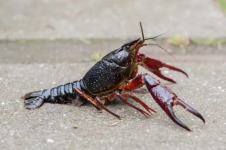
 ontario.ca
 news.ontario.ca
news.ontario.ca
news.ontario.ca
 invadingspecies.com
Facebook
facebook.com
 torontosun.com
Invasive species found in Tilbury, Ont., and Lake Aquitaine in Mississauga
Author of the article:Gordon Anderson
Published Jun 17, 2026 • Last updated 17 hours ago • 2 minute read
crayfish
The red swamp crayfish. Native to the U.S Gulf Coast and the Mississippi River basin, this invasive species has been found in southern Ontario. Photo by Luc Hoogenstein, Wikimedia Commons
Ontario residents are duly warned about an invasive species that is rapidly gaining a foothold in some southern Ontario waterways.
“This invasive species is considered a global invader and is highly destructive to wetlands and shorelines and will outcompete native crayfishes and other aquatic wildlife,” the Ontario Federation of Anglers and Hunters (OFAH) said in a social media post earlier this year in reference to the red swamp crayfish.
Last summer, the Invasive Species Awareness Program (ISAP) conducted a survey in Tilbury, Ont. More than 100 red swamp crayfish were found. The province says the species hasn’t been found in Ontario waters just yet, though they do recognize the species as a threat to native species.
The OFAH also says the species has been found in localized areas in Mississauga’s Lake Aquitaine.
It is illegal
Red swamp crayfish are native to the Gulf Coast region and the Mississippi River basin. Females may carry about 100 to 500 fertilized eggs under the tail, causing populations to grow quickly. Termed as an “aggressive” crayfish, they are found in various freshwater habitats with muddy or sandy bottoms and a large amount of organic debris.
The OFAH, the ISAP and Fisheries and Oceans Canada offer an online resourceto help identify the differences between native and non-native crayfish.
It is against the law to import live, possess, deposit, release, transport, breed/grow, buy, sell, lease, or trade red swamp crayfish in Ontario.
Cash infusion
On Monday at Lake Simcoe, the province announced a $2 million investment to help municipalities, Indigenous communities, conservation authorities and local organizations stop the spread of harmful invasive species.
“From early invasive species detection to on-the-ground management, this investment is helping communities across the province protect the natural spaces we all rely on and enjoy,” Dawn Gallagher Murphy, Parliamentary Assistant to the Minister of Natural Resources said.
Monday’s announcement is part of the three year, $16-million investment by the province to fight against the spread of invasive species.
The Ontario Invasive Species Act currently lists 42 species, four groups, one family and two carriers as invasive. The Act provides legislative tools to prohibit and restrict certain invasive species, as well as highlighting carriers that facilitate the movement of invasive species.
The province says Ontario has the highest number of invasive species in Canada. Once established, an invasive species can harm the natural environment and are extremely difficult and costly to control or remove.
“The best way to protect Ontario from invasive species is by preventing them from spreading,” Mike Harris, Minister of Natural Resources said. “That’s why our government continues to invest and give communities the tools they need to keep our waterways and forests safe for families across Ontario to enjoy.”
The province of Ontario defines an invasive species as “a species that is not native to Ontario, or to a part of Ontario and, is harming the natural environment of Ontario in which it is present or is likely to harm the natural environment of Ontario or of a part of Ontario, regardless of whether it is present in Ontario or in a part of Ontario.”
If you think you’ve found a red swamp crayfish, report it by calling the Invading Species Hotline at 1-800-563-7711
ganderson@postmedia.com
e-Laws | Ontario.ca
Ontario Newsroom
news.ontario.ca
Ontario Newsroom
news.ontario.ca
Red Swamp Crayfish | Ontario's Invading Species Awareness Program
invadingspecies.com
facebook.com
Red swamp crayfish a threatening guest in Ontario waters
Females may carry about 100 to 500 fertilized eggs under the tail, causing populations to grow quickly. Read more.