Space Thread

Ron in Regina

"Voice of the West" Party
Apr 9, 2008
30,731
11,240
113
Regina, Saskatchewan
Last full moon of 2025 will be largest and brightest in years
Author of the article:Spiro Papuckoski
Published Dec 04, 2025 • Last updated 14 hours ago • 1 minute read

The last Full Moon of the year will occur Thursday, Dec. 4, 2025.
Don’t be a full moon fool and miss out on this week’s last major celestial event of 2025.


That’s because the moon will be the closest to Earth and appear slightly larger and brighter on the horizon beginning early Thursday night when it will be at 100% illumination.


By Friday evening, its surface will be 98% illuminated in the night’s sky.

“For most casual observers, the difference is subtle, but it’s more noticeable if compared to a micromoon, when the moon is at its farthest point from Earth,” reports The Almanac.

The supermoon is the last of the year and won’t reappear until next fall.

The Weather Network says it’s also the brightest December full moon since 2008, reaching peak illumination at 6:14 p.m. ET on Thursday.

If the forecast calls for clouds, Canadians can wait to witness the cold moon on Friday as well until just after midnight.

According to the Royal Astronomical Society of Canada, when the moon is completely full, it is about 27,000 km closer to Earth than average. The shorter distance will make it glow 15% brighter.

NASA explains that the moon is opposite the sun when viewed from Earth and it reveals the moon’s dayside.

The full moon can also produce slightly higher tides along coastlines.

This week’s full moon is the third in a series of three consecutive supermoons.
Russia plans to put a nuclear power plant on the moon in the next decade to supply its lunar space programme and a joint Russian-Chinese research station as major powers rush to explore the earth's only “natural” satellite.
(YouTube & The Moon Revealed: It's a Hollow Spaceship, so who built it and why?)

Russia's state space corporation, Roscosmos, said in a statement that it planned to build a lunar power plant by 2036 and signed a contract with the Lavochkin Association aerospace company to do it.

Roscosmos said the purpose of the plant was to power Russia's lunar programme, including rovers, an observatory and the infrastructure of the joint Russian-Chinese International Lunar Research Station.
"The project is an important step towards the creation of a permanently functioning scientific lunar station and the transition from one-time missions to a long-term lunar exploration program," Roscosmos said.

Roscosmos did not say explicitly that the plant would be nuclear but it said the participants included Russian state nuclear corporation Rosatom and the Kurchatov Institute, Russia's leading nuclear research institute.

The head of Roscosmos, Dmitry Bakanov, said in June that one of the corporation's aims was to put a nuclear power plant on the moon and to explore Venus, known as earth's "sister" planet ‘cuz, you know, keeping it in the family…

Science hasn't been able to explain how the moon was formed, its unusual orbit, its distance from us, its density, its composition, its structure. These are all still questions. There are theories about the moon that solve some of these puzzles, but not others.

There is only one theory that answers every scientific question about the moon. Just one. That the moon is a hollow, artificial structure, brought here by -- someone else.
 

spaminator

Hall of Fame Member
Oct 26, 2009
39,618
3,688
113
Russia plans to put a nuclear power plant on the moon in the next decade to supply its lunar space programme and a joint Russian-Chinese research station as major powers rush to explore the earth's only “natural” satellite.
(YouTube & The Moon Revealed: It's a Hollow Spaceship, so who built it and why?)

Russia's state space corporation, Roscosmos, said in a statement that it planned to build a lunar power plant by 2036 and signed a contract with the Lavochkin Association aerospace company to do it.

Roscosmos said the purpose of the plant was to power Russia's lunar programme, including rovers, an observatory and the infrastructure of the joint Russian-Chinese International Lunar Research Station.
"The project is an important step towards the creation of a permanently functioning scientific lunar station and the transition from one-time missions to a long-term lunar exploration program," Roscosmos said.

Roscosmos did not say explicitly that the plant would be nuclear but it said the participants included Russian state nuclear corporation Rosatom and the Kurchatov Institute, Russia's leading nuclear research institute.

The head of Roscosmos, Dmitry Bakanov, said in June that one of the corporation's aims was to put a nuclear power plant on the moon and to explore Venus, known as earth's "sister" planet ‘cuz, you know, keeping it in the family…

Science hasn't been able to explain how the moon was formed, its unusual orbit, its distance from us, its density, its composition, its structure. These are all still questions. There are theories about the moon that solve some of these puzzles, but not others.

There is only one theory that answers every scientific question about the moon. Just one. That the moon is a hollow, artificial structure, brought here by -- someone else.
i hope the moonians fight back and hand them their asses. ;) 🌕
 
  • Like
Reactions: Ron in Regina

spaminator

Hall of Fame Member
Oct 26, 2009
39,618
3,688
113
Mark your calendars for these astronomical events in 2026
Here are the top astronomical events of 2026

Author of the article:Washington Post
Washington Post
Matthew Cappucci
Published Dec 26, 2025 • 4 minute read

Ursid Meteor Shower
People look up to the sky from an observatory near the village of Avren, Bulgaria, Aug. 12, 2009. Photo by Petar Petrov, File /AP Photo
The coming year will be jam-packed with stunning spectacles in the skies above, starting and ending with top-tier meteor showers, a total solar eclipse and a total lunar eclipse – with planetary rendezvouses sprinkled throughout.


Here are the top astronomical events of 2026.


Jan. 3-4: Quadrantid meteor shower
The good news: The year kicks off with a meteor shower. The Quadrantids typically feature dozens of shooting stars every hour.

The bad news? The full moon also happens the night of Jan. 3, meaning the fainter meteors will be outshined.

Moreover, the Quadrantids peak for only about six hours, compared to other meteor showers, which persist for days.

Quadrantid meteors also lack the long, shimmering trails sometimes seen with the August Perseids or December Geminids.

There’s still an outside chance you might spot an extra-bright fireball meteor, but – unlike in other years – it’s probably not worth bundling up and spending long outside this year.


Jan. 29: Venus near Mercury conjunction
Venus and Mercury will both be in proximity in the west-southwest sky immediately after sunset.

March 3: A total lunar eclipse
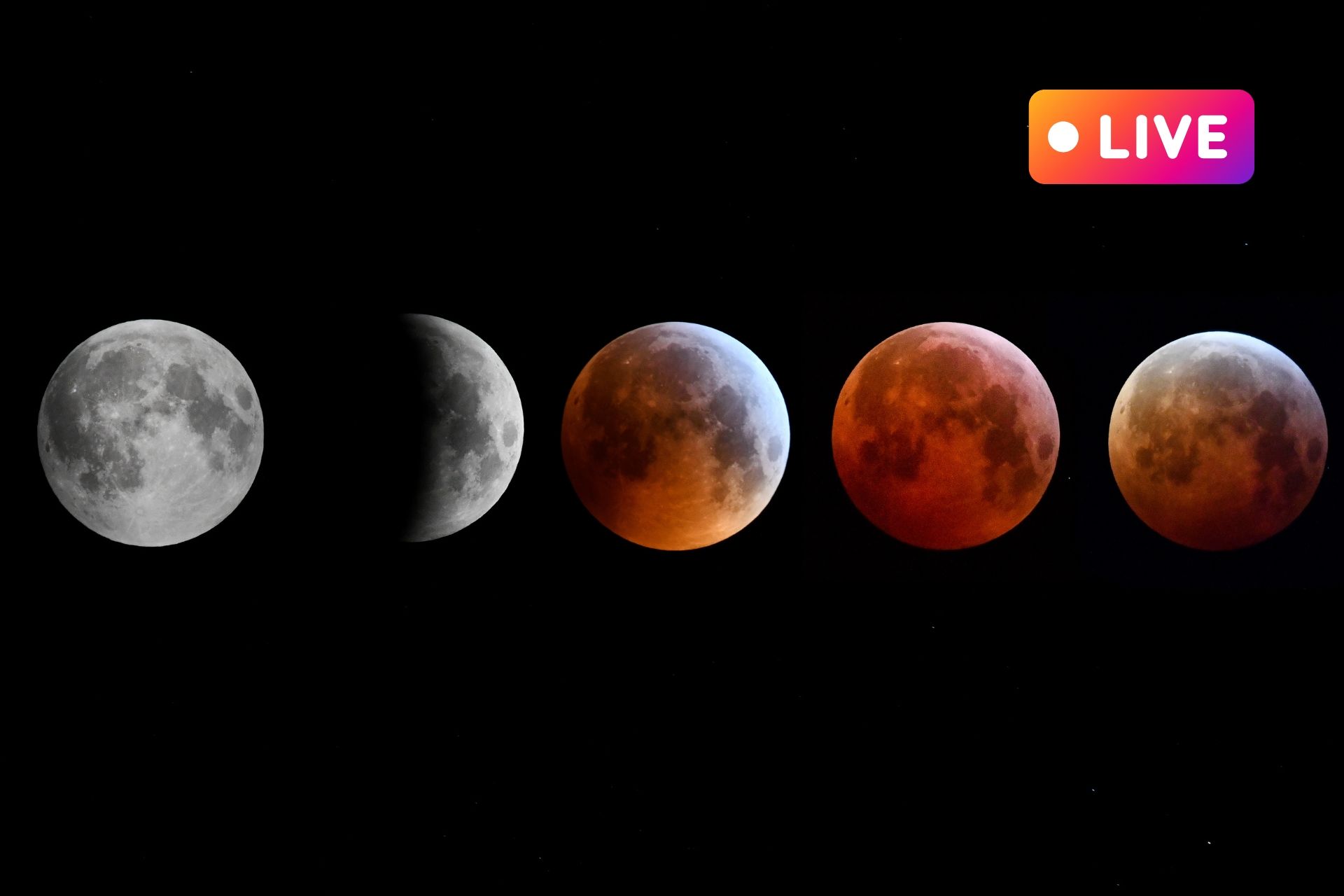
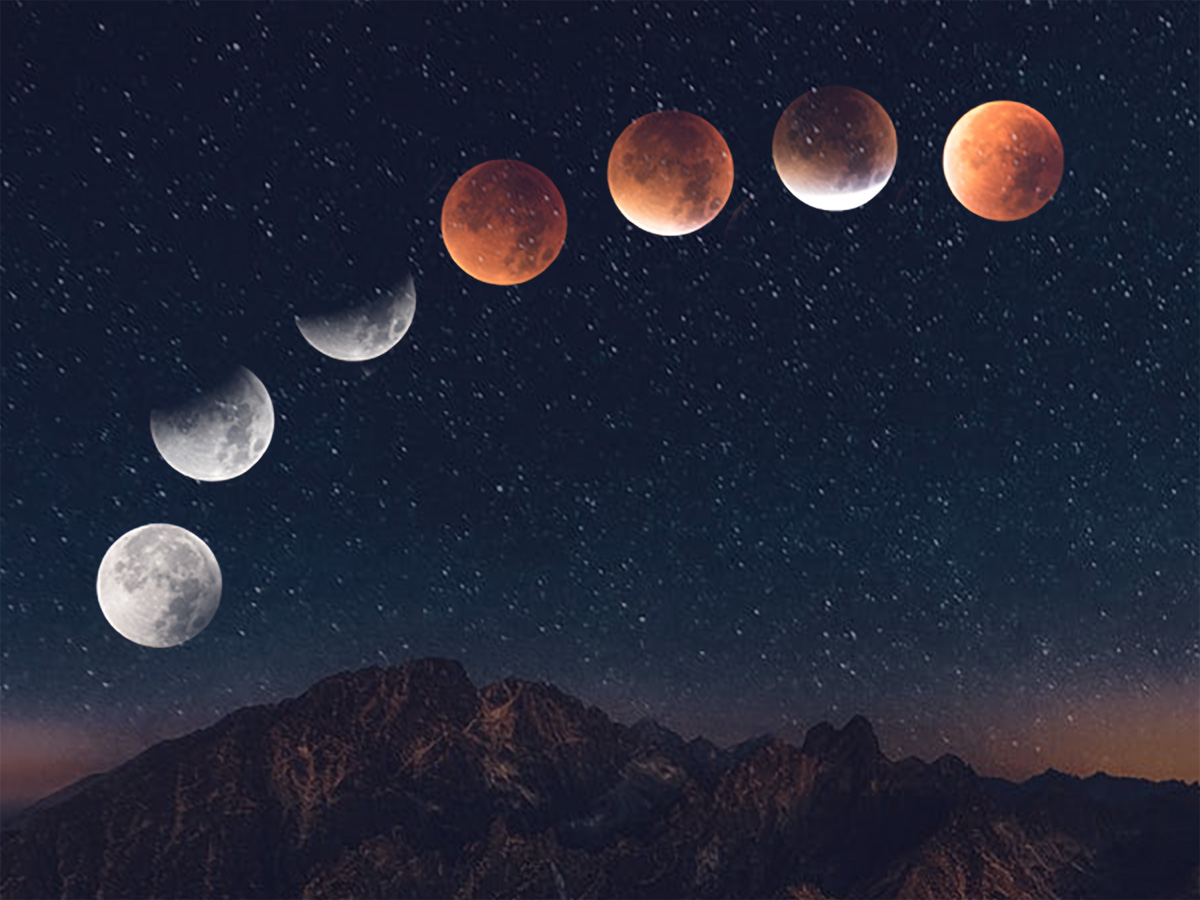
Early on the morning of March 3, a total lunar eclipse will be visible across North America. The East Coast will see it late in the overnight (it starts 4:50 a.m. Eastern time, with totality beginning at 6:04 a.m.). That means the Eastern Seaboard will see the moon set during totality.

In Washington, D.C., for example, moonset is at 6:28 a.m., but the moon will still be bathed in the Earth’s rusty-red shadow.

For the West Coast, the entirety of totality – which lasts 58 minutes – will be visible. It begins at 3:04 a.m. Pacific time, and concludes at 4:02 a.m.


Lunar eclipses occur when the Earth passes between the sun and the moon; the moon is basically behind Earth, residing in its shadow.

But some of the sunlight skims along the edges of Earth, passing through our atmosphere. That filters out the shorter wavelengths, allowing only reddish colours through. (It’s the same reason sunrises and sunsets look red – the sun is shining through more of our atmosphere at a lower angle). That’s what causes the moon to turn red – it’s the combined light of all of Earth’s simultaneous sunrises and sunsets hitting the moon at once.

Interestingly, the specific hue that the moon turns during a lunar eclipse can offer insight into how polluted the atmosphere is with aerosols. Scientists use what’s called the Danjon Scale to rate how red or brown a lunar eclipse is.


For example, following the June 15, 1991, eruption of Mt. Pinatubo, the December 1992 total lunar eclipse was an extremely dark brown that was barely visible. In some places, the fringe of the Earth’s shadow appeared tinged with blue. Sunday night’s lunar eclipse was a run-of-the-mill red, which more than 6.2 billion people on the nighttime side of Earth had the opportunity to enjoy.

Lunar eclipses can be enjoyed by the entire side of the Earth facing the moon – so everybody experiencing night! Solar eclipses, which happen when the moon blocks sunlight from reaching Earth, can only be seen in very narrow path – often less than 100 miles wide.

Aug. 12: A total solar eclipse
Those of us stateside will have to travel for this one. (This reporter has witnessed four total solar eclipses to date, all of which have strengthened my resolve to be a solar eclipse chaser the rest of my life.)


On Aug. 12, a solar eclipse will occur. The path of totality will sweep through eastern Greenland, far western Iceland and Spain.

Totality will last up to 2 minutes 18 seconds, though Spain will only see a maximum of 1 minute 50 seconds. It will also be a sunset eclipse in Spain, ending over Palma de Mallorca.

Any given location only experiences a total eclipse once every 375 years.

During a solar eclipse, the moon intercedes between the Earth and the sun, casting a shadow that brings a sudden, minutes-long nightfall to a small sliver of Earth.

Aug. 12-13: Perseid meteor shower
Great news! If you’re not travelling for the eclipse, you still get a consolation prize – the year’s best meteor shower, the Perseids, happens the night of Aug. 12 to 13 as well. (Plus, since the moon will be new, meaning that it will not be illuminated, there will be nothing to overpower the meteors).


Earth will be running into a swarm of debris left in the wake of long-gone comet Swift-Tuttle. Those tiny pebbles – about the size of a grain of puffed rice – will burn up in Earth’s outer atmosphere. (Think about driving into a swarm of bugs and watching them smear across your windshield.)

Warm temperatures and a lack of moonlight will make for optimal viewing conditions – and you may see 50-plus shooting stars every hour under ideal conditions.

Dec. 13-14: Geminid meteor shower
The Geminids are perhaps the most visually striking meteors of the year.

While the Perseids zip through the atmosphere at a quick 37 miles per second, the Geminids are a bit slower (relatively speaking) at 22 miles per second. That means each one is visible for a bit longer. They produce green, shimmering trails.

The waxing crescent moon will also mean minimal moonlight and near-perfect viewing.

Once again, 50-plus shooting stars are likely every hour. They’ll glow emerald green, violet, amber and white – quite the show to close out a stellar year.
 
  • Like
Reactions: Ron in Regina

spaminator

Hall of Fame Member
Oct 26, 2009
39,618
3,688
113
Want to see an eclipse next year? Here’s where to go.
Astronomers know years - and even decades - in advance when major astronomical events will take place

Author of the article:Washington Post
Washington Post
Andrea Sachs
Published Dec 26, 2025 • 6 minute read

Buddhist monk Geshe Kunga watches the 2024 solar eclipse from the path of totality in Bloomington, Indiana. MUST CREDIT: Matt McClain/The Washington Post
Buddhist monk Geshe Kunga watches the 2024 solar eclipse from the path of totality in Bloomington, Indiana. MUST CREDIT: Matt McClain/The Washington Post Photo by Matt McClain /The Washington Post
Unlike some planes, trains and buses, heavenly bodies tend to show up on time.


Astronomers know years – and even decades – in advance when major astronomical events will take place. NASA already has the schedule for lunar and solar eclipses through the 30th century.


“Our lives are ruled by unpredictability and by chaos,” said Paul Sutter, a cosmologist and author. “But the night sky is so regular and predictable, you can literally count on it.”

Every year, our solar system showcases several wondrous spectacles. Last April, millions of people from Mexico to Newfoundland stood, flew or cruised in the path of a total solar eclipse.

“It’s like the Olympics,” said Sutter, who experienced the minutes-long darkness with about 70,000 spectators in Indianapolis. “It happens often enough that you recognize it, and you have to be willing to move around.”


This year, in addition to two total lunar and two partial solar eclipses, an interstellar comet named 3I/ATLAS visited from another solar system. First sighted in Chile in July, the comet veered within 168 million miles of Earth on Dec. 19.

Heading into 2026, professional and amateur skywatchers are marking several astronomical phenomena on their calendars. Also next year, the International Dark Sky Discover Center is scheduled to open in Fountain Hills, Arizona, an International Dark Sky Community. With growing concerns over light pollution, the nonprofit attraction will explore the importance of preserving dark skies with an observatory, planetarium, theater, exhibition hall and interactive learning stations.


Astronomers suggest travelling to a destination far from city lights and skyscrapers, such as a dark-sky preserve or national park, and switching off your phone, which can disrupt your night vision.

Check local astronomy clubs, NASA’s Night Sky Network or natural history or science institutions such as the National Air and Space Museum for special stargazing events and star parties.

A crowd at the Russellville, Arkansas, train station watches the 2024 eclipse. (Jonathan Newton/For The Washington Post)
A crowd at the Russellville, Arkansas, train station watches the 2024 eclipse. (Jonathan Newton/For The Washington Post) Photo by Jonathan Newton /For The Washington Post
2026 solar eclipse
If you missed the 2024 solar eclipse because of stratospheric hotel rates or sold-out flights and cruises, 2026 could be the year of redemption.

On Aug. 12, the moon will completely blot out the sun across Greenland, Iceland, Spain, Russia and a small area of Portugal, according to NASA.

As a consolation prize, other parts of Europe, plus Africa, North America and the Atlantic, Arctic and Pacific oceans, will experience a partial eclipse covering about 90 percent of the sun.


“Lunar eclipses are easier to see because the whole night side of the Earth can see it,” said Shauna Edson, an astronomy educator with the Smithsonian’s National Air and Space Museum, “but the star of the show is absolutely going be the total solar eclipse in August.”

Dozens of tour operators and cruise lines, such as Intrepid Travel, Smithsonian Journeys, Astro Trails and Lindblad Expeditions, are organizing solar eclipse trips in Greenland and Europe and on the Arctic and Atlantic oceans.

For independent eclipse-chasers, Visit Iceland has rounded up some of the best viewing spots, including the Westfjords, Snæfellsnes Peninsula, Reykjanes Peninsula and the Reykjavík area.

Dania Wright, education director at the International Dark Sky Discovery Center in Arizona, said the longest period of totality on land will occur at Látrabjarg, seabird cliffs in the western region of the Nordic country.


“Start prepping: Iceland will be sold out,” the country’s tourism office warns.

Blood Moon
On March 3, Earth will insert itself between the sun and moon, the only total lunar eclipse of the year. The moon, cloaked in the Earth’s shadow and suffused with filtered sunlight, will glow red or orange.

The full Blood Moon will appear in East Asia, Australia, Pacific Islands and the Americas, according to NASA. In North America, Sutter said to go west, from Northern California to Alaska and Vancouver.

Timing-wise, Edson said sky-gazers in Asia and Australia can see the whole eclipse in the hours after sunset. Hawaii will experience totality around 1 a.m. local time; viewers in western North America will have to set their alarms for the wee hours.


East Coasters, Edson said, can glimpse totality in the predawn hours – or wait until June 26, 2029, when the lunar eclipse will more be more conveniently placed and timed.

On Aug. 27-28, Wright said North America will be treated to a partial lunar eclipse with 96 percent coverage. Depending on the dust and clouds in the atmosphere, she said the colour can shift from deep rust to bright copper.

If you happen to be on a cruise around Antarctica on Feb. 17, look up for the annular solar eclipse, when the moon partially shields the sun and becomes encircled in a “ring of fire.”

A total solar eclipse will be visible on Aug. 12. (Matt McClain/The Washington Post)
A total solar eclipse will be visible on Aug. 12. (Matt McClain/The Washington Post) Photo by Matt McClain /The Washington Post
March of the planets
Planet parades – the alignment or arc of several planets in one night – occur every year and often stick around in some type of formation for days or weeks. This spring, five planets marched across the sky, four of which (Venus, Mercury, Jupiter and Mars) were discernible to the naked eye, Edson said.


In late February, six planets plus the moon will fan out across the sky. Though the sunset glare could wash out Venus and Mercury, Edson said Saturn will be visible on a western horizon clear of such obstructions as trees and buildings. To see Neptune and Uranus, bring a telescope. To find Jupiter, look for the moon, its buddy.

“It’s not quite going to a pearl necklace across the sky,” she said, “but it’s still a cool thing to know those planets are all there.”

For an eyeful, ditch urban locales for more rural areas with no light pollution or vertical obstructions, such as trees or tall buildings.

If the weather is not optimal, try again on Aug. 12. The six-planet parade, with Mars replacing Venus, will kick off one of the busiest days for astro-tourists.


“This is a triple-threat day,” Wright said. “It will feature another planetary alignment in the morning, the total solar eclipse in the afternoon and the Perseid meteor shower peaking in the evening.”

Summer meteor showers
The Perseid meteor shower, a summertime ritual, typically bedazzles the sky from mid-July to late August. Similar to planet parades, you’ll want to avoid light pollution and busy skylines. They appear in both hemispheres but are more vivid in the northern half.

With a new moon on Aug. 12, the bright squiggles and exploding fireballs will burn especially bright against the black velvet backdrop. NASA said 50 to 100 meteoroids can whiz by per hour, especially during the peak times of 2 a.m. to 4 a.m.


Wright’s pick for a meteor shower is Geminid, which reaches its apogee on Dec. 14. If the sky is pitch dark, she said viewers can see upward of 120 meteors per hour. And they don’t need to pull an all-nighter.

“It offers the most reliable viewing prior to midnight,” Wright said.

A deep space launch
After the 2022 successful test run of Artemis I, the first integrated flight of NASA’s Deep Space Exploration Systems, the agency is planning to send four astronauts into space sometime between February and April for Artemis II.

During the 10-day mission, the team will orbit the moon to test systems and equipment for future moon walks and Mars expeditions.

“The Artemis II astronauts are traveling farther than any humans have since the last visit to the moon on Apollo 17 in 1972, more than 50 years ago,” Edson said.

The Space Launch System rocket and Orion spacecraft will launch from the Kennedy Space Center Visitor Complex on Florida’s Space Coast. Check the center’s website for Artemis II launch-viewing packages.